Think of your franchise agreement model as the master blueprint for your entire franchise system. It’s the core legal document that spells out the relationship, responsibilities, and rules of the road for you (the franchisor) and your franchisees. But it's so much more than just a contract; it’s a scalable framework built to protect your brand while giving your franchisees a clear path to success.
What a Franchise Agreement Model Truly Represents
Ever seen the playbook for a championship sports team? It’s a detailed guide ensuring every single player—from the rookie to the seasoned veteran—knows the plays, understands the expectations, and executes with absolute consistency. That uniformity is what wins games. Your franchise agreement serves the exact same purpose for your brand. It creates a predictable, repeatable structure that governs every single location. This ensures a customer gets the same great experience whether they walk into a store in Miami or Milwaukee. This document is the bedrock of any sustainable growth plan, and communicating its value is a key part of the sales process. However, even the most robust agreement is useless if your team is too slow to engage interested candidates. The real-world cost of slow or manual follow-up is that a competitor who responds instantly will capture the candidate's attention first, and you may never get the chance to explain the strength of your partnership model.
The Bedrock of Your Franchise Relationship
A well-crafted franchise agreement model gets several critical jobs done all at once:
- Defines Obligations: It clearly lays out what you promise to deliver (training, marketing support, site selection guidance) and what the franchisee is required to do (follow brand standards, pay fees, report sales).
- Protects Your Brand: The model is your primary tool for enforcing quality control and operational consistency—the lifeblood of any successful franchise.
- Sets Financial Terms: It details the initial investment, ongoing royalties, marketing fund contributions, and all other financial commitments.
- Manages the Relationship Lifecycle: The agreement covers the entire journey, from the initial grant of the franchise to the terms for renewal, transfer, or even termination if things don't work out.
A strong agreement is a silent partner in your sales process. It builds confidence and reduces friction, allowing your development team to focus on building relationships with qualified candidates rather than clarifying ambiguities.
A solid franchise agreement is the foundation for a healthy, scalable system. It clarifies expectations, protects your intellectual property, and gives both you and your franchisees a clear set of rules to operate by. Below is a quick look at the essential parts of a franchise agreement and the role each one plays in building a strong system.
Core Components of the Franchise Agreement Model
| Component | Its Purpose in the Agreement |
|---|---|
| Grant of Franchise | Officially gives the franchisee the right to operate under your brand name and system. |
| Term and Renewal | Defines the initial length of the contract (e.g., 10 years) and the conditions for renewing. |
| Fees and Payments | Spells out the initial franchise fee, ongoing royalties, and advertising fund contributions. |
| Territory Rights | Clarifies if the franchisee gets an exclusive, protected, or non-exclusive territory. |
| Training and Support | Outlines the initial and ongoing training and support you will provide as the franchisor. |
| Obligations of Franchisee | Details the franchisee's duties, including following the operations manual and brand standards. |
| Intellectual Property | Protects your trademarks, logos, and proprietary systems from misuse. |
| Transfer and Termination | Sets the rules for selling the franchise and the conditions under which the agreement can be ended. |
Each of these components works together to create a balanced relationship where both parties know exactly what to expect, paving the way for long-term success.
Agreement vs. FDD: What's the Difference?
It’s easy to confuse the franchise agreement with the Franchise Disclosure Document (FDD), but they play very different roles. Think of the FDD as the comprehensive "for your information" packet you are legally required to give prospective franchisees before they sign anything. It’s all about transparency. The franchise agreement, on the other hand, is the actual, legally binding contract the candidate signs to officially become a franchisee. It’s usually included as an exhibit within the FDD. In short: the FDD discloses, while the agreement officiates the partnership.
Breaking Down the Key Clauses of Your Agreement
Let's be honest, a franchise agreement can look like a mountain of dense legal text. But at its core, it’s a business playbook. For a potential franchisee, it’s the definitive guide on how they’ll operate and grow inside your system.
Your development team needs to know this document inside and out. Being able to explain the why behind each clause is how you build trust and show the real value of your partnership. It’s not just for the lawyers; it's a critical part of the sales conversation.
When a candidate asks why a rule exists, a clear, confident answer shows you’ve built a professional, well-thought-out system. A vague answer? That creates doubt and can kill a deal right on the spot.
A solid agreement is the bridge between your proven system and your franchisee's success. It’s what makes the model repeatable.
 This diagram gets it right—the agreement is the critical link that translates your system into a successful business for the franchisee.
The Grant of Franchise and Territory Rights
This is where it all begins. This clause is the official handshake that grants the franchisee the right to use your trademarks, logos, and proprietary system. Think of it as handing over the keys to the kingdom; it’s the moment they officially join your brand family. Right alongside that grant is the definition of their territory. This is, without a doubt, one of the most scrutinized parts of any agreement. If it’s not handled with absolute clarity, it becomes a massive source of conflict down the road. Your model must spell out exactly what kind of territory you're offering:
- Exclusive Territory: The franchisee is the only one who can operate within a defined area. You, the franchisor, agree not to open another location or allow anyone else to.
- Protected Territory: This is similar to exclusive, but it might have some exceptions. For example, you might reserve the right to sell products online or in non-traditional venues like airports within their area.
- Non-Exclusive Territory: The franchisee has no protection at all. You could, in theory, place another franchise right next door.
There's no room for gray area here. Ambiguity leads to disputes and erodes trust across your entire network.
Financial Obligations Fees and Royalties
Money talks, and this section lays out every financial commitment in black and white. It’s not just about the initial franchise fee; it details the ongoing payments that keep the whole system running. Here are the key financial components you'll find:
- Initial Franchise Fee: This is the one-time, upfront payment a franchisee makes to get in the door.
- Ongoing Royalties: This is typically a percentage of gross sales paid weekly or monthly. It’s the fee for the continued use of the brand, support, and systems.
- Advertising or Marketing Fund Contributions: Also usually a percentage of sales, this fee gets pooled to fund the big-picture national or regional advertising campaigns that benefit everyone.
Explaining these fees is a huge part of the sales process. Candidates need to see that royalties aren't just a bill—they're their investment in the ongoing support, innovation, and brand strength that helps them win.
The real cost in franchise development isn't the royalty fee; it's the opportunity cost of a lead going cold while waiting for a callback. A clear agreement is powerful, but only if you get the chance to discuss it.
Operational Standards and the Operations Manual
This section is the engine of brand consistency. It’s what legally requires the franchisee to follow the standards, methods, and procedures you’ve perfected. It also points to the operations manual—the detailed, day-to-day playbook for running the business. This clause is your authority to enforce quality control, which is non-negotiable for protecting the brand’s reputation. When you explain this to a candidate, frame it as a shield. It ensures that one franchisee’s poor performance won’t drag down their business next door.
Term, Renewal, and Termination
Every business relationship has a lifecycle, and this clause defines it. It provides stability and sets clear expectations for the long haul.
- Initial Term: The length of the first contract, which is often 10-20 years.
- Renewal Rights: This outlines the conditions for a franchisee to renew their agreement. Usually, it means they have to be in good standing, sign the latest version of the franchise agreement, and maybe pay a renewal fee.
- Termination: This spells out the specific circumstances under which either party can end the agreement. It covers things like franchisee default (e.g., not paying royalties) and gives you the right to terminate the contract to protect the brand.
These clauses give franchisees long-term security while giving you the tools to protect the entire system from operators who aren't holding up their end of the bargain. Communicating this stuff clearly from day one is how you build a healthy partnership. It’s that clarity that turns an interested lead into a confident, committed owner.
Avoiding the Most Common Agreement Pitfalls
A shaky franchise agreement isn't just a legal document—it's a magnet for future fights and brand damage. The smallest gray areas can blow up into expensive conflicts, draining your resources and poisoning franchisee relationships. For anyone in franchise development, spotting and stamping out these pitfalls is non-negotiable for building a scalable, healthy system.
These issues also scream "red flag" to your best candidates. A confusing or lopsided agreement hints at disorganization or, worse, unfairness. That's enough to make a high-quality lead walk away before you've even had a real conversation. A clear, balanced agreement, on the other hand, shows you're a pro and builds the trust needed to get to a signature.
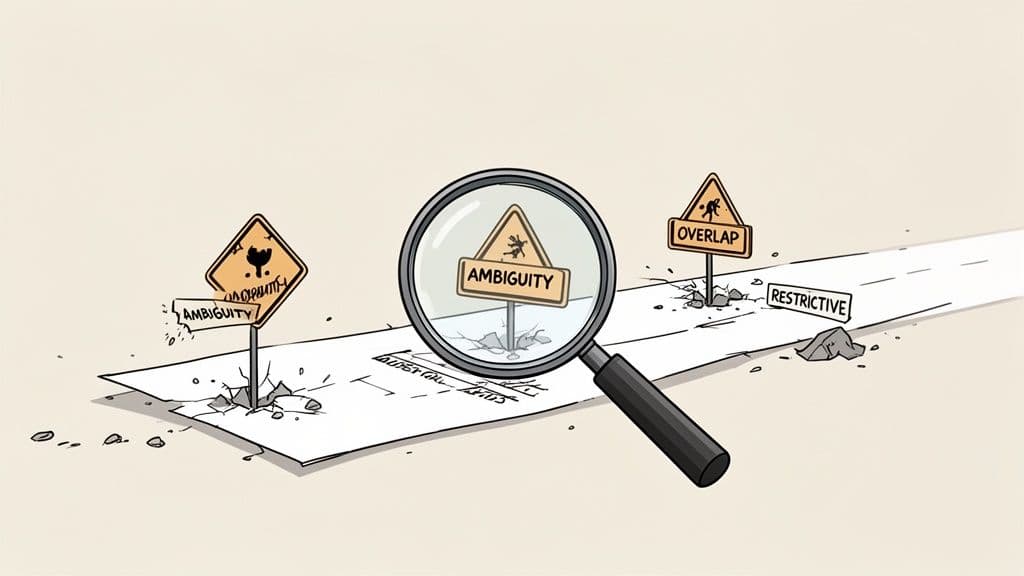
Vague Territory Definitions
One of the fastest ways to spark franchisee infighting is with a poorly defined territory. When the lines are blurry, franchisees feel like their investment is at risk. That’s when the turf wars begin, and your brand image pays the price. Your agreement needs to be surgically precise. Use concrete boundaries like zip codes, street maps, or even specific demographic data to carve out each territory. And don't forget to spell out the rules for online sales, catering, or any other non-traditional channels to head off future arguments.
Unclear Performance Metrics
Phrases like "best efforts" and "reasonable performance" sound nice, but they're basically unenforceable. Without hard, measurable Key Performance Indicators (KPIs), you have no objective way to manage an underperforming franchisee. Your agreement should lay out specific, non-negotiable metrics, such as:
- Minimum gross revenue targets
- Customer satisfaction scores
- Results from compliance audits
- Required local marketing spend
Clear benchmarks like these take the guesswork out of performance reviews. They give you a fair, solid foundation to stand on if you ever need to start default proceedings.
Overly Restrictive Clauses
Of course, brand control is critical. But an agreement that micromanages every last detail will crush a franchisee's motivation and kill any chance of local innovation. Clauses that are too rigid on minor operational points make them feel less like business owners and more like glorified employees. The trick is finding the right balance. The agreement must enforce your core brand standards while leaving room for some local autonomy. This approach builds a sense of ownership that ultimately drives everyone's success.
A great agreement sets clear guardrails, not a restrictive cage. It provides the structure for success without killing the entrepreneurial spirit that attracted your best candidates in the first place.
This level of transparency can be a powerful sales tool. But even the best agreement is useless if your leads never see it because your follow-up was too slow. The cost of slow or manual follow-up is massive; candidates looking at multiple brands will almost always go with the one that responds first. While your agreement solidifies the partnership, a tool like FranFunnel makes sure you get to have that first critical conversation. By using text-first automation that feels personal, you connect instantly, building the rapport you need to walk a candidate through your well-crafted legal documents. A fast, compliant, and personal first touch paves the way for a transparent and trust-filled sales process.
How a Strong Agreement Accelerates Franchise Sales
Your franchise agreement is one of your most powerful sales tools, but it’s only effective if you actually get the chance to discuss it. In a competitive market, top-tier candidates are evaluating multiple brands at once. Speed isn’t just an advantage; it’s everything. The franchisor who responds first almost always wins the conversation. This is where the real cost of slow, manual follow-up becomes painfully clear. While your well-crafted agreement outlines the long-term value and stability of your partnership, that message gets lost if your lead has already moved on. A competitor who responds in seconds will capture their attention and momentum, leaving you in the dust.
The Critical First Impression
Think of your lead engagement process as the opening act for your franchise agreement. If that first interaction is slow, clunky, or impersonal, candidates will assume your ongoing franchisee support will be the same. They'll question your brand's efficiency and professionalism before they even read the first clause of your FDD. On the other hand, an instant, personal response sets a powerful precedent. It shows you’re an organized, modern, and franchisee-focused brand right from the start.
The moment a lead submits a form, a clock starts ticking. Every minute of silence increases the odds they will lose interest or engage with a faster-moving competitor. Instant engagement isn't just a best practice; it's a survival tactic.
This is where a dedicated engagement layer like FranFunnel works hand-in-hand with a traditional CRM. While your CRM is the system of record, FranFunnel is the engine of immediate action, ensuring no lead ever has to wait. Automated but personal text messages can secure a conversation in minutes—the same conversation that might take days of phone tag and ignored emails to schedule manually.
Connecting Speed to Sales Cycle Velocity
A faster first contact directly translates to a shorter, more efficient sales cycle. When you engage leads immediately, you can qualify them, build rapport, and schedule the next steps while their interest is at its peak. This momentum carries through the entire discovery process, right up to the agreement signing. Modern franchise development is a race to connect. In this environment, inconsistent follow-up is a guaranteed way to lose your share of the market. Your agreement can't close a deal if you never get to have the conversation. Just look at the difference a quick response makes in getting the chance to even talk about your franchise agreement.
Lead Engagement Speed Manual vs Automated
| Metric | Slow Manual Process | Instant Automated Process |
|---|---|---|
| Time to First Contact | Hours or days | < 30 seconds |
| Typical Response Rate | 10-20% (if lucky) | 45%+ (via text) |
| Candidate Impression | "Are they even open?" | "Wow, they're on the ball!" |
| Likelihood of a Call | Low; momentum lost | High; interest is peaked |
| Impact on Pipeline | Stalled, requires chasing | Accelerated, builds momentum |
A faster, more predictable sales cycle means your development team can handle more leads without adding headcount, which directly impacts your bottom line. Automation allows teams to work more efficiently, ensuring consistent follow-up for every lead, every time.
Turning the Agreement into a Closing Tool
When your initial engagement is powered by speed and automation, the entire conversation shifts. Instead of chasing leads, your team spends its time educating qualified candidates. The franchise agreement is no longer just a legal necessity; it becomes a powerful closing tool that demonstrates the strength and fairness of your system. Here’s how speed empowers this shift:
- It buys you time for meaningful conversations. You get to walk candidates through the agreement's key clauses, building trust instead of just sending documents into a void.
- It frames your brand as a professional partner. A swift, tech-forward process aligns with the promises of a modern, well-run franchise system.
- It prevents deal fatigue. By keeping the process moving, you maintain the candidate's excitement and prevent them from getting bogged down or distracted.
Ultimately, a strong agreement builds the foundation for a lasting partnership, but instant, text-first communication is what gets you in the door to build it. By closing the gap between inquiry and conversation, you ensure your superior franchise model gets the attention it deserves.
Modernizing Your Agreement for Today's Market
Handing a modern candidate an old-school franchise agreement is like showing them a flip phone. It immediately sends the wrong message—that your brand is behind the curve. Today’s entrepreneurs expect to see forward-thinking policies around technology, data, and digital marketing. An agreement stuck in the past is a major red flag.
Updating your agreement is more than just a legal refresh; it’s a powerful statement about your brand. It proves to prospective franchisees that you understand the modern market and have built a system to compete in it. This is absolutely critical for attracting top-tier talent who demand sophisticated tools and support.
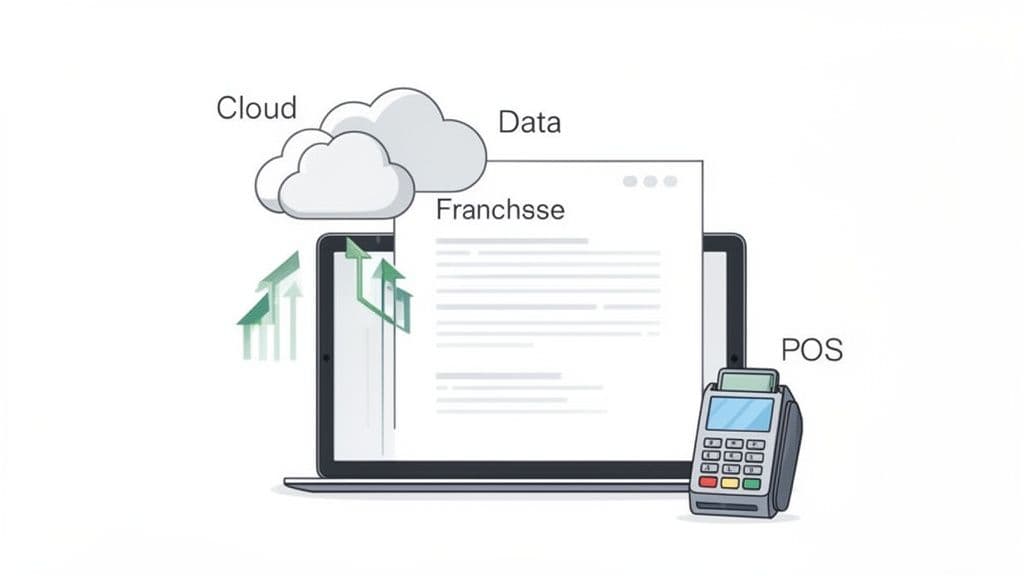
Integrating Technology Mandates
Technology isn't an add-on anymore. It's the central nervous system of any successful multi-unit business. Your franchise agreement has to reflect this reality with clear technology mandates. These clauses aren’t about being controlling. They’re about ensuring consistency and operational excellence across your entire system by requiring franchisees to use specific platforms. This might include:
- Point-of-Sale (POS) Systems: Standardizing your POS is a no-brainer. It allows for seamless data collection, sales tracking, and CRM across the whole network.
- Scheduling and Management Software: When everyone uses the same software, you get clean data on staffing, payroll, and inventory. This helps you make smarter system-wide decisions.
- Cybersecurity Protocols: Mandating specific security measures protects the franchisee, your other owners, and the integrity of your brand from digital threats.
Think of it this way: you're handing your franchisees a proven, efficient tech stack from day one. You're setting them up for success, not holding them back.
Defining Data Sharing and Digital Standards
In a data-driven world, your agreement must lay down the rules for information. A modern franchise agreement model needs specific clauses on data sharing—what info franchisees must report, how you’ll use it, and what privacy protocols are in place. This transparency builds trust and helps you steer the ship with real-time performance analytics. The same goes for your digital brand standards. It’s not just about the logo on the sign anymore. Your agreement must cover:
- Social media conduct and content policies.
- Rules for local websites and online directory management.
- Guidelines for online ads and email marketing.
These rules protect your brand's online reputation and make sure customers get a consistent experience, no matter how they find you.
Your sales process is the first demonstration of your brand’s modernity. If your agreement mandates the latest tech, but your lead follow-up relies on slow, manual emails, you create a jarring disconnect that undermines your credibility.
Aligning Your Process with Your Promises
This is where the rubber meets the road. If your agreement screams efficiency and modern thinking, your first conversation with a candidate better reflect that. The cost of slow or manual follow-up is huge. It tells a candidate that your brand might not be as forward-thinking as your legal documents claim. Evolving franchise agreements are key to future growth, folding in everything from tech mandates to new equity partnerships. As savvy brands layer powerful tools like FranFunnel on top of their CRMs for AI-assisted lead routing, they're proving that efficiency is a core value. You can find more insights on how tech and equity are shaping 2026 franchise trends. When you use an automated, text-first platform like FranFunnel, your first impression perfectly matches your modern brand. A candidate inquires and gets an instant, personal text message moments later. That single action proves you value speed and cutting-edge tools. It shows them—through action, not just words—that the efficiency promised in your agreement is baked into your brand’s DNA from the very first touchpoint. That’s how you build the confidence to move a candidate from inquiry to owner.
Your Top Questions About Franchise Agreements, Answered
Franchising is built on a legal framework, and that framework can bring up a lot of questions. For franchise development leaders, knowing the answers is key to building trust and keeping deals moving. Let's break down some of the most common questions that pop up from candidates when they’re looking at your franchise agreement model.
What’s the Difference Between the FDD and the Franchise Agreement?
Think of it this way: The Franchise Disclosure Document (FDD) is the detailed brochure, and the Franchise Agreement is the final, binding contract. The FDD is a massive, transparent document with 23 legally required sections that you give to a candidate before they sign anything. Its whole job is to provide full disclosure so they can make an informed decision. The Franchise Agreement is the actual contract they sign after they’ve reviewed the FDD. In fact, the agreement itself is tucked inside the FDD as an exhibit. The FDD gives them the complete picture; the agreement locks in the specific rules of the road for your partnership.
Are Franchise Agreements Negotiable?
As a rule, no—and that’s a good thing. The core terms of a franchise agreement are rarely negotiable. Why? Because uniformity is what protects the entire system. Franchisors need every franchisee to operate under the same standards, pay the same fees, and follow the same rules. If you started negotiating key terms for one person, it would create an unfair system and open you up to legal challenges from other franchisees. Sure, in rare cases with a huge multi-unit developer, a minor point like a build-out timeline might get a slight adjustment. But for almost everyone, the agreement is presented as-is. This reinforces the brand's integrity.
A non-negotiable agreement is actually a sales asset. It tells candidates that every franchisee operates under the same fair rules, strengthening the integrity of the entire system and protecting their investment from day one.
This consistency is the mark of a pro brand. It simplifies the sales conversation by setting the same clear expectations for every single person who joins.
How Does a Good Agreement Help Convert Franchise Leads?
A clear, fair, and well-written agreement is a massive trust-builder. When a candidate sees a professional, buttoned-up document, it quiets their anxieties about the investment. It signals that you’re a serious, organized brand. A strong agreement answers questions before they’re even asked, smoothing out the friction in the sales process. But here’s the catch: that powerful agreement is worthless if your leads go cold from slow follow-up. A great contract can’t do its job if you never get the chance to talk about it. Speed-to-lead is absolutely everything. This is where the cost of slow or manual follow-up kills deals. You need a system like FranFunnel to engage leads the second they inquire. You build trust with immediate, personal communication, which then earns you the right to walk them through the strengths of your franchise model.
What Happens When a Franchise Agreement Expires?
An expiration date isn't an automatic "goodbye," but it's not an automatic renewal either. The agreement itself will spell out exactly how a franchisee can renew their term. The process is designed to keep the system healthy by ensuring only committed, high-performing franchisees stick around. Typically, the renewal process involves a few key steps:
- Good Standing Requirement: The franchisee has to be up-to-date on all payments and in compliance with all brand standards. No exceptions.
- Signing the Current Agreement: They’ll almost always have to sign the newest version of the franchise agreement, which might have updated terms.
- Payment of a Renewal Fee: A standard fee is common to cover the franchisor's administrative and legal costs for processing the renewal.
- Facility Upgrades: They may need to update their location or equipment to meet the current brand standards, keeping the customer experience consistent everywhere.
If a franchisee doesn't qualify for renewal or decides not to, the agreement lays out their post-termination duties. This usually includes things like de-branding the business, returning the operations manual, and stopping all use of your trademarks. It’s a clean break that protects the integrity of the entire franchise network.
A well-crafted franchise agreement is the backbone of a scalable brand, but it only matters if you can engage candidates quickly enough to discuss it. FranFunnel ensures your first impression is as professional and efficient as your legal documents. By automating instant, personal, text-first outreach, we help you connect with more leads, book more meetings, and turn conversations into signed agreements. Learn how FranFunnel can accelerate your franchise development today.
Further reading: FranFunnel for franchise brands.