Think of franchise business coaching as the playbook that turns a great concept into a thriving, consistent network. It’s not about sending out a few tips in a monthly newsletter; it's a structured system designed to tackle the biggest headaches franchisors face—inconsistent unit performance, brand dilution, and franchisee churn. It’s a culture of support that should start the second a potential franchisee first reaches out.
Turning Potential into Performance
Imagine a world-class sports team. Every player has talent (that’s your franchisee), but it's the coach who gets them to run the same plays, sharpens their skills, and makes sure everyone is executing the same winning strategy. That’s exactly what a solid coaching program does for your franchise system.
It’s the bridge between your big-picture vision at corporate and what actually happens on the ground, day-to-day. Without it, even your best franchisees can start to drift from brand standards, miss key revenue opportunities, or just feel like they’re on an island. Coaching provides the accountability and structure they need to stay aligned and profitable.
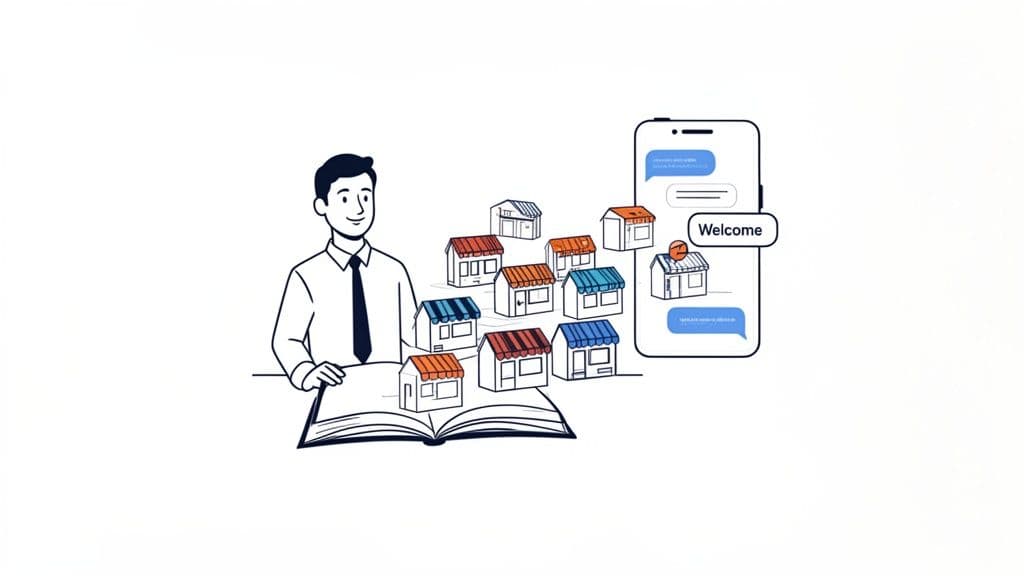
Building a Foundation of Support from Day One
Here’s something most franchisors miss: this supportive culture doesn't begin after the FDD is signed. It starts the moment a lead comes in. That first text, that first email—it sets the tone for everything that follows. But trying to manage this first touchpoint manually is where many franchise development teams stumble.
Slow or inconsistent follow-up is expensive. The cost of manual follow-up is enormous; leads go cold, candidates feel ignored, and your team gets bogged down in repetitive tasks instead of building real relationships. This is where a seamless, automated engagement system becomes a game-changer.
A text-first outreach strategy is non-negotiable. It meets modern franchise candidates where they are—on their phones. By automating that first response, you guarantee every single lead gets an instant, professional reply, which builds trust and shows you’re organized from the get-go.
This does more than just boost your contact rate. It sends a powerful signal to potential franchisees that you run a tight ship. It’s the very first proof point of the organized, supportive system you're selling. For dev teams, a lightweight sales engagement layer like FranFunnel is the perfect complement to a CRM, because it handles the high-speed, top-of-funnel engagement that CRMs just aren't built for. It lets you:
- Respond instantly to every new lead with a text and email.
- Automate follow-up sequences that feel personal, not robotic.
- Qualify candidates and book meetings without lifting a finger.
When you nail the top of your funnel with speed and consistency, you attract higher-quality candidates who are primed to succeed within your coaching framework. This is a critical distinction from the role of a franchise business consultant, who usually steps in long after a franchisee is already in the system. Ultimately, a responsive experience from the very first touchpoint is the first step in building a well-coached, successful franchise network.
The Undeniable ROI of Investing in Coaching
Let's move beyond theory and talk about what really matters: the numbers. A structured franchise business coaching program isn’t just a “nice-to-have” support system. It’s a powerful financial engine that directly pumps up your most critical metrics.
When you get it right, coaching boosts unit-level revenue, gets franchisees profitable faster, and drastically improves retention. The return on investment isn't just clear—it's compelling. This proactive, data-driven approach is the polar opposite of the reactive, manual follow-up that quietly kills growth. The true cost of doing nothing is staggering when you add it all up: lost royalties from struggling stores, brand damage from inconsistent operations, and the massive expense of replacing failed franchisees.
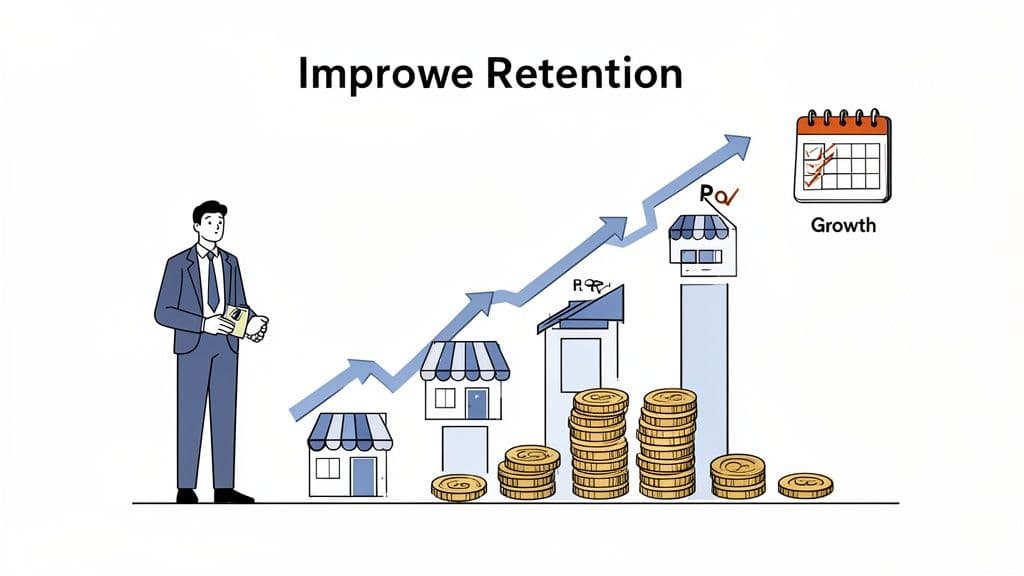
Connecting Coaching to Your Bottom Line
Good coaching isn't about tossing out generic advice; it's about making targeted improvements that show up on the P&L statement. A well-designed program creates a multiplier effect across your entire network by zeroing in on the things that actually drive financial success.
For instance, coaching helps franchisees truly master their local marketing, sharpen their sales process, and get a handle on operational costs. These aren't abstract goals. They are specific skills that directly lead to higher ticket averages and healthier profit margins. The numbers consistently prove it.
The ROI is almost hard to believe. One landmark MetrixGlobal study revealed a 529% return on investment for executive coaching programs, which many franchise frameworks are modeled after. This single stat explains why forward-thinking franchisors are all-in on models that give owners the tools for 27% YoY revenue growth and 87% net profit margins. It’s no surprise that business coaching is on track to be a $27 billion industry by 2025. You can discover more coaching statistics and insights to see just how powerful it is.
The table below breaks down the financial multiplier effect, showing the stark difference between a structured coaching system and the "business as usual" approach.
Coaching Impact: The Financial Multiplier Effect
| Metric | With Structured Coaching | Without Structured Coaching (Manual Approach) |
|---|---|---|
| Average Unit Revenue | Increased by 15-20% through optimized operations and marketing. | Stagnant or marginal growth; misses key local opportunities. |
| Franchisee Profitability | Achieved 3-6 months faster, leading to higher franchisee satisfaction. | Delayed profitability, increasing risk of franchisee failure and turnover. |
| Franchisee Retention | 90%+ retention rate due to strong support and clear growth paths. | Higher churn (10-15%), incurring significant replacement costs. |
| System-Wide Royalties | Consistent, predictable growth in royalty stream from healthier units. | Volatile and lower-than-potential royalties from underperforming units. |
| Brand Consistency | Uniform high standards, protecting and enhancing brand reputation. | Inconsistent execution, leading to customer complaints and brand erosion. |
As you can see, the choice isn't just about support—it's about building a more resilient, profitable, and scalable franchise system. The numbers speak for themselves.
From Lead Engagement to Franchisee Success
The same principles that make coaching so powerful—consistency and efficiency—are just as critical at the very start of the franchisee journey: lead generation. Just as inconsistent coaching holds back a franchisee, slow or manual follow-up with new leads absolutely tanks your conversion rates.
Think about it. The very first interaction a candidate has with your brand sets the tone for everything that follows. A delayed response screams disorganization. A prompt, professional touch communicates competence and support.
The cost of slow follow-up is enormous. A lead that receives an instant text response is exponentially more likely to engage than one who waits hours or days for a generic email. This initial engagement is the first step in a successful coaching relationship.
This is where a lightweight sales engagement layer becomes essential. Your CRM is great for storing data, but it wasn't built for the speed needed in modern franchise development. By using a tool like FranFunnel to automate that first touchpoint, you ensure every single lead gets a timely, professional, and personal message via text and email.
This automation doesn’t replace the human element; it accelerates it. It frees up your development team from repetitive tasks so they can focus on what they do best: building real relationships with qualified candidates. This seamless handoff not only maximizes your conversion rates but, more importantly, lays the foundation for a successful coaching partnership right from day one. When you attract better-fit franchisees who feel supported from their very first click, you set them—and your entire system—up for long-term success.
Exploring Different Franchise Coaching Models
Not all franchise coaching programs are built the same. Just like you wouldn’t use a single marketing message for every lead, applying a one-size-fits-all coaching approach to your franchisees is a recipe for failure. The right model depends entirely on your network’s size, maturity, and what you’re trying to achieve.
Getting this choice right is the difference between a program that drives real results and one that becomes a costly, ineffective distraction. Let's break down the most common models to see which one fits your system best.
One-on-One Executive Coaching
This is the white-glove, deep-dive approach. It's typically reserved for top-performing multi-unit operators or franchisees staring down complex, high-stakes challenges. Think of a coach working elbow-to-elbow with an owner, dissecting P&L statements, sharpening their leadership skills, or mapping out a sophisticated expansion plan.
- Best For: High-potential franchisees, those gearing up for major growth, or operators who need a targeted intervention to get over a specific business hurdle.
- Benefits: Delivers highly customized, impactful guidance that can produce a massive financial return for a single location or territory.
- Drawbacks: It’s the most expensive and least scalable model out there. Because of the heavy time commitment, it’s just not feasible for an entire network.
Scalable Group Coaching
For most franchise systems, group coaching is the most practical and scalable model, especially when onboarding new owners. In this setup, a single coach leads a small cohort of franchisees through a structured curriculum focused on the fundamentals—marketing, sales, operational efficiency.
This is a fantastic way to build a consistent knowledge base across your network. It ensures every new owner learns the "brand way" of doing things right from the start, which is critical for maintaining standards and getting them to profitability faster. A guide to running a successful group mastermind can also be an incredibly effective format, since it gets franchisees collaborating and learning from each other.
Peer-to-Peer Advisory Groups
This model taps into the most valuable asset you have: the collective wisdom of your experienced franchisees. A peer-to-peer group brings together owners from non-competing territories to share what's working, troubleshoot common headaches, and hold each other accountable. It’s a powerful way to build community and reinforce best practices organically.
- Best For: Mature networks with a solid base of successful franchisees who are open to mentoring others.
- Benefits: Extremely cost-effective, builds strong relationships between franchisees, and promotes a culture of shared success.
- Drawbacks: Can drift into chaos without a dedicated facilitator and may even lead to sharing "bad habits" if it isn't moderated properly.
The operational challenge isn't just choosing a model; it's managing it. Scheduling calls, sending reminders, and distributing materials for dozens or hundreds of franchisees quickly becomes an administrative nightmare, pulling your team away from high-value coaching activities.
The Communication Layer That Makes Coaching Scalable
No matter which model you choose, consistent communication is the engine that keeps it running. A franchisee who misses a coaching call or forgets a follow-up task gets absolutely nothing out of the program. The cost of manual follow-up is huge—it’s not just the time your team wastes, but the lost momentum and engagement from franchisees.
This is where a lightweight engagement tool shines. It’s not meant to replace your CRM, which is your system of record. Instead, it acts as a dedicated communication layer that automates all the logistical heavy lifting.
Imagine automatically sending text and email reminders for every coaching call, scheduling follow-ups, and distributing resources without anyone on your team lifting a finger. An engagement platform like FranFunnel lets you build automated communication cadences that feel personal, not robotic. This ensures every franchisee gets consistent, timely touchpoints, keeping them engaged and accountable without adding headcount. At just $249/mo per seat, it often replaces multiple tools and the need for an admin, making your coaching program both effective and affordable.
How to Build and Implement Your Coaching Program
Moving from the idea of a franchise coaching program to a real, executed strategy can feel like a massive leap. But it doesn't have to be. With a clear blueprint, you can launch a program that builds momentum and delivers value right out of the gate.
The trick is a phased rollout, one that’s focused on measurable goals and backed by smart technology.
Start With Crystal-Clear Objectives
First things first: you have to define what success actually looks like. Vague goals like “improve franchisee performance” won’t cut it. You need specific, quantifiable targets that leave no room for ambiguity.
Get granular. Think in terms of:
- Increasing Average Unit Revenue (AUR): "Our goal is to boost AUR by 15% across all coached locations within 12 months."
- Accelerating Time to Profitability: "We need to get new franchisees profitable in 12 months, down from the current average of 18."
- Enhancing Operational Consistency: "Let's improve brand standard scores by 25% system-wide."
These kinds of sharp objectives don't just guide your curriculum—they give you hard numbers to prove the program’s value to everyone from franchisees to the C-suite.
Select and Train Your Coaches
With your goals locked in, it’s time to pick the right people to lead the charge. Your coaches are the face of this program, and their credibility is everything. Look for people with a proven track record in operations, fantastic communication skills, and a genuine desire to mentor others.
Once you have your team, training is non-negotiable. It’s not enough for them to be experts in your brand’s systems; they need formal coaching skills. This is a real professional discipline. Just look at the franchise coaching industry itself—it's reshaping the $27 billion global business coaching market because it treats coaching as a science.
Data shows 73% of clients look for coach certifications, and a staggering 99% of coaches have specialized training. The average coach is juggling over 12 clients, which makes efficiency critical. That's why structured training is so vital.
Develop a Core Curriculum
Your curriculum is the playbook. It needs to be structured, scalable, and tied directly back to those objectives you set earlier. Don't fall into the trap of a one-size-fits-all manual. Instead, build modules focused on the areas that will make the biggest impact.
A great curriculum isn't just a manual; it's a dynamic resource. It should include standardized playbooks, video tutorials, and performance checklists that coaches and franchisees can use to track progress and stay aligned.
Think about building modules around key business drivers like local marketing, financial management, and team leadership. You could even include modules on specific customer acquisition tactics, like exploring strategies for growing a tutoring business, since many of those principles transfer to other local service models.
These practical, hands-on elements make the coaching tangible and immediately useful for your franchisees. For more on structuring this kind of content, our guide on creating an effective franchise sales training program is a great place to start.
Phased Rollout and Tech Integration
Finally, resist the temptation to launch your program to the entire network all at once. Start small. A pilot group of engaged, eager-to-participate franchisees is your best bet.
This phased approach lets you work out the kinks, gather honest feedback, and—most importantly—collect early success stories. Those wins will build the excitement you need for a wider rollout.
This is also the perfect time to bring in technology to handle the grunt work. A coach’s time is far too valuable to be spent scheduling meetings, sending reminders, or chasing down franchisees. The cost of that slow, manual follow-up is immense, draining both time and program momentum.
This is where a lightweight sales engagement layer becomes indispensable. Tools like FranFunnel use text and voice AI to automate these "low stakes" parts of the coaching funnel. You can set up simple workflows that:
- Automatically schedule coaching calls via text.
- Send pre-call resources and reminders.
- Confirm appointments without anyone lifting a finger.
By automating the administrative drag, you ensure your program runs smoothly and consistently across dozens of locations without adding headcount. You free up your coaches to do what they do best: have high-impact conversations that drive franchisee success.
Measuring Success and Proving Program Value
If you can’t measure it, you can’t manage it. A franchise business coaching program without clear metrics is just an expensive conversation. To justify the investment and actually drive improvement, you have to get serious about data.
This isn't about surface-level stats. It's about tracking the KPIs that truly prove the program is making a difference for your franchisees and your bottom line. When you can walk into a stakeholder meeting with hard numbers, you're not just asking for buy-in; you're proving the program's tangible value.
The process below breaks down how to build a program that delivers real, measurable results—from setting your goals upfront to using automation to scale your impact.
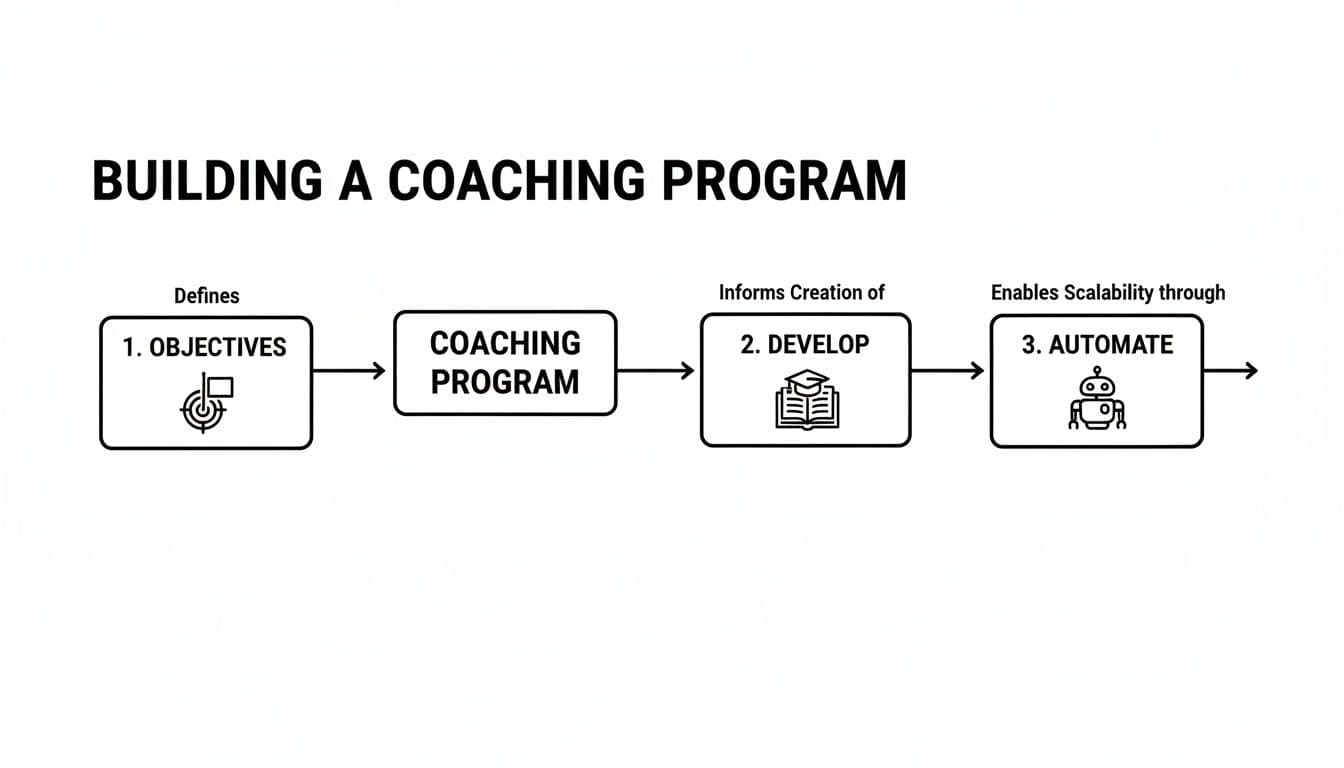
As you can see, successful coaching isn’t accidental. It’s built on a foundation of clear goals and powered by smart, efficient processes that ensure every franchisee gets consistent, high-impact support.
KPIs That Actually Matter
Forget the vanity metrics. Your focus should be on a handful of powerful numbers that connect coaching activities directly to financial outcomes and franchisee health.
Here are a few essentials to start tracking:
- Average Time to Profitability: How fast does a new franchisee start making money? A solid coaching program should slash this timeline by helping owners sidestep common rookie mistakes. You calculate this by tracking the months from opening day until a unit hits consistent positive cash flow.
- Year-Over-Year Revenue Growth Per Unit: This shows the program's effect on your established franchisees. By comparing the revenue of coached units to non-coached ones (or just historical averages), you can see the direct financial lift your coaching provides.
- Franchisee Net Promoter Score (NPS): Revenue is king, but satisfaction is the leading indicator of retention and long-term success. A simple NPS survey asking, "How likely are you to recommend this coaching program to another franchisee?" gives you a powerful, quantifiable pulse on sentiment.
The table below breaks down these key metrics and others that can help you paint a full picture of your program's health and impact.
Key Performance Indicators for Franchise Coaching
| KPI | What It Measures | Industry Benchmark |
|---|---|---|
| Time to Profitability | The time it takes a new unit to become cash-flow positive. | 12-18 months (varies by industry) |
| YOY Revenue Growth | Percentage increase in revenue per coached unit, year over year. | 5-10% above system average |
| Franchisee NPS | Likelihood of franchisees to recommend the coaching program. | Score of 50+ is considered excellent |
| Franchisee Retention Rate | Percentage of franchisees who renew their agreements. | 90% or higher |
| Local Marketing ROI | Return on investment for marketing spend by coached franchisees. | 3:1 to 5:1 ratio |
Tracking these KPIs transforms coaching from a "nice-to-have" into a hard-nosed business driver. When you can say, "Our coaching program cut time-to-profitability by four months," you’ve made an undeniable case for its value.
For a deeper dive into the financial side of tracking success, check out our guide on how to measure marketing ROI, as many of the same principles apply here.
Connecting Early Engagement to Long-Term Success
Here’s something most people miss: proving your program’s value doesn’t start when a franchisee opens their doors. It starts the moment they become a lead.
Think about it. The success of a coaching program is directly tied to the coachability of the candidates you bring into the system in the first place.
This is where your top-of-funnel data becomes a crystal ball. Early engagement metrics—like speed-to-lead and meeting conversion rates—tell you a lot. A candidate who is responsive and engaged from the very first text is almost always a more engaged and coachable franchisee down the line.
The cost of slow, manual follow-up at this stage is huge because you’re accidentally filtering out your best people—the decisive, motivated ones who don't wait around.
By using a simple engagement tool like FranFunnel, you ensure every single lead gets an instant, professional response. This text-first, automated outreach doesn't just boost your conversion rates; it helps you attract better-fit franchisees who are primed for success in a structured coaching environment from day one.
Common Pitfalls in Franchise Coaching to Avoid
Even the sharpest franchise coaching programs can fail. They often fall into the same predictable traps that don't just weaken the program—they can break a franchisee's trust and tank your network's performance. You have to get ahead of these mistakes to build a coaching culture that actually gets results.
The business coaching industry is set to hit $27 billion by 2025, growing 11-16% each year. This isn't just a trend; it's a reflection of how smart franchisors are using structured coaching to grow. In a sector that added over 210,000 jobs last year and boasts more than 792,000 franchise units in the U.S., the cost of bad franchisee support is massive. If you want to see just how high the stakes are, check out this piece on the growth of business coaching franchises.
The Dangers of a One-Size-Fits-All Approach
The most common mistake? Handing every franchisee the same generic playbook.
A brand-new owner in their first six months needs something completely different from a seasoned multi-unit operator who's trying to expand. Pushing the same coaching script on both of them is lazy, ineffective, and frankly, tells them you’re not listening.
The Fix: Segment your coaching. Create different tracks for different franchisee stages:
- Onboarding Track: All about mastering the basics and hitting profitability fast.
- Growth Track: For experienced owners ready to scale, optimize, or open another location.
- Turnaround Track: A direct, focused intervention for stores that are struggling.
The Corrosive Effect of Inconsistent Delivery
Inconsistency is the silent killer of otherwise good coaching programs.
When one franchisee gets a weekly call from their coach and another one gets a single check-in all quarter, you've got a problem. It breeds resentment and makes the whole system feel chaotic and unfair. It kills the program’s credibility and the franchisee’s belief in your support.
This is the exact same problem that plagues franchise development: inconsistent lead follow-up. Just like letting a hot lead go cold kills a potential deal, sporadic coaching damages the relationship with the owners you already have. The cost of slow, manual follow-up is enormous in both cases.
The answer for both sales and operations is the same: blend smart automation for consistency with a human touch for real impact. You need a system that makes sure every franchisee gets the right touchpoint at the right time. Every time.
The Fix: Use technology to standardize your communication. An engagement platform can automate reminders for coaching calls, send out agendas, and schedule follow-ups through text and email. It creates a consistent, professional experience for everyone without bloating your payroll.
A simple tool like FranFunnel can handle this heavy lifting. It frees up your coaches to focus on having meaningful conversations instead of getting bogged down in admin work. You get total reliability that still feels personal, not robotic.
Your Franchise Coaching Questions, Answered
When franchisors start thinking about building a formal coaching program, a few common questions always seem to pop up. Let's get straight to the practical answers you need to figure out your next steps.
How Much Should a Coaching Program Cost?
The truth is, costs are all over the map. If you build it in-house, your main expense might just be a coach's salary. On the other hand, bringing in an external firm can run anywhere from a few thousand to tens of thousands of dollars a month.
But focusing only on the cost is the wrong way to look at it. The real question is how that investment stacks up against the ROI you’ll see from higher royalties and fewer franchisees leaving the system. We always suggest starting small with a pilot program. Prove the financial model works, then go all in.
Can We Just Use Our CRM to Manage Coaching?
It’s tempting, but probably not a great idea. Your CRM is fantastic as a system of record—it’s the filing cabinet where all your data lives. But it wasn't built for the kind of fast, multi-channel communication that actually gets a franchisee’s attention.
Think about it: a franchisee who misses an important coaching call because your email got buried in their inbox isn't getting the support they need. The whole program's value disappears in that moment.
That’s exactly why so many brands add a lightweight engagement tool like FranFunnel on top of their CRM. It handles the text-first communication and automation for things like reminders and follow-ups, then syncs everything back to the CRM. You get the best of both worlds: lightning-fast engagement and a clean, reliable database.
A classic mistake is trying to make your CRM do a job it wasn't designed for. You wouldn't use a spreadsheet to run a payroll system. Don't let slow, manual communication that franchisees just ignore undermine your entire coaching program.
What’s the First Step if We Have Limited Resources?
If you're on a tight budget, start with a peer-to-peer mentorship program. It's a low-cost, high-impact move.
Just identify your top-performing franchisees—the ones who always hit their numbers and have great attitudes—and incentivize them to mentor a small group of new or struggling owners. You're not just sharing best practices; you're building a stronger, more connected community from the ground up.
And you don't need a huge team to manage it. You can use automated texting tools to schedule the calls and send out reminders, which keeps the administrative work off your plate. This ensures everyone stays in the loop with consistent touchpoints, all without adding headcount.
Ready to make sure every coaching touchpoint is timely, personal, and actually gets seen? FranFunnel is the text-first automation layer that guarantees your franchisees stay engaged and supported. See how it works by visiting https://www.franfunnel.com.
Further reading: FranFunnel for franchise brands.