So you're thinking about franchising your business. Before you get bogged down in legal documents or marketing budgets, let's talk strategy. This is the foundation for everything that comes next.
A solid franchise development strategy isn't just about finding people to buy into your brand; it's a complete system for finding the right people and setting them up to win.
Mapping Your Franchise Growth Strategy
A common mistake I see is focusing solely on recruiting new blood. While that's obviously a huge piece of the puzzle, you can't ignore the goldmine you might already be sitting on: your existing, successful franchisees. A smart strategy balances bringing in fresh talent with helping your current partners expand.
The numbers back this up. The Annual Franchise Development Report shows that while 59% of brands are boosting their spending on franchise development, they aren't putting all their eggs in one basket. They expect 69% of new locations to come from brand-new franchisees, but a significant 31% will come from existing owners reinvesting in the system. That's a powerful vote of confidence.
This dual focus is a sign of a healthy, mature franchise system. You need to be thinking about both from day one.
Before we go any further, it's helpful to see how all the pieces fit together. Franchising is a multi-stage journey, and understanding each phase helps you prepare for what's ahead.
Key Phases of the Franchise Development Process
Here’s a high-level look at the core stages you'll navigate. Think of this as your roadmap from a great business idea to a thriving, multi-unit franchise system.
| Phase | Primary Goal | Key Activities |
|---|---|---|
| 1. Strategic Planning | Validate the concept & build the foundation. | Define ideal franchisee profile, analyze markets, create financial models. |
| 2. Legal & Compliance | Create the legal framework for franchising. | Draft Franchise Disclosure Document (FDD), register with states. |
| 3. Marketing & Lead Gen | Attract qualified franchisee candidates. | Build franchise website, run ad campaigns, attend trade shows. |
| 4. Sales & Qualification | Guide candidates through the discovery process. | Initial calls, FDD review, validation calls with existing franchisees. |
| 5. Onboarding & Training | Prepare new franchisees for a successful launch. | Site selection support, comprehensive training programs, grand opening marketing. |
Each of these phases is a world unto itself, but seeing them laid out like this helps connect the dots. The planning you do in Phase 1 directly impacts the quality of leads you get in Phase 3 and the success of your new partners in Phase 5.
Defining Your Ideal Market and Candidate
A huge part of your initial strategy is figuring out where you're going to grow and who you're going to grow with. This isn't a guessing game. It requires a hard look at market data to find territories with real demand and a competitive landscape you can actually win in.
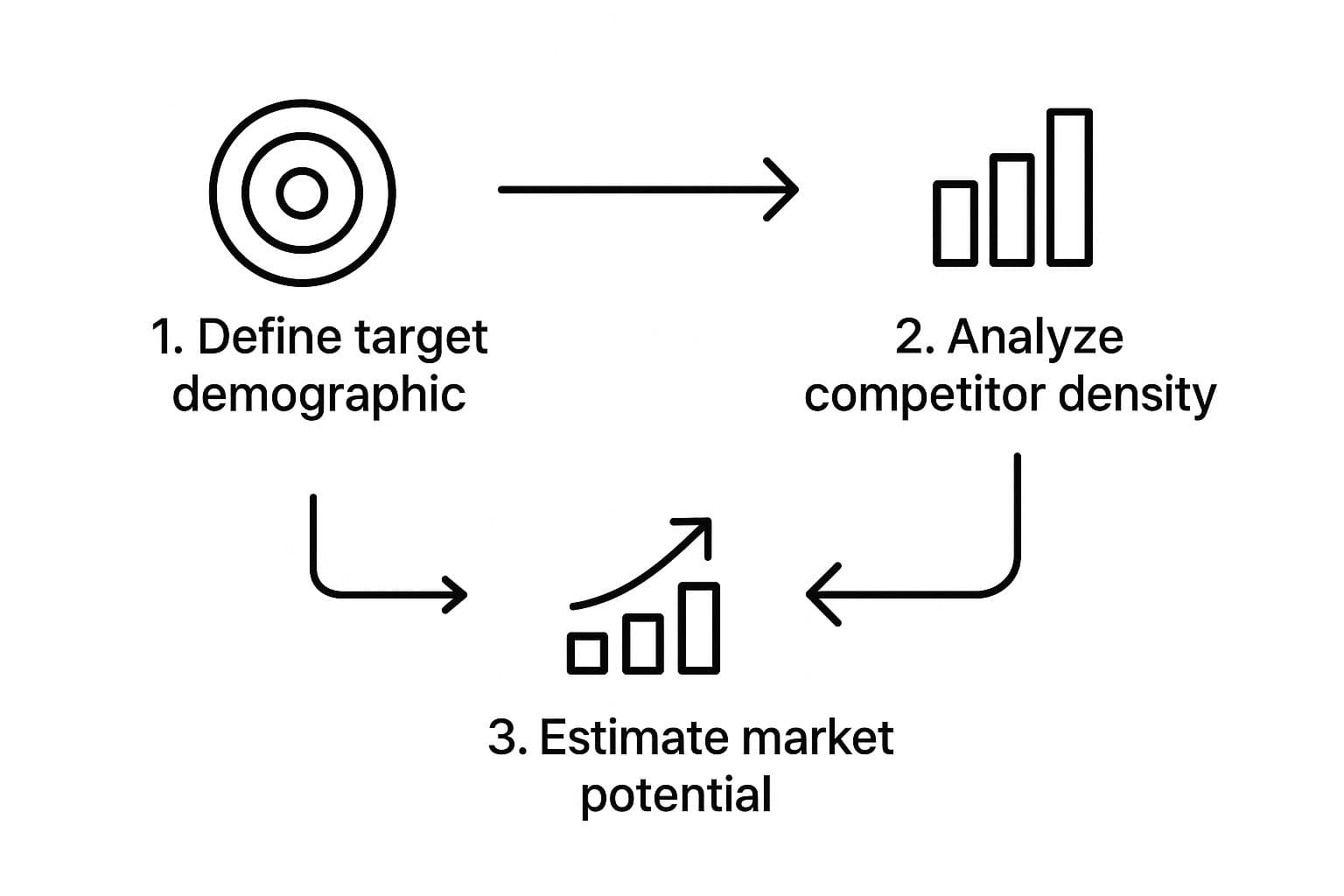
When you have a clear, data-driven profile of your ideal market and franchisee, your entire recruitment process becomes sharper and more efficient. You stop wasting time and money chasing opportunities in the wrong places or talking to the wrong people. It’s about being methodical, not just opportunistic.
Your strategy must be more than just a document; it's a living guide that informs every decision you make. It ensures that as you grow, you're not just getting bigger—you're getting stronger by adding the right people in the right places.
Building this roadmap is the most critical work you'll do at the start. For a much deeper dive into the nuts and bolts, check out our complete guide to building a successful franchise development plan. This initial planning sets the stage for the entire journey, from assessing your brand's readiness to celebrating that first new grand opening.
Building Your Franchise Legal and Operational Foundation
Alright, you've nailed down your strategy. Now it's time to build the actual scaffolding that will support your entire franchise system. This is where your business concept stops being just an idea and becomes a real, legally sound, and operational entity. It’s all about creating the core documents that define the relationship, manage expectations, and keep everything consistent.
Getting this stage of the franchise development process right is critical. It can feel a bit overwhelming, but solid legal and operational documents prevent a mountain of headaches down the road. These aren't just legal busywork; they're powerful tools for both sales and day-to-day operations.
Crafting the Franchise Disclosure Document
The Franchise Disclosure Document (FDD) is the absolute centerpiece of your legal framework. This is a massive, detailed document that gives prospective franchisees everything they need to know about your business. We're talking company history, leadership bios, all the fees, initial investment breakdowns, and the full scope of their contractual obligations.
Think of the FDD as the ultimate transparency tool. It’s where your serious candidates go to dig in. For example, when Abby Smayda was looking into a barre3 franchise, she mentioned using the FDD to get into the "nitty gritty of the business." It’s where people find the hard facts that let them make an informed “yes” or “no.”
A well-written FDD does more than just check a legal box; it has to be compelling. You have to follow the strict rules laid out by the Federal Trade Commission (FTC) across 23 required "Items," but the story you tell within that structure can either build confidence or create confusion.
Key Takeaway: The FDD isn't just a legal hurdle. It's your first real chance to tell your brand’s story in a structured, honest way that builds trust with the candidates you actually want.
Developing the Franchise Agreement and Operations Manual
While the FDD discloses information, the Franchise Agreement (FA) is the legally binding contract. This is the document that officially defines the partnership between you (the franchisor) and the franchisee for the entire length of your relationship.
This is where you lock in all the crucial details, including:
- The term of the agreement and any rights for renewal.
- All the fees, from the initial franchise fee to ongoing royalties and marketing fund contributions.
- Territory rights, which spell out a franchisee's exclusive or protected area.
- The training and support you are contractually obligated to provide.
- Termination clauses and what happens after the agreement ends.
As you hammer out your franchise agreement and other legal docs, it's smart to cross-reference your work with a comprehensive contract review checklist to make sure you haven’t missed anything.
At the same time you're working on the legal side, you absolutely must create a detailed operations manual. This is the bible for your business. It’s the playbook that ensures a customer in Boise has the exact same brand experience as a customer in Miami. It standardizes everything—from service scripts and recipes to hiring best practices and how to close up shop at night.
A rock-solid operations manual is the key to scaling your brand and keeping it consistent. It's what truly empowers your franchisees to take your model and replicate its success.
Designing Your Franchisee Recruitment Engine
With your legal and operational house in order, it’s time to shift gears. Now the real growth begins—finding the right people to become the face of your brand in new markets.
This isn't about casting the widest net possible and hoping for the best. That’s a recipe for wasted time and mismatched partners. Instead, you need to build a sophisticated, intentional recruitment engine. It's a system designed to attract, engage, and ultimately convert your ideal franchisee candidates.
Think of it as moving beyond a single source of leads to creating a multi-faceted strategy. Your goal is simple: be wherever your perfect candidate is looking, whether that’s a franchise portal, their LinkedIn feed, or an industry tradeshow. A strong recruitment engine is what keeps your growth pipeline full and your development on track.
Defining Your Ideal Franchisee Persona
Before you spend a single dollar on marketing, you absolutely have to know who you're talking to. A detailed franchisee persona is your north star for every ad you run and every email you send. This goes way beyond basic demographics like age and income.
You need to dig deeper into the attributes that truly matter for success in your system:
- Professional Background: Are you looking for seasoned C-suite executives ready for their next chapter? Passionate industry veterans who live and breathe your sector? Or maybe hungry entrepreneurs from a completely different field who bring fresh energy?
- Personal Values: What are the non-negotiables? A childcare franchise like Lightbridge Academy, for instance, needs someone who is genuinely committed to educational excellence, not just the bottom line.
- Financial Acumen: What level of business and financial savvy is required? Be honest about what it takes to manage cash flow and P&Ls in your model.
- Leadership Style: Does your model require a hands-on owner-operator, or is it better suited for an empire-builder who excels at delegating daily tasks?
Nailing this persona is critical. It allows you to craft messages that don't just get seen—they get felt. You start attracting candidates who are not only financially qualified but are a perfect cultural fit for your brand.
Building Your Multi-Channel Lead Strategy
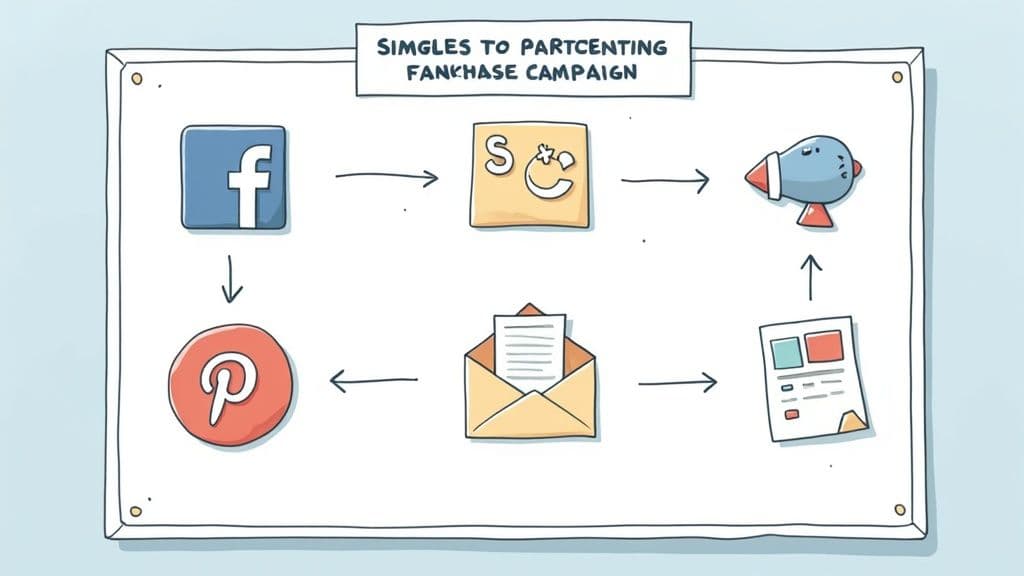
Once you know exactly who you're targeting, you can build a smart strategy to reach them. A balanced approach almost always involves a mix of inbound (drawing them to you) and outbound (actively seeking them out) tactics. As you start designing your recruitment engine, a solid grasp of sales fundamentals is a must. If you need a refresher, resources on understanding sales leads and lead generation are a great place to start.
Pro Tip: Never, ever rely on a single source for your leads. Diversification is your best defense against market shifts and algorithm changes. If your portal leads suddenly dry up, your broker network or social media ads can pick up the slack, ensuring your development efforts never stall.
Some of the most common and effective recruitment channels include:
- Franchise Portals: These are the dedicated marketplaces where active franchise seekers are already looking.
- Digital Marketing: This includes everything from targeted ads on LinkedIn and Facebook to content marketing and SEO that captures organic interest.
- Franchise Brokers: These are third-party consultants who act as matchmakers, connecting qualified candidates with the right franchisors.
- Referral Programs: Don't forget the low-hanging fruit! Incentivize your existing franchisees and even corporate employees to refer great people.
A multi-channel strategy isn't just a nice-to-have; it's vital for sustained, predictable growth. For a much deeper dive into these tactics, check out our in-depth article on franchise development marketing.
The timing couldn't be better. The economic climate for franchising is exceptionally strong, making this a prime moment to invest in a world-class recruitment engine. The global sector is showing incredible resilience.
In the U.S. alone, total franchise output is projected to rocket past $936.4 billion. That's a 4.4% increase—a growth rate that significantly outpaces the broader U.S. economy's forecast. Hotbeds like the Southeast and Southwest are expanding even faster, making them prime targets for ambitious brands.
Getting to Know Your Future Franchisee
So, the leads are rolling in and your pipeline is buzzing. This is where the real work begins—and it's less about marketing and more about building a genuine relationship. You're shifting from casting a wide net to carefully guiding the right people from initial curiosity to a signed agreement.
Think of this phase not as a sales funnel, but as a mutual evaluation. Your job is to be an open book, providing total transparency. At the same time, you're figuring out if the candidate has what it takes to succeed: the financial footing, the operational savvy, and—just as important—the right cultural vibe.
Every conversation and every touchpoint from here on out is designed to build trust on both sides.
The First Handshake: Qualification and the FDD
The first real conversation after a lead expresses interest is the initial qualification call. This is your first gut check. You're confirming the fundamentals: Do they have the capital? Is their preferred territory even available? And why do they want to join your brand, specifically?
A great first call sets the tone for everything that follows. Abby Smayda, a barre3 franchisee, said her first chat felt like a "safe space to explore" without any pressure. That's exactly the feeling you want to create—supportive, informative, and laser-focused on finding a good fit for everyone.
Once you've established that baseline connection, it’s time to introduce the Franchise Disclosure Document (FDD). This is a huge moment. The FDD contains all the nitty-gritty details a candidate needs to do their homework. Your role here isn't to sell; it's to be a resource. Answer their questions, even the tough ones, and help them navigate the document.
The Main Event: Designing an Impactful Discovery Day
If a candidate makes it this far, they’re serious. The Discovery Day is the grand finale of their evaluation journey. It’s an immersive, all-access pass where your top prospects meet the executive team, see your support systems in action, and get a real feel for your company culture.
This is your chance to bring the brand to life in a way a document never can.
Whether you host it virtually or in person, a killer Discovery Day needs a solid game plan:
- Meet the Shot-Callers: Give candidates direct access to your founders and key leaders. That level of transparency builds incredible trust.
- Show Off Your Support: Introduce them to the actual people they'll be working with—from the marketing department to the operations and training crews.
- Lean into Tough Questions: A candidate asking challenging questions is an engaged one. You want them to dig deep, so create an environment where they feel comfortable doing it.
Ultimately, Discovery Day is about answering one simple question for both you and the candidate: "Can we really see ourselves in a successful, long-term partnership?" Everything on the agenda should point toward a confident "yes."
The Final Hurdles: Validation and Screening
Before anyone gets close to signing, you have to let your existing franchisees do the talking. That means setting up validation calls—where candidates can speak directly with current owners, without you listening in. It's the most powerful form of social proof you have.
Honestly, a network of happy, successful franchisees is your single greatest sales tool. Hearing about the daily grind, the challenges, and the rewards straight from a peer is often the final piece of the puzzle for a prospect.
To ensure you're bringing the right partners into your system, it’s crucial to have a clear and consistent evaluation framework. The table below outlines key areas to assess during your screening process.
Franchise Candidate Evaluation Checklist
| Evaluation Area | Key Question to Ask | Red Flag to Watch For |
|---|---|---|
| Financial Stability | "Can you walk me through your plan for funding the initial investment and covering personal expenses for the first 12-18 months?" | Vague answers about funding sources or an unrealistic personal budget. |
| Operational Capability | "Describe a time you had to build and lead a team to achieve a difficult goal. What was your specific role?" | A lack of hands-on management experience or a preference for delegating everything. |
| Cultural Fit | "What part of our brand's mission and values resonates most with you, and why?" | Focusing only on the financial opportunity without any passion for the brand itself. |
| Grit & Resilience | "Tell me about a significant professional setback. How did you handle it and what did you learn?" | Blaming others for failure or showing an inability to learn from mistakes. |
| Coachability | "If we gave you feedback that contradicted your own idea, how would you respond?" | Defensiveness or an unwillingness to follow a proven system. |
Using a structured checklist like this helps remove emotion from the decision and ensures you're comparing all candidates against the same high standards.
Finally, the formal screening process confirms all the details you’ve gathered. A comprehensive guide to the pre-franchisee screening process can provide some great best practices here. This final step is your last chance to be absolutely sure you’re bringing the right person into your family—someone who is ready to sign on the dotted line and start their journey.
Ensuring a Successful New Franchise Launch

The franchise agreement is signed, the ink is dry, and the celebrations are over. Now the real work—and the real partnership—begins.
This transition from a promising candidate to a thriving new franchisee is arguably the most critical phase in the entire franchise development process. Get this wrong, and you can sour the relationship from day one. A rushed or disorganized onboarding experience kills the initial excitement and puts long-term success at risk.
But a structured, supportive launch process does more than just get a new location open. It builds a rock-solid foundation of trust and competence, turning a new owner's enthusiasm into genuine, lasting confidence. This is your chance to equip them with everything they need to hit the ground running and become a true champion for your brand.
From Site Selection to Grand Opening
The journey to opening day is a collaborative sprint, not a solo mission. The best franchise systems I've seen master the handoff from the development team to a dedicated new-franchisee support manager. It's a seamless transition that shows the new owner they're still the priority.
For example, after signing her agreement with barre3, franchisee Abby Smayda was immediately introduced to the Manager of New Studio Development. That manager then connected her with a specialized real estate partner who knew the brand's needs inside and out.
This is the kind of high-touch, structured support that makes all the difference, especially during the intimidating stages like site selection and build-out. A dedicated support system should guide the franchisee through every key milestone:
- Real Estate and Construction: Give them access to expert brokers who get your brand’s specific site requirements. Just as important, help them manage the often-chaotic build-out timeline.
- Comprehensive Training: This has to be a two-part punch. First, corporate training on operations, brand standards, and the "why" behind your systems. Second, hands-on, in-the-field training at a high-performing location.
- Grand Opening Marketing: Develop—and help fund—a localized marketing blitz. You need to generate buzz and drive traffic from the moment the doors open to ensure a strong start.
Key Insight: A well-executed onboarding process transforms the franchisee from a buyer into a true partner. The level of support you provide here sets the tone for the entire relationship and directly impacts their early performance and profitability.
Fostering Long-Term Success and Advocacy
This initial support can't just stop once the "Open" sign is lit. The first six to twelve months are make-or-break. This is when you reinforce best practices and help them build operational muscle memory. Ongoing guidance, regular performance reviews, and easy access to your support team are non-negotiable.
This phase is where your brand's true value shines through, proving you're invested in their success far beyond the initial franchise fee.
Brands that nail this, like Lightbridge Academy which is aiming for 20+ new locations in the coming years, understand a powerful truth: successful franchisees become your most effective marketing tool. A happy, profitable owner is the best validation you can possibly offer the next candidate in your pipeline.
This dedication to franchisee success is happening in a booming market. The global franchise industry has surpassed an incredible $890 billion and is projected to grow by nearly 10% annually. Innovation is everywhere, with new and exciting franchise categories constantly emerging. To see just how powerful this growth is, explore the latest industry statistics and get a sense of the opportunity at hand.
Your Top Franchise Development Questions, Answered
Thinking about franchising your business? It’s a huge step, and naturally, you’ve got questions. Getting straight answers is the only way to move forward with real confidence.
Let's cut through the noise and tackle the most common questions we hear from aspiring franchisors about timelines, costs, and what it really takes to get started.
How Long Does It Take to Franchise My Business?
This is usually the first question on everyone's mind. While there's no one-size-fits-all answer, a good rule of thumb is four to six months to get from "we should franchise" to being legally ready to sell your first location. This assumes you’re focused and have your team in place.
This timeline is mostly eaten up by creating your core legal and operational documents. The Franchise Disclosure Document (FDD) is a beast of its own—a critical legal document that requires a sharp franchise attorney and your deep strategic input. Rushing this is a rookie mistake that can lead to legal nightmares and scare off the best candidates.
At the same time, you'll be building out your operations manual. Think of it as the bible for your entire franchise system. A detailed, crystal-clear manual is what ensures every franchisee can replicate your success and maintain the quality your customers expect.
What Are the Real Costs to Get Started?
Budgeting is, of course, a huge piece of the puzzle. The initial, one-time investment to properly set up your franchise system typically lands somewhere between $50,000 and $150,000. Where you fall in that range depends on how complex your business is and the experts you bring on board.
This upfront cost breaks down into a few key areas:
- Legal Fees: This will be your biggest expense. It covers the drafting of your FDD and Franchise Agreement by a lawyer who lives and breathes franchise law. Don't skimp here.
- Consulting Fees: Many first-time franchisors hire a development consultant. They’re invaluable for guiding you through the strategic planning, financial modeling, and operational blueprint.
- Operations Manual Development: Creating a world-class manual often means bringing in outside help to make sure it’s franchisee-proof—clear, comprehensive, and effective.
- Initial Marketing Setup: This covers the essentials for finding your first franchisees, like building a recruitment website, creating marketing materials, and firing up your first lead generation campaigns.
A word of hard-won advice: trying to cut corners on legal and ops development is a classic blunder. Investing in top-tier help from day one will save you an incredible amount of money and headaches down the road. It’s the foundation you build everything on.
How Fast Should I Follow Up with New Leads?
Once you’re officially selling franchises, speed is everything. The second a potential franchisee hits "submit" on your form, the clock is ticking. Loudly. All the data shows that the first brand to make a real, meaningful connection is the one that dramatically increases its odds of closing the deal.
Your goal should be to make contact within five minutes. Yes, five minutes. It might sound aggressive, but an instant text or email shows the candidate you’re serious and that they’re a priority. Wait a few hours, and you’ve practically invited your competitors to swoop in.
If your team is struggling to hit this mark, it's time to sharpen your process. Take a look at these lead follow-up best practices built specifically for franchising. That first interaction sets the entire tone for what could be a decades-long partnership.
Ready to stop losing leads and start having more conversations with qualified candidates? At FranFunnel, we help brands respond instantly, get noticed, and win more franchise deals. Our automated follow-up system ensures no lead goes cold, boosting your response rates and turning more inquiries into owners.
See how FranFunnel can transform your franchise development process.
Further reading: franchise development marketing and franchise lead engagement.