A successful franchise marketing strategy isn't about the franchisor dictating from on high. It’s a partnership. The real magic happens when you blend the power of a national brand with the smart, on-the-ground execution of your local franchisees.
It's about creating an ecosystem where everyone wins—building a plan that defines your ideal partners and customers, establishes a fair brand fund, and guides without stifling that local creative spark.
Building Your Modern Franchise Marketing Foundation
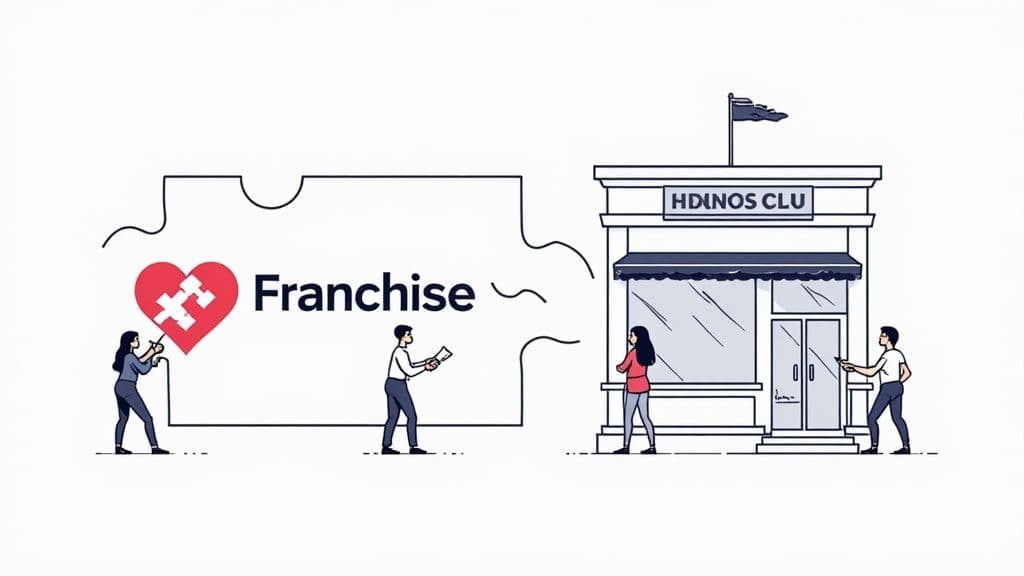
The days of a rigid, one-size-fits-all franchise marketing strategy are long gone. Dropping a single national campaign into every unique market and expecting it to stick is just lazy—and it doesn’t work.
Today’s powerhouse franchise systems are built on a strong partnership between corporate and the owners on the front lines. This first stage is all about creating the blueprint for that partnership to actually work.
Defining Your Dual Audience
Before you spend a dime on marketing, you have to know exactly who you're talking to. And I don’t mean a vague demographic sketch. A killer franchise strategy needs two crystal-clear personas:
- Your Ideal Franchisee Profile: Who is the perfect person to run one of your locations? Are they a seasoned operator looking to add another unit, or a first-time business owner full of passion? You need to know their financial picture, their operational chops, and what they want to achieve. This is absolutely essential for your franchise development marketing.
- Your Ideal End Customer Profile: Once you have a franchisee, who do they need to attract? This requires digging deep into the behaviors, pain points, and preferences of the people who will actually buy your stuff.
Creating these profiles isn’t just a thought exercise. Every marketing decision you make flows from here.
Think about a quick-service restaurant (QSR) franchise. Their ideal franchisee might have previous restaurant management experience. Meanwhile, their ideal customer could be a busy working parent, aged 30-45, who needs convenient, healthy meal options for their family.
See the difference? This dual focus keeps your messaging sharp. Your ads for new franchisees will talk about ROI and operational support. Your local ads will focus on making that parent's life easier.
Structuring a Fair and Effective Brand Fund
Ah, the national advertising fund. It's often a source of friction, but it doesn't have to be. To build a solid foundation, the brand fund needs to be transparent and fair. Franchisees have to see it as an investment that delivers a real return, not just another tax.
A well-managed brand fund acts as a force multiplier. It pools resources to pull off high-impact brand-building activities that a single franchisee could never afford—like major media buys or celebrity endorsements—which lifts the value of every single location.
The key is balance. The fund should cover big-picture brand initiatives while also arming franchisees with assets they can actually use for their local marketing. We're talking professionally designed social media templates, pre-approved ad copy, and high-quality video they can run themselves.
And this investment is more critical than ever. The total franchise output in the U.S. is projected to blow past $936.4 billion, a 4.4% jump from last year. Unsurprisingly, the average franchise budget has also climbed to around $1.02 million, with a heavy focus on lead generation and tech. If you want to dive deeper, you can explore the latest franchise economic insights to see this trend in action.
Establishing Clear and Flexible Brand Guidelines
Finally, your foundation needs guardrails. But think of them less as a restrictive rulebook and more as a helpful playbook. The goal is to keep the brand consistent across the entire network without crushing the local entrepreneurial fire that makes franchising so powerful in the first place.
Your guidelines should clearly define the non-negotiables:
- Visual Identity: Logos, color palettes, and fonts.
- Brand Voice: The personality and tone of your communications.
- Core Messaging: The key value propositions and taglines.
By providing this strong central framework, you give franchisees the confidence to apply the brand standards to their local market in a way that feels authentic and effective. It ensures every customer gets a consistent experience, no matter which location they visit.
Mastering Your Local and Digital Marketing Mix
A winning franchise marketing plan isn't about choosing between national brand-building and local, on-the-ground efforts. It’s about making them work together. The real magic happens when you blend the authority of your corporate brand with the authentic, local voice of your franchisees.
But that’s where most franchisors get stuck. How do you split the budget? How do you empower franchisees without losing brand control? The key is moving away from old-school thinking and toward a more balanced, ROI-focused approach that gives local marketing the resources it deserves.
This data here shows you exactly why a one-size-fits-all national campaign just doesn't cut it anymore.
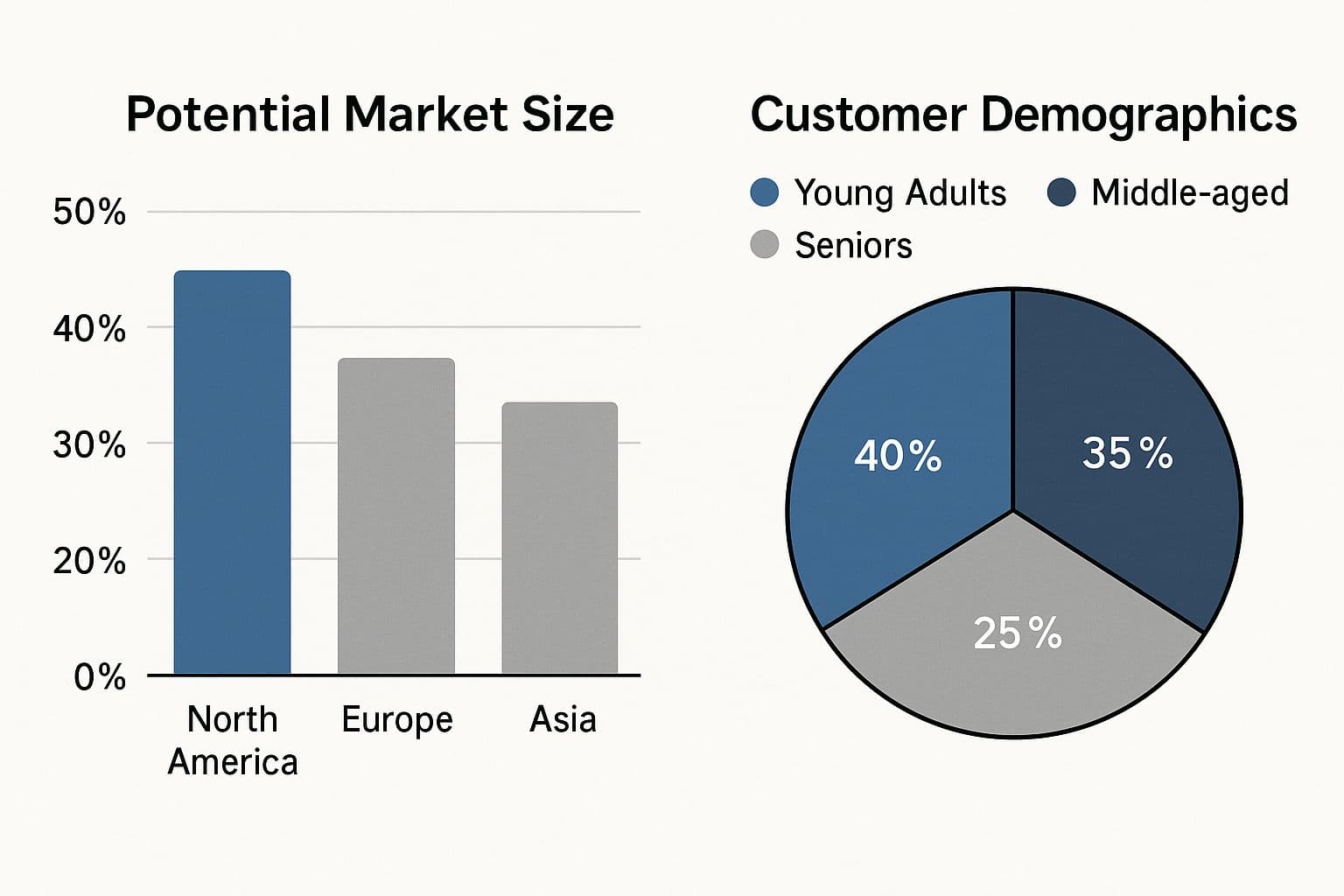
You can see clear differences in market potential from one region to another, and even how customers are clustered. This is proof that your biggest opportunities are often hyperlocal, demanding a strategy that can adapt from one territory to the next.
Striking the Optimal Budget Balance
For years, the standard playbook for many franchise systems was a 70/30 split: 70% of the marketing budget went to broad, corporate-led digital campaigns, and the remaining 30% was earmarked for local marketing.
But the game has changed. Top-performing franchises are flipping that script, moving toward a 60/40 split, with 40% of the budget now fueling local, grassroots efforts. Why? Because it drives better leads and a stronger ROI. This hybrid model gets you the best of both worlds—the wide net of digital ads combined with the trust and connection that only genuine community engagement can build.
At the end of the day, your franchisees care most about driving traffic to their specific location. Big national campaigns are great for building brand equity, but they have to be designed in a way that franchisees can easily grab and run with in their own backyard.
Below is a table that breaks down how this budget shift reallocates resources toward what truly drives local growth.
Franchise Marketing Budget Allocation Models
| Focus Area | Traditional Model (70/30 Split) | Modern Model (60/40 Split) | Key Activities |
|---|---|---|---|
| National Brand Fund | 70% | 60% | Corporate website, national PPC & SEO, brand-level social media, PR. |
| Local Marketing Fund | 30% | 40% | Local SEO (GBP), geo-fenced ads, community events, local partnerships, franchisee social media. |
This shift isn't just about moving money around; it's a strategic decision to invest more heavily in high-intent, local activities that directly translate into foot traffic and sales for each franchisee. It recognizes that modern marketing wins on the local level.
Creating a Replicable Local Marketing Playbook
One of the biggest mistakes a franchisor can make is telling franchisees to "go do local marketing" without showing them what that actually means. You can't just set rules; you have to provide tools. The best way to do this is with a simple, proven playbook.
Imagine a national wellness franchise that wants to scale its local partnership program. Instead of leaving it up to chance, the corporate team develops a straightforward playbook.
It could include things like:
- A "Top 10" Local Partner Prospect List: This isn't generic. It’s a curated list of non-competing businesses like chiropractors, health food stores, and corporate wellness managers that are perfect allies.
- Plug-and-Play Outreach Templates: Pre-written emails and call scripts that franchisees can use immediately, explaining the mutual benefits of a partnership.
- Proven Co-Branded Offer Examples: Showcasing what works, like a "Wellness Week" discount for a partner's employees or a shared booth at a community health fair.
- A Simple Tracking Sheet: A basic spreadsheet where owners can log their outreach and see their results, keeping them motivated and organized.
This simple system takes the guesswork out of local marketing. It gives every franchisee, regardless of their marketing experience, a clear path to generating high-quality local leads.
Key Takeaway: A great franchise marketing strategy doesn't just dictate; it enables. A playbook turns a big, intimidating goal into a series of small, manageable steps that anyone can follow to get results.
Mastering Your Hyperlocal Digital Footprint
While community events and partnerships are powerful, the digital side of local marketing is where many franchises win or lose. For any brand with multiple locations, two areas are absolutely critical.
First, you have to get your social media organized. When you have dozens of locations, things can get messy fast. It's worth reading up on managing multiple social media accounts effectively to learn how to keep your brand consistent while still giving franchisees the freedom to connect with their local audience.
Optimizing Every Single Google Business Profile
Think of your Google Business Profile (GBP) as the digital front door to each franchise location. Managing hundreds of them is a huge undertaking, but it’s completely non-negotiable for local search visibility.
Every single profile needs to be perfectly optimized. That means:
- Accurate name, address, and phone number (NAP).
- Correct business hours, updated for every holiday.
- High-quality, recent photos of that specific location.
- Timely, professional responses to all reviews—good and bad.
- Regular Google Posts announcing local sales, events, and news.
This used to be a manual nightmare, but thankfully, new tools are making it much more manageable. In fact, the right technology is changing the game entirely. You might be surprised to learn how AI is fueling a franchise boom by helping brands handle the explosion of leads that comes from properly optimized local profiles.
By blending a balanced budget, a replicable local playbook, and a dominant digital presence in every single market, your marketing strategy stops being a top-down corporate mandate. It becomes a true growth engine, fired up by every franchisee in your network.
Navigating a Privacy-First Marketing Landscape

Let's be honest—the old marketing playbook is broken. The strategies that reliably brought in customers for the past ten years are getting more expensive and less effective by the day. For franchises, this isn't just a challenge; it's a massive opportunity to get ahead.
We’re caught between two powerful forces: soaring digital ad costs and a non-negotiable consumer demand for data privacy. This collision is forcing every franchise to rethink its marketing from the ground up. The focus is shifting away from chasing anonymous clicks and toward building real, lasting relationships with actual customers.
The days of simply buying hyper-targeted ads based on tracking people across the web are over. Big changes like Google's phase-out of third-party cookies are dismantling the very tools we used to rely on for broad-reach targeting.
The New Reality of Customer Acquisition
For both franchisors and their franchisees, one thing is painfully clear: the cost to get a new customer through the door is climbing. The digital advertising engines we loved—powered by third-party cookies that followed users everywhere—are being taken apart in the name of privacy.
This new environment makes it tougher and pricier to get your message in front of the right eyeballs. As the market gets more crowded, franchises are getting hit with a double whammy: rising costs and weaker results from old-school digital tactics.
This is precisely why the most successful franchises are now laser-focused on collecting their own data directly from consumers. They're using loyalty programs, surveys, and CRM systems to build a treasure trove of first-party data. This pivot isn't just about compliance; it's about personalizing marketing in a way that actually boosts customer lifetime value.
The game has changed. The future belongs to franchises who can build and master their own first-party data engine.
Building Your First-Party Data Engine
So, what is first-party data? It's the information you collect straight from your audience—your customers and prospects. It’s ethically sourced, incredibly accurate, and, best of all, it's 100% yours. Think of it as the bedrock of your entire marketing system.
Instead of "renting" an audience from Google or Facebook, you're building your own. This is, without a doubt, your most valuable marketing asset.
Here are some practical, no-fluff ways to start collecting it:
- Loyalty & Rewards Programs: This is the most straightforward value exchange. Offer exclusive discounts or freebies for a name and an email address.
- In-Store Wi-Fi Logins: Your guest Wi-Fi is a goldmine. Ask for an email to grant access. The customer gets free internet; you get a direct line of communication.
- Point-of-Sale (POS) Interactions: A simple script for cashiers works wonders. "Would you like your receipt emailed to you?" is a low-friction way to capture an email address right at the transaction.
- Local Events & Contests: When a franchisee hosts a local event, a simple sign-up sheet (digital or even physical) is a must. You can gather info from engaged locals for future follow-ups.
- Website Pop-Ups & Gated Content: Offer something genuinely useful—a how-to guide, a checklist, or a 10% off coupon—in exchange for an email.
The goal isn’t just to hoard data. It's to open a direct line of communication with your customers. This data is what lets you create personalized campaigns that solve real problems, build unshakable trust, and drastically increase how much a customer is worth to you over their lifetime.
Turning Data Into a Competitive Advantage
Once you start building this data asset, it becomes your secret weapon. You're no longer at the mercy of unpredictable ad platform algorithms or the skyrocketing cost of buying data from someone else. You own the relationship.
Think about it. A fast-casual restaurant franchise can dive into its own data and find customers who only ever order vegetarian meals. Instead of blasting them with a generic promo for a new bacon cheeseburger, they can send a targeted email announcing a new plant-based bowl.
That's a level of personalization you simply can't achieve without your own data. It turns your marketing from annoying background noise into a helpful, welcome conversation. You're not just selling; you're serving. And that’s how you build brand loyalty that your competitors can't just go out and buy.
Implementing Smart Marketing Automation
Let's be blunt: manual follow-up is a guaranteed way to lose deals. Whether you're trying to recruit a new franchisee or help a location land a new customer, speed is everything. This is where you shift from brute-force manual effort to intelligent automation, letting you engage every single lead instantly and consistently.
Growth is all about efficiency. When you get the right automation stack in place, you can handle leads at scale. No prospect—whether a potential owner or a local customer—slips through the cracks. This isn't about replacing the human touch; it’s about using technology to make those crucial connections happen faster and more reliably.
Your Essential Franchise Tech Stack
Building a powerful automation engine doesn't mean you need a dozen complicated tools. It really just comes down to a few core components working together like a well-oiled machine. The goal is to build a system that captures, nurtures, and converts leads with as little manual work as possible.
Here’s the essential tech stack for any modern franchise:
- Customer Relationship Management (CRM): This is the brain of your entire operation. A solid CRM (think Salesforce or HubSpot) tracks every single interaction with your franchisee prospects. It tells you who your leads are, where they came from, and exactly where they are in your sales pipeline.
- Email & SMS Marketing Platform: You need a tool like Mailchimp or Constant Contact to build out your automated follow-up sequences. And make sure it can handle both email and SMS. The ability to send texts is critical, as SMS has a massively higher open rate and is perfect for those immediate, urgent follow-ups.
- Lead Capture Forms: These are the front doors to your entire automation system. They need to be dead simple, work flawlessly on mobile, and—most importantly—integrate directly with your CRM. That's what kicks off the automated workflows the second a lead shows interest.
This trio is a powerhouse. It automates the heavy lifting and frees up your development team to do what they do best: build relationships with qualified, engaged candidates who are actually ready to talk.
Crafting Automated Lead Nurturing Workflows
Once your tech is in place, the real work begins—designing the workflows. A truly effective workflow is all about delivering the right message at the right time, guiding a lead from that initial flicker of curiosity all the way to a scheduled conversation.
Let’s map out a real-world example for a franchisee recruitment lead.
The moment a prospect fills out a "Request for Information" form on your website, your automation should fire instantly:
- Immediate SMS & Email: Within 60 seconds, the lead gets an automated text: "Hi [First Name], thanks for your interest in [Your Franchise]. I'm reviewing your info and will be in touch shortly. In the meantime, here’s a link to our digital brochure: [Link]" A friendly intro email goes out at the same time.
- Day 3 Follow-Up: If you haven't heard back, an automated email shares a franchisee testimonial video. The message is simple and low-pressure: "Hi [First Name], I wanted to share a story from one of our successful owners in Texas. See why they chose [Your Franchise]: [Video Link]"
- Day 7 Value-Add: Still quiet? Send another email offering a helpful resource, like a guide to funding a franchise. This positions you as an expert who's there to help, not just a salesperson pushing for a call.
- Day 14 Break-Up Email: If there's still no response, a final automated email makes one last attempt to re-engage before moving them to a long-term nurture list.
This systematic approach ensures every lead gets consistent, valuable touchpoints. It dramatically increases the chances of getting a response compared to relying on a busy sales rep to manually follow up every single time.
The same logic works for local customer marketing, too. A customer who signs up for a coupon at a specific location can be dropped into a local-only email sequence promoting that store's weekly specials or events.
Learning to build these flows is foundational. You can dive much deeper and explore more advanced concepts to improve your entire system by reading about comprehensive franchise marketing automation techniques. By segmenting your audiences and automating your outreach, you reclaim priceless time and drive much higher conversion rates across your entire network.
Measuring What Matters for Sustainable Growth
Let’s be honest. A brilliant marketing campaign is useless if you can’t tell whether it’s actually working. Without a clear way to measure performance, you're just throwing money at the wall and hoping something sticks. You’re flying blind.
Having piles of data is one thing; turning it into actionable intelligence is another game entirely. It’s time to move past the feel-good vanity metrics like social media likes or impressions. They don’t pay the bills. Real, sustainable growth comes from obsessively tracking the key performance indicators (KPIs) that directly map to your network's success.
Identifying Your Core Marketing KPIs
For any franchise system, a few core metrics tell the real story. These are the numbers that should live on every dashboard, from the corporate office down to the local franchisee's desk. They don’t just tell you what’s happening—they tell you why and how much it costs you.
Focusing on these KPIs brings a ton of clarity to your entire marketing strategy.
- Cost Per Lead (CPL): This is your efficiency metric. It shows you exactly what you’re spending to get a potential franchisee or customer to raise their hand. A high CPL on a campaign? That’s an immediate red flag for poor targeting or weak messaging.
- Customer Acquisition Cost (CAC): This takes it a step further. CAC calculates the total cost to convert a lead into a paying customer. It's the ultimate report card on your marketing and sales effectiveness combined.
- Franchisee ROI: For local marketing, this is the holy grail. Franchisees have to see a clear, tangible return on every dollar they contribute, whether it’s from the national ad fund or their own local budget.
When you nail down these numbers, you start making smarter decisions. If you're looking for fresh ways to bring in high-quality inquiries, our guide on modern franchise lead generation strategies is packed with ideas to lower your CPL and boost your overall ROI.
To give you a clearer picture, here's a breakdown of the most critical KPIs you should be tracking at both the corporate and local levels.
Essential KPIs for Franchise Marketing Success
This table outlines the key metrics that provide a 360-degree view of your marketing performance, ensuring both the franchisor and franchisees are aligned and focused on what truly drives growth.
| KPI | Level | What It Measures | Why It Matters |
|---|---|---|---|
| Cost Per Lead (CPL) | Corporate & Local | The average cost to generate a single new lead from a specific channel. | Tracks the efficiency of ad spend and helps allocate budget to the most cost-effective channels. |
| Customer Acquisition Cost (CAC) | Corporate & Local | The total cost of marketing and sales to acquire one new customer or franchisee. | The ultimate measure of profitability. If CAC is too high, your business model isn't sustainable. |
| Franchisee ROI | Local | The revenue generated from local marketing efforts divided by the cost of those efforts. | Proves the value of marketing spend directly to franchisees, encouraging their buy-in and participation. |
| Lead-to-Close Rate | Corporate & Local | The percentage of leads that become paying customers or signed franchisees. | Indicates the quality of leads being generated and the effectiveness of the sales process. |
| Website Conversion Rate | Corporate & Local | The percentage of website visitors who take a desired action (e.g., fill out a form). | A key indicator of how well your website and landing pages are performing. |
| Brand Ad Fund Performance | Corporate | The overall ROI generated from the national or regional advertising fund. | Demonstrates the value of the brand fund to the entire franchise network, building trust and alignment. |
Tracking these KPIs is non-negotiable. They provide the hard data you need to justify budgets, pivot strategies, and prove to your franchisees that the marketing plan is delivering real value.
Building Transparent Performance Dashboards
Data shouldn’t be a secret locked away in a corporate vault. The fastest way to build a culture of accountability and shared success is with simple, transparent dashboards that everyone can access.
The franchisor’s dashboard might offer a 30,000-foot view of network-wide CAC and lead volume by channel. A franchisee’s dashboard, however, needs to be hyperlocal. It should show them leads generated for their specific territory, traffic to their local Google Business Profile, and the direct ROI from their last community sponsorship.
A shared understanding of the data builds trust. When franchisees can see exactly how the brand fund is performing and how their local efforts are paying off, they become more engaged and motivated partners in the brand's growth.
These dashboards don't need to be complicated. Tools like Google Analytics 4 and most modern CRMs can be set up to display these core metrics in a clean, easy-to-digest format. And for social media, you have to connect your activity to real business outcomes. To make sure your efforts are actually moving the needle, it's essential to understand how to measure social media ROI correctly.
Running Performance Reviews and A/B Tests
Once you have your core KPIs and dashboards running, you can finally shift to a cycle of continuous improvement. This is where you test, learn, and optimize every piece of your marketing machine.
Make performance reviews a collaborative conversation, not a top-down critique. Sit down with franchisees and go over their dashboards together. Ask questions like, "We saw your local PPC campaign had an amazing CPL last month. What do you think worked so well?" This is how you uncover priceless, on-the-ground insights you’d never find otherwise.
At the same time, the corporate team should be in a constant state of A/B testing.
- Test different ad headlines.
- Experiment with new landing page layouts.
- Try out different email subject lines.
For instance, you could run a test comparing two franchisee recruitment ads: one focused on financial opportunity versus another highlighting lifestyle benefits. By tracking which ad drives a lower CPL, you get a data-backed insight you can immediately roll out across all future campaigns. This is how your marketing gets smarter, more efficient, and more profitable over time.
Your Franchise Marketing Strategy Questions Answered
Rolling out a great franchise marketing strategy always brings up some tough, real-world questions. Whether you're a new franchisor just getting your sea legs or an established brand looking to sharpen your approach, you're going to hit roadblocks.
Let’s tackle a few of the most common ones I hear from franchise leaders.
How Do I Get Franchisees to Buy Into New Marketing Initiatives?
This is the big one. It’s a constant challenge because your franchisees are on the front lines, running their businesses and being rightfully careful with their marketing budgets. Just trying to force a new program on them is a fast track to failure.
The secret is to stop dictating and start demonstrating.
Instead of a system-wide mandate, launch a pilot program. Hand-pick a small, diverse group of franchisees who are open to trying something new. Run the initiative with them and track everything meticulously. You need to focus on the numbers they actually care about: leads, cost per lead, and—most importantly—closed sales.
Once you have a rock-solid case study with real data and, even better, testimonials from their peers, then you can roll it out to everyone else. Frame it as a proven opportunity for growth, not a top-down order.
A franchisee’s most trusted source is often another franchisee. When they see one of their own succeeding with a new strategy, their skepticism quickly turns into a fear of missing out. This approach fosters buy-in organically.
Should My Strategy Change for Different Franchise Industries?
Absolutely. There's no such thing as a one-size-fits-all marketing plan in franchising. The tactics that crush it for a Quick Service Restaurant (QSR) will fall completely flat for a home services brand.
- For QSR & Retail: This is a high-volume, high-frequency game. Success is all about hyperlocal promotions, driving foot traffic, and encouraging impulse buys. Think geo-fenced mobile ads for a lunch special, loyalty programs that keep people coming back, and a laser focus on Google Maps visibility and glowing reviews.
- For Home Services (e.g., HVAC, Plumbing): The customer journey here is much longer and more considered. It's all about trust. Your marketing needs to build authority with content like blog posts on "5 Signs Your AC Needs a Tune-Up," showcasing a mountain of five-star reviews, and nailing local SEO for high-intent searches.
- For B2B Franchises (e.g., Business Coaching): It all comes down to relationships. Marketing should live on professional networking sites like LinkedIn, establish thought leadership with webinars and whitepapers, and use targeted email campaigns to nurture leads through a much longer sales cycle.
Your core brand message has to stay consistent, of course. But the channels you use and the offers you push must be tailored to how your final customer actually decides to buy.
What’s the Best Way to Manage Social Media Across All Locations?
Managing social media for a franchise system is a tricky balancing act. You need brand consistency, but you also crave that authentic, local feel that truly connects with a community. I’ve found the most effective model is a hybrid one.
Corporate Handles:
- The main brand pages on major platforms (Facebook, Instagram, LinkedIn).
- Creating a high-quality library of approved images, videos, and post templates for franchisees to use.
- Running national brand-awareness campaigns and making big announcements.
Franchisees Handle:
- Their own local Facebook page or Google Business Profile posts.
- Posting about community events, local staff wins, and franchisee-specific deals.
- Directly engaging with local comments, reviews, and messages.
The key is to give franchisees a clear social media playbook—the do's and don'ts—but also the freedom to be the local voice of the brand. This empowers them to build real connections, while corporate ensures the brand's image stays strong and cohesive everywhere.
FranFunnel is the purpose-built platform that helps franchisors respond faster, get noticed, and win more deals. By automating your outreach with perfectly timed SMS and email follow-ups, we ensure no lead ever goes cold. See how we can help you turn more inquiries into owners by visiting https://www.franfunnel.com.
Further reading: FranFunnel vs hiring an SDR.