An international franchising expo is much more than a trade show; it's a launchpad. Think of it as the most critical arena for taking your brand global, putting you face-to-face with qualified investors, potential master franchisees, and the right partners from all corners of the world. If you have international ambitions, these events aren't just an option—they're essential.
Why International Franchising Expos Are Game-Changers
These expos are the central nervous system for the global franchise industry. They’re dynamic marketplaces where ambitious entrepreneurs and proven business models come together under one roof, creating high-stakes connections that would otherwise take years to build. For any brand serious about growing beyond its home turf, showing up is a critical first step.
The sheer scale of these events tells you everything you need to know. Just look at the numbers from a typical large-scale international expo.
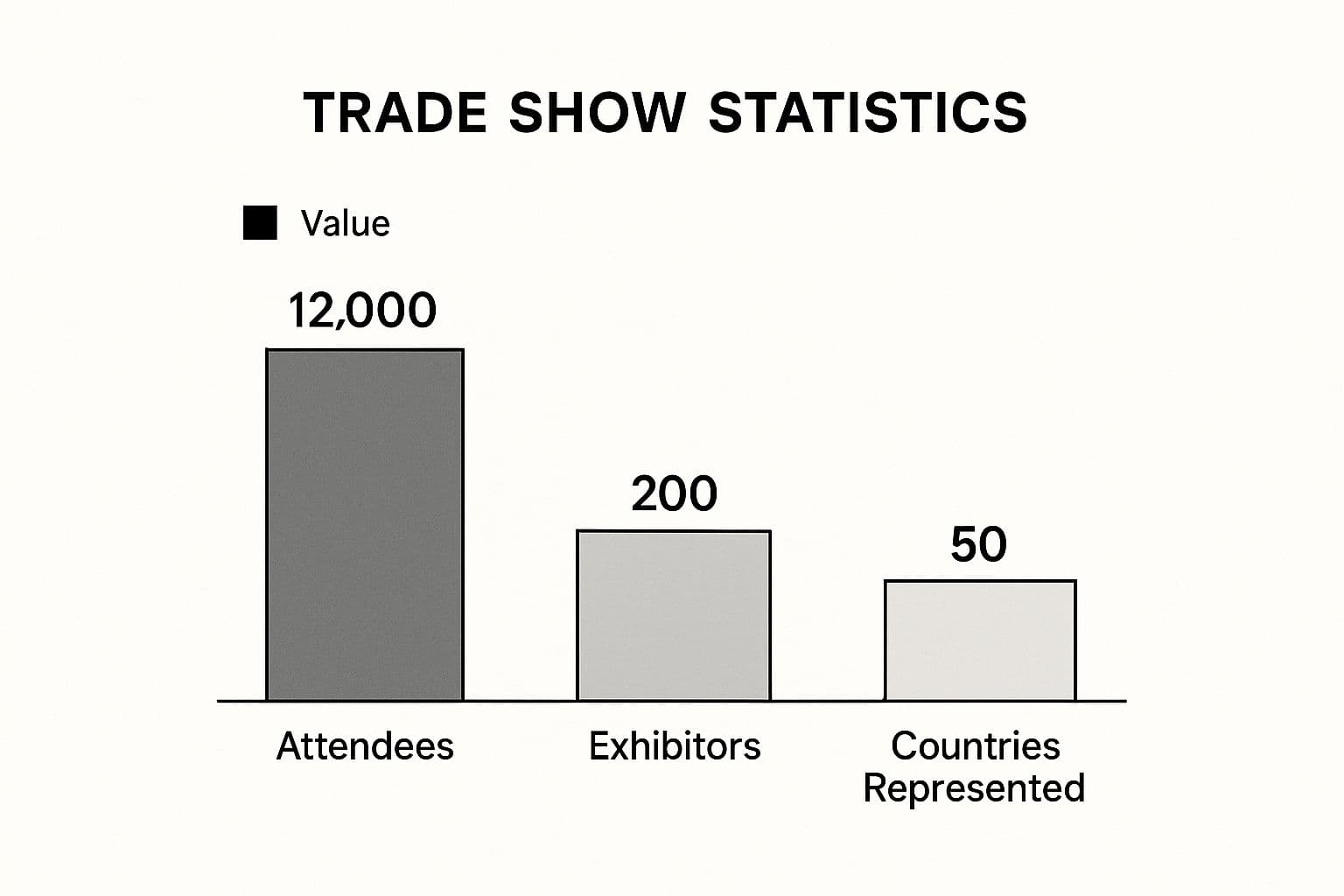
This isn’t just about the thousands of people walking the floor. The real value is in the quality of those connections. Attendees are there for a reason: they're actively looking for investment opportunities and have often been pre-qualified.
Beyond Networking: A Global Growth Engine
Sure, networking is a huge part of it, but the strategic value of an international franchising expo runs much deeper. These gatherings are goldmines for market intelligence. You get firsthand insights into regional consumer trends, regulatory hurdles, and what your competitors are doing, just by walking the floor and striking up conversations with local experts. That kind of direct access is invaluable for figuring out how to adapt your brand for a new culture and economy.
This flurry of activity reflects the industry's explosive growth. The global franchise market was valued at around USD 100.8 billion in 2021 and is on track to hit USD 176 billion by 2027—a powerful compound annual growth rate of 9.73%. To dig deeper into this trend, you can find more insights on global franchise events.
The biggest win at an international expo is speed. You can compress months or even years of market research into just a few days. It's your chance to validate demand, meet potential partners, and size up the competition in one efficient, face-to-face setting.
Key Strategic Differences
Walking into an international expo requires a completely different mindset than a domestic one. The stakes are higher, the cultural nuances are far more complex, and your strategic goals are fundamentally different. Nailing these distinctions is the key to getting a real return on your investment.
The table below breaks down the core differences in focus. While a domestic show is often about finding your next local operator, an international event is about finding the right partner to launch your brand in an entirely new country.
Domestic vs International Franchising Expo Focus
| Focus Area | Domestic Expo | International Expo |
|---|---|---|
| Primary Goal | Single-unit franchisee recruitment within a known market. | Securing master franchisees or area developers for new countries. |
| Audience Profile | Local entrepreneurs seeking a business opportunity. | Sophisticated investors and business groups with capital and infrastructure. |
| Marketing Focus | Brand recognition and consumer-level appeal. | Business case, ROI potential, and franchisor support systems. |
| Due Diligence | Standard financial and operational checks. | Complex legal, logistical, and cultural adaptability assessments. |
Understanding this shift is crucial. At home, you're selling a business opportunity. Abroad, you're selling a long-term strategic partnership, and everything from your marketing materials to your conversation starters needs to reflect that.
Choosing the Right Expo for Your Brand's Success
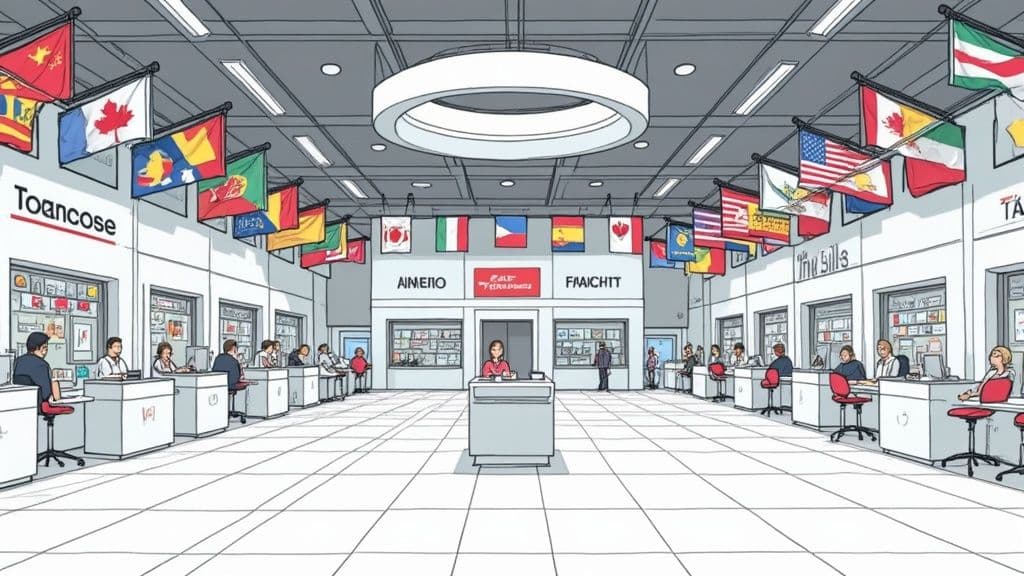
Let’s be honest: not all events are created equal. Choosing the wrong one is a fast way to burn through your time and budget with nothing to show for it. The trick is to look past the biggest, flashiest international franchising expo and find the one that actually lines up with your brand's specific expansion goals. You need a data-driven plan to avoid a bad investment.
The first step is simply geography. If your five-year plan is laser-focused on Southeast Asia, does it really make sense to exhibit at a prestigious show in Paris? Probably not. Your very first filter should always be the specific markets you’re ready to enter right now.
Digging into the Data
Once you have a shortlist of expos in the right locations, it’s time to put on your detective hat. Don’t just take the event organizer’s flashy marketing brochure at face value. You need to hunt for the historical data, which you can often find on the expo's website or in industry reports.
Here’s what to look for:
- Past Exhibitor Lists: Are your direct competitors showing up? Even more telling, are there complementary, non-competing brands present? Their attendance is a good sign of a relevant, high-quality crowd.
- Visitor Demographics: Get a breakdown of who actually walks the floor. You want to see a high percentage of real investors, potential master franchisees, and area developers—not just tire-kickers looking for general business ideas.
- Geographic Origin of Attendees: An expo in Dubai should be pulling in prospects from across the entire MEA region, not just the local Emirate. This data tells you if the event truly has regional influence.
This kind of research helps you forecast a real return on your investment. For instance, a small, specialized QSR-focused event in a new target market will likely deliver more qualified leads than a massive, generic business expo. Getting this detail right is a critical first step in a successful franchise sales process.
Your goal isn't just to find attendees; it's to find the right attendees. A smaller, industry-specific international franchising expo with 5,000 highly qualified visitors is far more valuable than a general expo with 30,000 curious onlookers.
Evaluating Reputation and Reach
An expo's reputation and marketing muscle have a direct impact on your brand's visibility. Check out the speaker lineup. Are they genuine industry thought leaders, or did they just pay for a speaking slot? A strong educational program almost always attracts a higher caliber of attendee.
Take the Feria Internacional De Franquicias (IFE) in Latin America, for example. It's an absolute powerhouse, attracting over 30,000 visitors each year. Its sustained success shows how a well-respected regional expo can become the main entry point for brands looking to expand across an entire continent.
When you align with an event that has that kind of influence, you're essentially borrowing its credibility and reach to give your own brand a powerful launch in that new region.
Nailing Your Pre-Expo Prep

Let’s be honest: your success at an international franchising expo is decided weeks before you ever step on the plane. Showing up without a rock-solid plan is just an expensive way to hand out brochures.
To avoid wasting time and money, you need to get hyper-specific. What does success look like? Define a target number of qualified leads you want to walk away with. Aim for at least five media mentions from local or industry publications. These aren't just vanity metrics; they're the benchmarks that prove your trip was worth it.
Your budget is your roadmap. Map out every conceivable cost: travel, shipping, booth construction, customs fees, and even a buffer for currency fluctuations. A simple shared spreadsheet can be your team's single source of truth, keeping everyone aligned and preventing surprise expenses.
Finally, you have to start marketing before you go. Reaching out to key prospects to book meetings in advance is a game-changer. A targeted email campaign offering an exclusive demo slot can easily boost your meaningful conversations by 40%.
Setting Clear, Actionable Objectives
Get everyone in a room for a kick-off meeting. This is where you set the goals and, just as importantly, assign ownership. Who's the lead qualifier? Who manages the booth? Who's the marketing liaison? Put it all on a shared project board so progress is transparent.
A few practical goals to set:
- Identify your top 50 prospects based on the region and their business sector.
- Draft outreach templates for social media, email, and phone calls.
- Schedule a team training session on local cultural etiquette. Don’t skip this.
Defining measurable goals is what separates the pros from the amateurs. It brings clarity and keeps the entire team focused on what actually matters.
If your big-picture goal is to secure 30 high-quality meetings, you need to break that down into daily targets. This reverse-engineering approach helps you pace your efforts and avoids that last-minute scramble on the final day of the expo.
Coordinating the Nightmare of Logistics
Logistics can make or break your entire expo experience. I've seen brands sink thousands into a beautiful booth that never made it out of customs. Every country is different, with its own frustrating set of rules and deadlines.
Rule of thumb: make sure your materials arrive at least 10 days before the event.
- Confirm your booth dimensions and power requirements with the event organizers. Double-check.
- Book your freight shipping way in advance. This isn't the place to procrastinate; early booking saves money.
- Prepare a duplicate set of essential marketing materials. If one box gets held up, you're not dead in the water.
Create a detailed customs compliance checklist. List every item, its value, and the correct harmonized codes. This little bit of prep work is your best defense against unexpected duties and delays.
Crafting a Booth That Speaks the Local Language
An international show isn't the place for a one-size-fits-all approach. Your booth needs to be culturally intelligent. This means understanding local color symbolism, language norms, and imagery. For example, using red in some markets might signal danger, not opportunity.
- Dual-language signage is a must. Keep the messaging clear and concise.
- Offer localized giveaways. Think branded calendars that feature regional holidays, not just American ones.
- Brief your staff on proper greetings, business card etiquette, and conversational no-go zones.
This level of cultural awareness shows respect. It builds immediate rapport and tells prospects you've done your homework.
Your Pre-Show Marketing Playbook
You need to create buzz before the doors even open. A quiet booth is a failing booth. One great tactic is to host a pre-event webinar that offers valuable industry insights tailored to the local market. Promote it through LinkedIn and by partnering with local franchise associations.
Here are a few other ideas to drive foot traffic:
- Send personalized video invites via SMS to your top-tier targets.
- Run a countdown email series highlighting what makes your booth a must-visit.
- Use social media ads targeted at industry-specific hashtags for the event.
We’ve seen firsthand why franchisors lose 70% of their leads, and it almost always comes down to slow or nonexistent engagement. Pre-show marketing is your first line of defense against that.
Scheduling meetings ahead of time ensures you land with a calendar already full of high-intent conversations.
Make sure your CRM is ready to go. Tag every pre-show interaction so you know exactly where each lead came from. A dry run is also critical. Role-play different scenarios with your team to iron out any awkwardness or potential cultural missteps before they happen in front of a real prospect.
A thorough plan translates directly into better leads and a smoother, more profitable expo.
Designing a Booth That Captivates and Converts

At a packed international franchising expo, your booth is more than just a piece of real estate on the show floor—it's your brand’s embassy. This is the very first impression you'll make on potential partners in a brand-new market. It has to do more than just exist; it has to stop people in their tracks and scream your value proposition in seconds.
Think about your layout as a conversation starter. An open-concept design with multiple ways in feels welcoming, practically inviting people to step inside. A closed-off, fortress-like setup? That just tells prospects to keep walking. The goal is to create a natural flow that pulls people off the aisle and into your world.
To really stand out, you need to move beyond the standard pop-up banner and folding table. Checking out some fresh exhibition display ideas can spark the creativity needed to make a real impact. A unique design can be the one thing that separates you from the crowd and makes your booth a must-see stop.
Creating an Immersive Brand Experience
Okay, you've grabbed their attention. Now you have to hold it. This is where interactive tech is your best friend. Static posters and brochures are easily forgotten, especially when language barriers are in play. It's time to bring your franchise concept to life.
Incorporate elements that demand engagement:
- Touchscreen Kiosks: Let prospects explore your business model, investment tiers, and franchisee support systems at their own pace. No pressure.
- Virtual Reality (VR) Tours: This is a game-changer. Let an investor from São Paulo virtually "walk through" your flagship store in Chicago. It makes the opportunity feel real and tangible.
- Live Product Demos: If you're a food and beverage concept, this is non-negotiable. Nothing sells better than a taste test. That sensory connection is powerful and creates an instant, lasting memory.
Stunning graphics are also a must. Use high-resolution images and keep the text minimal to break through any language barriers. Your visuals should tell a universal story of success and what's possible.
Your booth should be a destination, not just a display. It must offer an experience so compelling that prospects feel they’ve gained real value just by stopping by. That’s how you turn a visitor into a truly qualified lead.
Training Your Team to Be Cultural Ambassadors
You could have the most spectacular booth at the entire expo, but it will fall flat if your staff is just standing around like statues. Your team members are your front-line ambassadors. They need to be proactive, knowledgeable, and culturally aware hosts.
Before you even step on the plane, conduct specific training covering:
- Proactive Engagement: Teach your team how to step forward with a warm, open-ended question. Don't wait for people to approach you—go to them.
- Cultural Etiquette: This is crucial. Go over proper greetings, the protocol for exchanging business cards, and any conversational no-nos for the host region.
- Lead Qualification: Give them a short, simple list of questions to quickly sort serious prospects from the tire-kickers.
A well-trained team turns your booth from a marketing expense into a lead-generation machine. They're the ones who forge the personal connections that leave a positive impression long after the expo ends.
Engaging Prospects on the Expo Floor
This is where all your prep work really pays off. The floor of an international franchising expo is a whirlwind of activity, and it's your stage. Every single interaction is a shot at turning a casual browser into a serious prospect. The real key is to get past just scanning badges and start having real conversations that uncover genuine interest and the capacity to invest.
Your first move has to be proactive. Don't just stand there waiting for people to wander into your booth.
A warm, open-ended question like, "What brings you to the expo today?" or "Which markets are you most interested in exploring?" works so much better than a passive, "Can I help you?" This small shift instantly positions you as a helpful guide, not just another salesperson pushing a product.
Crafting a Compelling Pitch for an International Audience
Your standard elevator pitch won't cut it here; it needs a global lens. Keep it concise, clear, and laser-focused on the core value that speaks to everyone, regardless of culture: profitability, support, and a proven system. You need to speak the universal language of business success.
A strong international pitch has to:
- Highlight Global Appeal: Stress how your brand has already adapted or is built to adapt to different markets.
- Showcase Robust Support: International investors are taking a big leap. They need absolute confidence that you have the infrastructure to back them up from thousands of miles away.
- Be Data-Driven: Use hard numbers. Talk about ROI, average time to profitability, and franchisee success rates.
This approach proves you’ve actually thought through what it takes to win on a global scale. It shows you’re a serious partner, not just another brand dipping a toe in the international waters.
The goal of every conversation is discovery. You're not there to sell a franchise on the spot. You're there to determine if there's a mutual fit and if a follow-up conversation is warranted.
Asking Sharp Questions to Qualify Potential
The quality of your leads comes down to the quality of your questions. You've got to quickly and respectfully figure out a prospect's potential without turning the conversation into an interrogation.
Start broad, then narrow your focus. Think of it as a funnel:
- "What's your background in business ownership or the [Your Industry] sector?" This quickly establishes their experience level.
- "Which specific regions or countries are you targeting for this investment?" This tells you immediately if their goals align with your expansion plans.
- "What's your general timeline for making an investment decision?" This reveals their sense of urgency.
These questions help you efficiently sort prospects and decide where to invest your most valuable asset at the expo: your time. And the opportunities are huge. Franchising is a massive growth engine. In 2025, the industry's economic output is projected to smash $936.4 billion, with over 20,000 new franchise locations expected to open in the U.S. alone. You can find more details in the franchising economic outlook.
By structuring your interactions this way, you make sure every conversation on that busy expo floor is a strategic move toward finding your next great international franchise partner.
Turning Expo Leads into Franchise Partners
The real work starts the moment the expo hall doors close. All the handshakes, conversations, and scanned badges at an international franchising expo mean nothing without a disciplined, persistent follow-up plan. This is especially true in the international arena, where building trust across borders and time zones is everything.
Leaving the event with a stack of business cards isn't a victory; it's just the starting line. Your first move is to re-engage prospects fast, while the memory of your brand and your conversation is still fresh. A prompt, personalized email within 24 hours is non-negotiable. Mention something specific you discussed—a question they asked, a market they're interested in—to show you were actually listening.
Building a Multi-Channel Nurturing System
One email and done? Not a chance. You need a multi-channel approach that keeps your brand visible without being annoying. After the initial buzz of the expo wears off, applying effective email follow-up tips is critical to keeping the conversation moving and guiding prospects toward becoming franchise partners.
A solid follow-up cadence might look something like this:
- Day 1: The personalized "Great to meet you" email, recapping your chat.
- Day 3: Connect on LinkedIn with a short, friendly message. No hard sell.
- Day 7: Send something genuinely useful. Think a case study of a successful international franchisee or a market report on their specific region.
- Day 14: Go for the next step. Propose a short, 15-minute virtual meeting to dig into their specific questions.
This multi-touch strategy respects their time while consistently showing your value and commitment. It’s a marathon, not a sprint, and every touchpoint helps build the foundation of trust needed for such a huge investment.
Segmenting Leads for Maximum Impact
Let's be real: not all leads are created equal. Treating every contact with the same high-touch approach is a surefire way to burn out your team and miss the best opportunities. You have to segment your contacts based on the quality of the interaction you had at the expo.
Split your leads into three distinct buckets:
- Hot Leads (Tier A): These are the people who showed intense interest, asked detailed financial questions, and talked about specific timelines. They get your most personal and immediate attention.
- Warm Leads (Tier B): These folks were engaged and showed real potential but need more nurturing. They go into your automated, yet personalized, follow-up sequence.
- Cool Leads (Tier C): The casual browsers or people who might be a fit someday. Add them to your general email newsletter to keep your brand on their radar without being pushy.
This simple segmentation ensures you focus your energy where it matters most. It's a shocking but true stat that 80% of franchise leads never respond, largely because of poor follow-up. A segmented system helps you beat those odds.
Measuring the True Return on Investment
Finally, you have to measure what actually matters. Counting the stack of business cards you collected is a vanity metric. The real ROI of attending an international franchising expo is found in one place: conversions.
Track the entire journey from that first handshake to a signed agreement. Analyze how many Tier A leads made it to a discovery day, how many Tier B leads requested more info, and the total contract value of the new franchisees you signed directly because of that event.
This data becomes your playbook. It tells you exactly what worked, what flopped, and how to sharpen your strategy for even bigger wins next time.
Are you tired of qualified franchise leads slipping through the cracks? FranFunnel is a purpose-built platform that automates your outreach with SMS, email, and phone, ensuring every prospect is engaged instantly. Our system answers every inquiry in under 60 seconds, so more expo connections turn into signed franchisees. Stop losing leads and start closing deals with FranFunnel.
Further reading: franchise development marketing and franchise lead engagement.