A violation of TCPA happens when a business uses automated tech to call or text a consumer without the right consent, contacts someone on the National Do Not Call Registry, or ignores an opt-out request. These common mistakes, often stemming from simple human error, can trigger massive financial penalties, starting at $500 per incident and quickly snowballing into class-action lawsuits.
The High Stakes of Common TCPA Mistakes
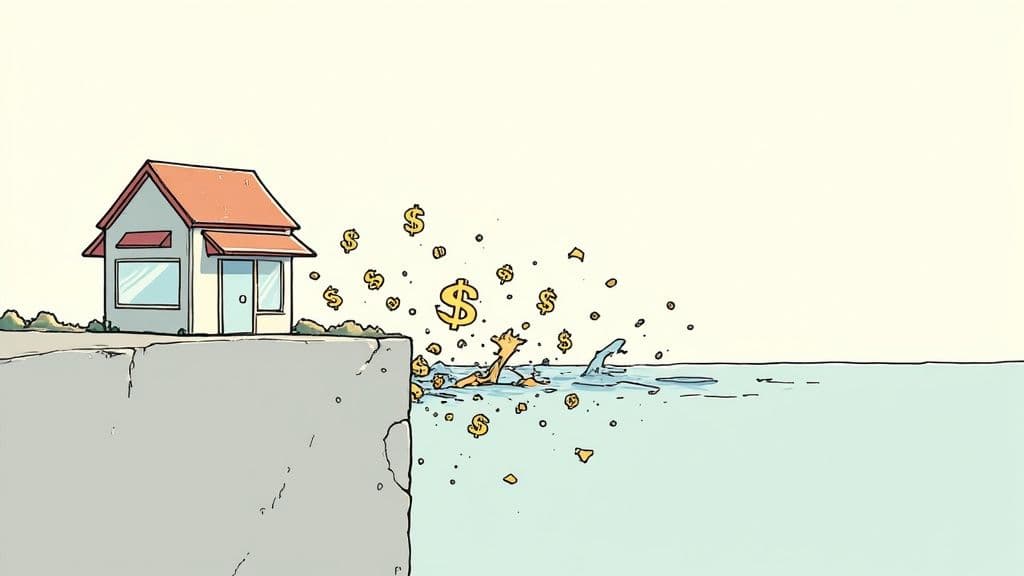
Think of TCPA compliance like a dam. One tiny crack—a single unwanted text from a sales rep or a missed "STOP" request—might not seem like a big deal. But under legal pressure, that small fissure can burst open, unleashing a flood of class-action litigation with catastrophic costs for your franchise. A TCPA violation isn't just a technical misstep; it's a prime target for aggressive lawsuits. What often feels like an innocent mistake, usually born from inconsistent manual follow-up, can lead to crippling fines that put a business's future in jeopardy. And the legal landscape is only getting tougher, especially with new state-level rules popping up. Staying ahead means understanding these regulations and what they mean for your SMS strategy.
The Rising Tide of TCPA Litigation
This financial risk isn't just a hypothetical. We're seeing an explosion in TCPA-related lawsuits, which makes getting your compliance house in order more urgent than ever.
In a single year, TCPA class action filings hit a staggering 2,788 cases—a 67% jump from the year before. More than 80% of these were class actions. The trend didn't slow down, with January of the next year seeing a jaw-dropping 268% surge in filings compared to the same month a year prior.
This is why franchises absolutely cannot afford to be complacent.
 The numbers make it crystal clear: TCPA is a hotbed for litigation, and plaintiffs' attorneys are actively hunting for non-compliant businesses. This is especially true for any organization doing high-volume outreach, like call centers for political campaigns and surveys, where a single mistake can have huge ripple effects.
This table breaks down the most common TCPA pitfalls and what they can mean for your brand.
The numbers make it crystal clear: TCPA is a hotbed for litigation, and plaintiffs' attorneys are actively hunting for non-compliant businesses. This is especially true for any organization doing high-volume outreach, like call centers for political campaigns and surveys, where a single mistake can have huge ripple effects.
This table breaks down the most common TCPA pitfalls and what they can mean for your brand.
Common TCPA Violations and Their Business Impact
| Type of Violation | What It Means for Your Business | Potential Penalty Per Violation | How FranFunnel Helps Prevent It |
|---|---|---|---|
| No Prior Express Written Consent | Texting or calling leads with an autodialer without clear, documented permission. | $500 - $1,500 | Captures and logs consent from web forms, ensuring a clear audit trail. |
| Ignoring Opt-Out Requests | Continuing to contact someone after they've replied with "STOP" or a similar request. | $500 - $1,500 | Automatically processes opt-outs in real-time and blocks future messages. |
| Contacting DNC Numbers | Calling or texting numbers listed on the National Do Not Call Registry. | Up to $51,744 | Allows for DNC list scrubbing to filter out registered numbers from campaigns. |
| Wrong Time of Day Calls | Sending automated messages before 8 a.m. or after 9 p.m. in the recipient's time zone. | $500 - $1,500 | Enforces time-of-day sending windows to prevent out-of-hours contact. |
These violations aren't just about fines; they damage your brand's reputation and can bring your sales outreach to a grinding halt. Having a system in place is the only way to reliably avoid them.
Sealing the Cracks Before They Break
At its core, most TCPA violations boil down to human error made worse by disconnected systems. A sales rep might manually text a lead who already opted out. Or inconsistent follow-up happens outside of permitted hours. These manual, disjointed processes are exactly the kinds of cracks that lead to a major compliance breach.
A proactive compliance strategy is no longer a luxury—it's a fundamental requirement for survival. Relying on manual oversight and scattered spreadsheets is an invitation for a costly TCPA violation.
This is where a purpose-built system is no longer a nice-to-have, but a must-have. A platform like FranFunnel is designed to be your proactive defense, sealing these potential cracks before they can cause any damage. By bringing all communications into one place, automatically honoring opt-outs, and preventing rogue manual follow-up, it eliminates the guesswork and human error that leave franchises exposed. It's not just a tool for efficiency; it’s a shield against the devastating financial and reputational fallout of a TCPA violation.
The Three Pillars of TCPA Compliance
Mastering TCPA compliance isn't about memorizing dense legal texts. It really just boils down to three core principles. If you build your outreach strategy on top of these, you’ll have a defensible process that protects your franchise from eye-watering fines.
Think of it like a three-legged stool. If even one leg is wobbly, the whole thing comes crashing down, taking your business with it. Each pillar addresses a critical point where simple human error or a sloppy process can lead to disaster.
Pillar 1: Prior Express Written Consent
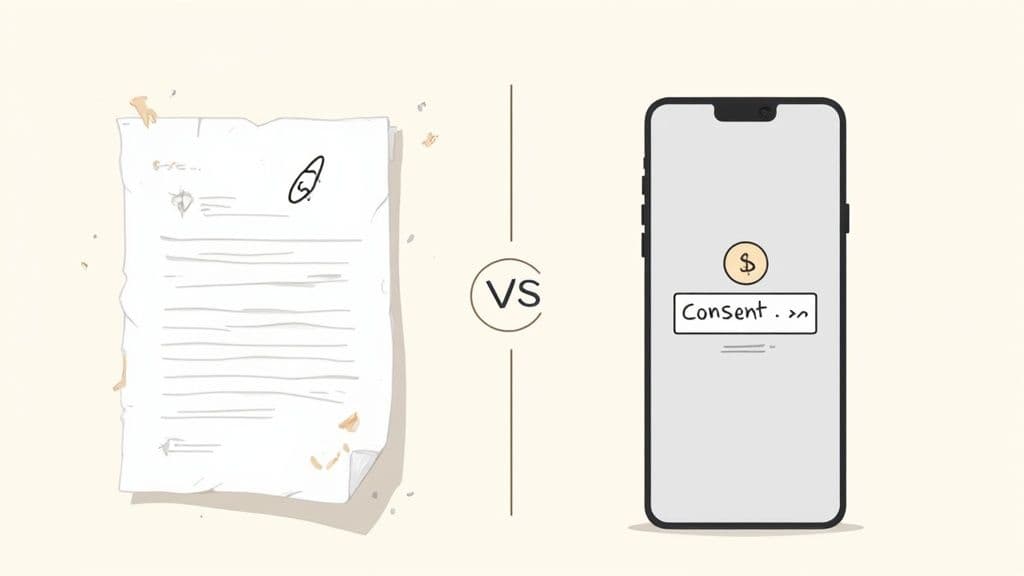
This is the big one. You absolutely must have Prior Express Written Consent before you send automated marketing texts or blast out prerecorded calls. This isn't a "nice to have"—it's a non-negotiable legal requirement. It means getting clear, unambiguous, and provable permission from a person before you ever hit send. A tiny checkbox on a web form with vague language won't cut it. The consent form has to spell out that the person is agreeing to get marketing messages from you, potentially from an autodialer, at the specific number they provided. This is where so many businesses trip up. A sales rep gets a verbal "sure, text me" on the phone or pockets a business card at a trade show and assumes that’s consent. But without a timestamped digital record proving that person opted in, you have zero defense. This is precisely the gap a system like FranFunnel closes by automatically creating a clear consent record for every single lead.
Pillar 2: Honoring Opt-Outs and the DNC List
The second pillar is your duty to manage opt-out requests instantly and respect the National Do Not Call (DNC) Registry. When a prospect texts back "STOP," "CANCEL," or "UNSUBSCRIBE," that's not a suggestion. It’s a legally binding command. Ignoring that request is one of the fastest ways to land yourself in hot water with a violation of tcpa. You also have to scrub your contact lists against the DNC Registry regularly. Calling or texting numbers on that list comes with its own set of painful penalties. The real danger here is manual error. A team member sees an opt-out text but forgets to update the CRM. The next day, another rep, completely unaware, sends that same person a new message. Boom—you've just committed a violation. FranFunnel prevents this by automatically detecting opt-out keywords and immediately blocking that contact from receiving any more messages.
A TCPA-compliant process is not just about what you do, but also about what you can prove. Documented consent and immediate opt-out processing are your best defense in the event of a legal challenge.
Pillar 3: Using Compliant Technology
The third pillar is all about the tech you use. You need to understand what an Automated Telephone Dialing System (ATDS) is and make sure your platform operates on the right side of the law. The legal definition has been a moving target, but the main idea is to avoid systems that use a random or sequential number generator to create and dial lists of numbers. Choosing the right partner is critical. A platform built with compliance at its core gives you the guardrails needed to keep your team from making costly mistakes. For a high-level view on creating these kinds of guardrails, it's worth reading up on building a modern compliance risk management framework, as the same principles apply here. This is why a specialized tool like FranFunnel is so important. It was built from the ground up for compliant, high-volume franchise lead follow-up. It bakes these three pillars right into your daily workflow, replacing risky manual habits with safe, automated, and fully documented processes. It turns compliance from a constant headache into a built-in feature of your growth engine.
Common Mistake: Failing to Document Consent
Let’s talk about the single most expensive—and easiest—mistake you can make with the TCPA: failing to properly secure and document consent. This isn't some obscure legal loophole. It's a fundamental breakdown in process that can put a franchise on the hook for massive liability with just one simple misstep. Picture a sales rep at a franchise expo. They have a fantastic conversation with a promising lead who casually says, "Sure, text me some more info." The rep, trying to be efficient, jots the number on the back of a business card or punches it into their phone. Right there, in that moment, the franchise has created a ticking time bomb. Without a clear, timestamped record of that consent, you have absolutely no defense. That verbal "okay" vanishes the second the conversation ends. If that lead later claims they never gave permission, it becomes their word against yours. And in that scenario, courts almost always side with the consumer.
The Danger of Scattered Consent
This problem snowballs when franchises rely on manual entry, scattered spreadsheets, or random notes buried in different systems. A single typo by a sales rep entering a number can accidentally add someone to a texting list without their permission, instantly creating a TCPA violation. This is exactly how class-action lawsuits are born. It’s rarely a single malicious act. Instead, it’s a series of small, undocumented interactions that, when added up, create a clear pattern of non-compliance. Here’s where the risk really multiplies:
- Third-Party Leads: Buying leads without rigorously vetting how they collect consent is like building your house on someone else's shaky foundation. If their consent language is weak or non-compliant, the liability falls squarely on you when you make the call or send the text.
- Assumed Consent: Just because someone calls your business for information doesn't mean they've agreed to get marketing texts from you forever. Assuming consent from an inbound inquiry is a dangerous and all-too-common mistake.
- Inconsistent Records: When one rep has a note in their email, another has a spreadsheet, and a third has a reminder on their phone, you have no single source of truth. This chaos makes it impossible to prove consent if you're ever challenged.
The consequences of these seemingly minor slip-ups can be absolutely staggering. We saw this in the infamous case against Dish Network, which ended in a colossal $210 million settlement over millions of unlawful robocalls. Similarly, US Coachways got hit with a major lawsuit for sending over 391,000 unauthorized marketing texts. They just didn't have the right consent. You can learn more about these landmark cases and what they mean for businesses from this breakdown of major TCPA lawsuits.
Building an Unbreakable Audit Trail
This is where having a centralized system becomes a non-negotiable asset for any serious franchise. The only way to kill the risk and guesswork is to automate how you capture and document consent from the very first click.
A provable, timestamped record of consent is your best and only shield in a TCPA lawsuit. Without it, you are defenseless against claims of unsolicited contact.
A platform like FranFunnel is built specifically to solve this problem. When a lead fills out a web form connected to our system, it automatically creates a clear, unassailable record of their consent. Every single lead profile contains a time-stamped log showing exactly when and where they opted in. This consolidated approach takes human error out of the equation. No more scattered spreadsheets, no more forgotten verbal agreements, and no more ambiguous notes. You get a permanent, bulletproof audit trail tied directly to each lead. This doesn't just keep you compliant; it empowers you to follow up with confidence, knowing every single message is built on a solid foundation of documented permission. To get this right, it's essential to follow established guidelines—our article on SMS best practices is a great place to start.
Common Mistake: Mishandling Opt-Out Requests
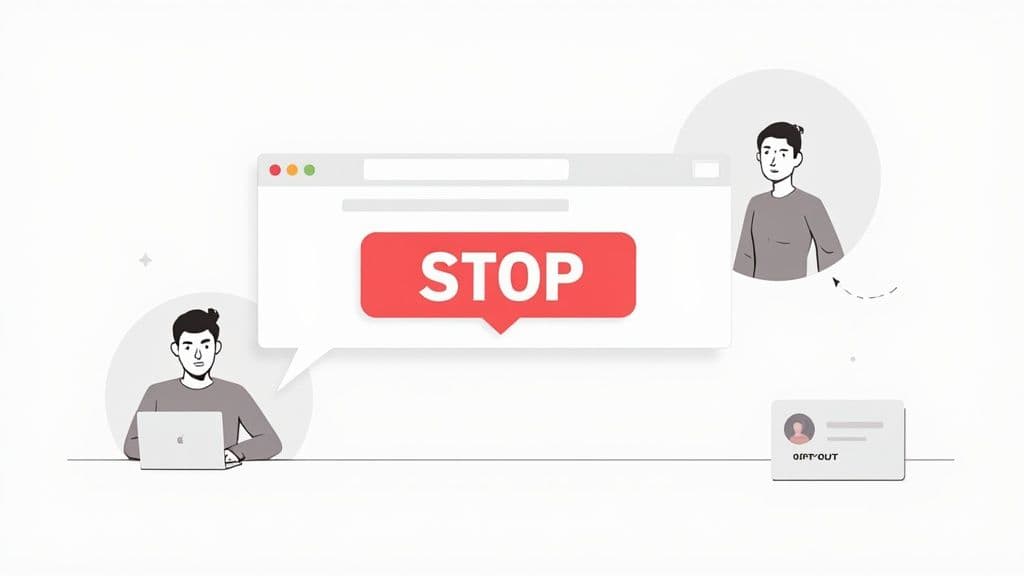
When a lead replies with "STOP" or "UNSUBSCRIBE," it's not a polite suggestion—it’s a legally binding command. Ignoring this is like walking into a hotel room with a "Do Not Disturb" sign on the door. It’s a direct intrusion and, under the TCPA, a seriously costly mistake.
This is exactly where many franchises trip up, usually because of scattered, manual communication processes. Picture this: a lead texts "STOP" to a sales rep's personal phone. That rep gets busy, forgets to log it in the central system, or maybe doesn't even have a clear process for it.
The very next day, someone else from the team, completely in the dark about the opt-out, sends another follow-up text. In that one moment, your franchise has committed a crystal-clear violation of TCPA, opening the business up to massive financial risk.
The High Cost of Human Error
This isn't just a hypothetical breakdown; it’s one of the most common reasons for TCPA lawsuits. Mishandling these requests is a huge risk because consumers can opt out through any reasonable channel, and their requests must be honored within 10 business days. As you can read in this analysis of TCPA compliance priorities shaping new case filings, failing to process these requests automatically and immediately turns routine follow-ups into a legal minefield. Manual processes are riddled with points of failure. The danger isn't just one person forgetting; it’s that the whole system lacks the guardrails to prevent it. This includes:
- Inconsistent Logging: Different reps using different methods (or none at all) to record opt-outs.
- Delayed Updates: Manually updating a spreadsheet or CRM can take hours or even days, leaving a dangerous window open for illegal contact.
- No Central Blacklist: Without a single, system-wide "do-not-contact" list, an opted-out number can easily be re-added to a new campaign by mistake.
Each of these gaps is an unnecessary—and expensive—gamble.
Automating Compliance to Eliminate Risk
The only truly reliable way to prevent this violation is to take human error out of the equation entirely. This is where moving all communications into a single, intelligent platform becomes non-negotiable.
Relying on your team to manually process every opt-out request is not a compliance strategy—it's a liability waiting to happen. Automation is the only way to ensure immediate, documented, and defensible compliance.
A purpose-built system like FranFunnel is designed to solve this exact problem. It doesn't need a person to remember to update a record. Instead, it acts like an automated compliance officer that works 24/7. When a lead texts an opt-out keyword like "STOP," the platform instantly recognizes the command. From there, FranFunnel automatically flags the contact and blocks all automated communications to that number across the entire system. This action is immediate, documented, and universal, making sure no other team member can accidentally text that lead again. It turns a major compliance vulnerability into a seamless, automated strength.
Common Mistake: Violating Quiet Hours
It's one of the easiest TCPA rules to break, and it’s also one of the costliest: violating "quiet hours." The rule is straightforward enough—no telemarketing calls or automated texts before 8 a.m. or after 9 p.m. in your recipient's local time. But for a franchise with leads spread across the country, that simple rule becomes a logistical nightmare.
Think about it. A motivated rep in New York wants to get a jump on their day and starts sending texts at 8:30 a.m. ET. Without a second thought, they message a promising lead in California, where it’s a brisk 5:30 a.m. That one text is a crystal-clear violation of TCPA.
This isn't a rare hypothetical; it happens constantly in franchises with decentralized follow-up. When each rep is an island, inconsistent outreach becomes the default, damaging your brand and racking up serious legal risk.
The Chaos of Uncontrolled Outreach
When communication isn't centralized, compliance is left to chance. Every well-intentioned text from an individual rep can inadvertently expose the entire franchise to a lawsuit. This lack of process control is a breeding ground for violations. The manual approach is riddled with problems:
- Time Zone Confusion: Expecting reps to manually calculate local time for every single lead is a recipe for human error.
- Inconsistent Messaging: With no set workflow, the timing and frequency of messages are all over the place, creating a sloppy candidate experience.
- Lack of Oversight: How can you possibly monitor or enforce quiet hours when every rep is doing their own thing? You can’t, leaving the brand totally exposed.
This disorganization doesn't just put you in legal jeopardy. It creates a genuinely bad experience for potential franchisees who get messages at completely inappropriate hours.
How Centralized Systems Enforce Compliance
The only way to solve this at scale is to stop relying on manual guesswork. You need automated, system-level controls that make compliance the default setting, not an afterthought.
A compliant follow-up strategy shouldn't depend on every team member remembering every rule. It should be baked into the technology you use, making the right way to communicate the easiest way.
This is exactly how a system like FranFunnel is designed to protect your brand. It was built from the ground up with TCPA quiet hours in mind. The platform's automated messaging sequences are hard-wired to only send communications within compliant time windows. More importantly, FranFunnel automatically detects a lead’s time zone from their area code. That text from the New York rep to the California lead? The system holds it. It won’t send the message at 5:30 a.m. PT. Instead, it waits until after 8 a.m. local time, ensuring perfect compliance with zero manual effort. By bringing all communication into one place, FranFunnel transforms chaotic, inconsistent outreach into a standardized, professional, and fully compliant strategy. It takes human error out of the equation, shielding your franchise from a costly and completely preventable TCPA violation.
How FranFunnel Builds Your TCPA Compliance Fortress
Trying to keep up with TCPA rules can feel like defending a castle. One wrong move—a single text sent too early or a missed "STOP" request—and your defenses are breached, leading to a massive violation of TCPA. Managing this with spreadsheets and sticky notes is a losing battle. You need a system built from the ground up to be your compliance fortress. FranFunnel isn't just another messaging tool; it's an automated risk management system designed specifically for the franchise world. It systematically stamps out the human errors that cause the most common—and most expensive—violations. This gives you the peace of mind to stop worrying about lawsuits and start focusing on growth.
Centralized Communication Creates a Single Source of Truth
Most TCPA violations start with chaos. When your reps use their personal phones or different apps to talk to leads, you have no single source of truth. One person might get an opt-out request on their phone, but another rep won't see it and sends an illegal follow-up text. It's an accident, but it's still a violation. FranFunnel fixes this by pulling every text, email, and phone call into one unified timeline. This creates a rock-solid audit trail for every single interaction, ensuring everyone on your team sees the exact same communication history. This central log is your first line of defense, giving you clear, documented proof that your outreach is compliant.
Automated Opt-Outs and Documented Consent
Two of the riskiest manual tasks are handling opt-outs and proving consent. Forgetting to log a "STOP" request or not having a clear record of when and how a lead opted in can leave your brand completely exposed. FranFunnel takes the human element out of these critical jobs.
- Instant Opt-Out Processing: When a lead texts "STOP," "unsubscribe," or a similar keyword, the system instantly and automatically blocks all future automated messages to that number. There's no manual step to forget. It just happens.
- Bulletproof Consent Records: Every lead that comes through a connected form gets a timestamped, permanent record of their consent attached to their profile. This isn't up for debate; you have hard evidence ready to go if your outreach is ever questioned.
Controlled Workflows Prevent Rogue Outreach
Inconsistent follow-up is another huge vulnerability. A well-meaning rep sending messages at 7 a.m. their time might be texting a lead on the West Coast at 4 a.m., creating a clear violation. Relying on your team to manually track time zones is a recipe for disaster.
FranFunnel replaces inconsistent manual outreach with a standardized, professional, and compliant follow-up strategy. It enforces the rules so your team doesn't have to remember them.
The platform's automated workflows are hard-coded to only send messages within the TCPA's "safe harbor" hours—8 a.m. to 9 p.m. in the recipient's local time zone, based on their area code. This built-in governor stop out-of-hours messages before they can ever be sent. By consolidating communication, respecting opt-outs, documenting consent, and controlling workflows, FranFunnel builds a fortress around your brand. It turns a constant compliance headache into an automated background process. To see how a CRM with SMS capabilities can reinforce this fortress, explore our detailed guide. Visit franfunnel.com to see how our platform can protect your franchise and help you grow with confidence.
Frequently Asked Questions About TCPA Violations
Even when you think you have the rules down, real-world questions pop up that can leave you feeling uncertain. And in the world of the TCPA, one wrong move can turn into a very expensive problem. Let's clear up a few of the most common questions we hear from franchise owners.
What Exactly Is Prior Express Written Consent?
This is so much more than a simple checked box on a web form. Prior Express Written Consent has to be a formal, signed agreement. It needs to state, in crystal-clear language, that a person agrees to get automated marketing calls or texts from you at a specific number. Critically, the disclosure must also tell them their consent isn't a condition for buying anything. For your franchise, this means your landing pages and inquiry forms need unambiguous language. This is precisely where a system like FranFunnel is a lifesaver—it automatically logs this consent, creating a permanent, defensible record for every single lead.
Does the TCPA Apply to B2B Communications?
Yes, it often does. There’s a huge misconception that the TCPA only covers calls to regular consumers. The reality is, its rules on autodialers and pre-recorded messages apply to any calls or texts sent to a wireless number—even if that number is on a business card. If your franchise is using an automated system to text a business owner's cell phone, you still need their prior express written consent. Never assume that just because it's a B2B conversation, you get a free pass.
Who Is Liable for a Third-Party Vendor's Violation?
You are. Period. If you hire a marketing agency or a lead gen service and they violate the TCPA while working for you, your franchise can be held directly liable for their mistakes. You simply can't outsource your compliance risk.
It's your job to vet any third-party vendor with a fine-tooth comb. Make sure their lead generation and communication methods are 100% TCPA compliant. Their slip-ups become your legal nightmare.
This is another huge reason why consolidating your communications is so important. When you control the whole process through a central platform like FranFunnel, you close the door on third-party risks. By managing opt-outs instantly and ensuring consistent follow-up, you eliminate the compliance gaps that outside vendors often create. It replaces risky guesswork with automated, documented protection.
At FranFunnel, we build a fortress around your franchise to protect you from costly TCPA violations so you can focus on growth. See how we can safeguard your brand by visiting https://www.franfunnel.com.
Further reading: texting and follow-up on top of your franchise CRM and FranFunnel vs CRM texting.