
A franchise CRM is a specialized Customer Relationship Management system built to handle the unique, two-level relationships inside a franchise network. Think of it as the central nervous system for the whole operation. It’s a single hub where the franchisor can support, monitor, and communicate with franchisees. At the same time, it gives those franchisees the exact tools they need to manage their own local customer base. The whole point is to keep the brand consistent and operations smooth across every single location.
What a Franchise CRM Is and Why It Matters
Ever tried conducting an orchestra where every musician has a different sheet of music? It would be pure chaos. A regular, single-location business might only need one piece of sheet music—its customer list. But a franchise is far more complex. A franchise is the entire orchestra. The franchisor is the conductor, and each franchisee is a section leader. A franchise CRM is the master score that makes sure everyone plays in perfect harmony. Unlike a generic CRM that just focuses on the end customer, a franchise CRM is built for two very different but connected audiences: the franchisees and their customers. It creates a hierarchy where the franchisor gets a complete, top-down view of the entire network's performance. Meanwhile, each franchisee gets a clear, focused view of their own territory and clients. This specialized structure is what sets it apart—and it's absolutely critical.
The Dual-Role Advantage
The real magic of a franchise CRM is how it manages two relationships at once:
- Franchisor-to-Franchisee (B2B): This is the operational backbone for the corporate team. It’s where you manage franchise agreements, track royalties, check for brand compliance, send out marketing materials, and provide ongoing support.
- Franchisee-to-Customer (B2C): This is the traditional CRM stuff. The system gives franchisees the tools to manage leads, track local sales, run their own marketing campaigns, and deliver great customer service in their designated area.
This two-in-one design prevents the data silos and messy disconnects that happen when you try to shoehorn a standard CRM into a franchise model. It ensures that what’s learned at the local level can actually inform corporate strategy, and corporate support can be delivered effectively to make franchisees successful.
A Foundation for Scalable Growth
The franchise industry is exploding. Projections show that over 20,000 new franchise units will be added globally, pushing the total to a record-breaking 851,000 establishments. This boom is especially strong in personal services like salons, fitness centers, and pet care—all businesses where technology is essential to manage growth. A solid franchise CRM isn’t a nice-to-have anymore; it's the foundation for any brand serious about capturing a piece of this growth. If you want to dig into these numbers, you can learn more about the 2025 franchising economic outlook.
A franchise CRM isn't just a database; it's a strategic asset that aligns your entire network. It transforms the complex web of relationships between franchisor, franchisees, and customers into a streamlined, collaborative, and growth-oriented ecosystem.
By centralizing communication, standardizing processes, and giving everyone clear visibility, the right tool moves way beyond simple contact management. It becomes the nerve center of the entire franchise operation. It makes sustainable growth possible, protects your brand integrity, and empowers every single person in your network to win. Without it, trying to scale becomes a logistical nightmare of disconnected spreadsheets, inconsistent branding, and a whole lot of missed opportunities.
Franchise CRM vs. Standard CRM: A Clear Comparison
It’s a question every growing franchisor asks sooner or later: “Can’t I just use a standard, off-the-shelf CRM for my network?” On the surface, it makes sense. They all manage customers, right? But that’s like trying to use a family sedan to haul commercial cargo. Sure, it might work for a short trip, but it’s inefficient, risky, and eventually, it’s going to break down. A standard CRM is built for a single business. Its entire design is meant to give one team a flat, unified view of its customers. A franchise isn't one business—it’s a business of businesses. This complex ecosystem needs a completely different kind of structure. Trying to cram a generic CRM into this model almost always leads to expensive workarounds, total data chaos, and franchisees who are beyond frustrated. The real problem is that standard CRMs are missing the built-in hierarchy and specialized tools that a franchise network needs to run smoothly and actually scale.
The Architectural Divide: Hierarchical vs. Flat Structure
The single biggest difference comes down to the system’s architecture. A standard CRM operates on a flat plane. All the data—contacts, deals, reports—is accessible to users inside one company account. It has no meaningful way to tell the difference between a corporate user and a franchisee. A franchise CRM, on the other hand, is built on a hierarchical model. Think of it as your corporate org chart, but brought to life in software.
- The Franchisor Level (Top View): Corporate gets the 30,000-foot view of the entire network. They can see big-picture performance data, track system-wide sales trends, and check on brand compliance across every single location.
- The Franchisee Level (Ground View): Each franchisee logs into their own secure portal. They only see their leads, their local customers, and their location's performance. No peeking into another franchisee's data.
This structure gives franchisors the oversight they need without getting bogged down in the day-to-day operations of each location. It keeps sensitive data protected, prevents ugly territory conflicts, and gives franchisees the autonomy they need to succeed locally.
This data chart shows how a franchise-specific CRM drives both performance and satisfaction across the network.
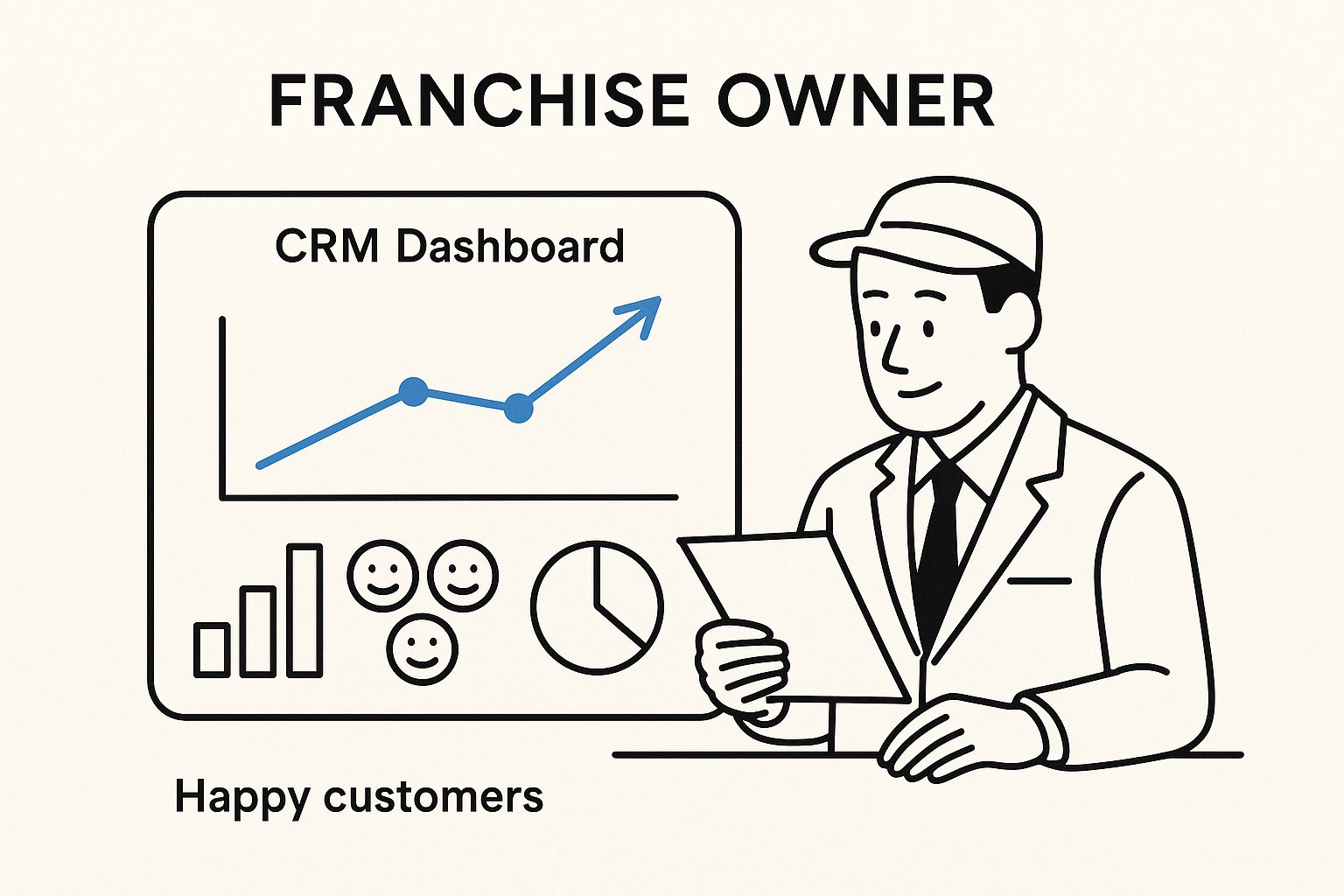 By providing tools that line up what the franchisor wants with what the franchisee needs, the system creates a positive feedback loop of growth and success.
Franchise-Specific Functions You Won’t Find Elsewhere
Beyond the core structure, a franchise CRM is packed with purpose-built tools designed to solve the unique headaches of franchising. These are features you simply won't find in a generic platform. This is a critical distinction, especially as the global CRM market expands. With a valuation of around USD 101.4 billion expected to hit USD 262.74 billion by 2032, the push for CRM adoption is massive. But for franchises, picking a specialized tool is the only way to make this technology work. Discover more insights about CRM market growth trends. So, what does that specialization actually look like? Here’s a direct comparison.
Feature Showdown: Franchise CRM vs. Generic CRM
A quick look at this table makes the differences jump out. It’s not just about small tweaks; it’s about fundamentally different capabilities designed for two very different business models.
| Feature | Franchise CRM | Generic CRM |
|---|---|---|
| User Access | Hierarchical roles for franchisor, franchisee, and staff. | Flat structure; all users exist within one company account. |
| Lead Routing | Automatically assigns leads based on territory rules. | Manual lead assignment or basic round-robin distribution. |
| Royalty Tracking | Built-in tools to automate royalty calculations and reporting. | No native functionality; requires manual spreadsheets or costly third-party integrations. |
| Marketing | Central library of brand-approved assets for franchisee use. | Single marketing hub; no separation for local deployment. |
| Onboarding | Streamlined workflows to manage new franchisee setup. | Lacks tools for managing franchisee training and legal documentation. |
| Compliance | Dashboards to monitor brand standards across all locations. | No tools for tracking operational or brand compliance. |
The gap is clear. One system is built to manage the complexity of a franchise network, while the other is just hoping you can make it work with duct tape and custom code.
A generic CRM manages one relationship: business-to-customer. A franchise CRM manages three interconnected relationships: franchisor-to-franchisee, franchisee-to-customer, and franchisor-to-the-entire-customer-network.
Ultimately, picking a generic CRM for your franchise is a short-term fix that creates long-term problems. It forces you to build clunky workarounds that create data silos, damage brand consistency, and stop you from making smart, network-wide decisions. A true franchise CRM is an investment in a scalable foundation built specifically for the business model you're in.
Unpacking the Core Features of a Franchise CRM
A franchise CRM is way more than a digital address book; it’s the engine room of a successful network. Its features aren’t just nice-to-haves—they’re purpose-built tools designed to solve the messy, everyday challenges that franchisors and franchisees actually face. Let's get past the buzzwords and look at the real-world problems these features fix.
 Think of each tool in the system as a gear in a much larger machine. They all work together to drive growth, lock in consistency, and make operations simpler across every single location.
Centralized and Intelligent Lead Management
Picture this: two franchisees in neighboring territories are both spending marketing dollars trying to land the same high-value lead. That's a recipe for internal conflict and wasted cash. A franchise CRM puts a stop to that with smart, territory-based lead routing. When a new prospect fills out a form on the corporate website, the system instantly figures out where they are and automatically sends them to the right franchisee. It sounds simple, but the results are powerful:
- No More Channel Conflict: Franchisees can trust they're getting every lead in their designated area.
- Maximum Sales Opportunities: Leads go straight to the nearest location, which means a faster, local response and a much higher chance of conversion.
- A Better Customer Experience: Prospects connect with the right local expert right away, skipping the frustrating delays and hand-offs.
This one automated process makes sure every marketing dollar works harder and every lead is handled by the person best equipped to turn it into a customer.
Brand-Approved Marketing Automation
Keeping a brand consistent across dozens—or hundreds—of locations is a massive headache. One franchisee in Ohio could create a promotion that accidentally misrepresents the brand, and suddenly, everyone's reputation takes a hit. This is where a franchise CRM becomes a game-changer. It provides a central library of brand-approved marketing materials.
Franchisors can build professional, high-impact email campaigns, social media posts, and ad templates at the corporate level. Franchisees can then log in, grab what they need, and launch these campaigns with a single click, automatically personalized with their local contact info.
This approach gives franchisees the power to market effectively in their own backyard without the risk of going rogue. It equips them with top-tier assets while giving the franchisor total peace of mind. Many platforms even build in SMS capabilities. If you're curious, exploring a CRM with text messaging can show you just how powerful direct-to-prospect engagement can be.
Performance Dashboards and Analytics
How does a franchisor figure out which locations are killing it and which ones need a hand, all without drowning in spreadsheets? The answer is network-wide performance dashboards. A franchise CRM pulls data from every single location and organizes it into clear, visual dashboards you can actually understand. This lets franchisors track key performance indicators (KPIs) in real time, like:
- Sales Growth: Compare revenue and growth rates across different regions or groups of franchisees.
- Lead Conversion Rates: Pinpoint which franchisees are pros at closing deals and which might need a little extra sales coaching.
- Customer Satisfaction Scores: Keep an eye on feedback to make sure service quality stays high across the board.
Armed with these insights, franchisors can finally make data-driven decisions. They can see what the top performers are doing, replicate their strategies across the network, and proactively offer support to those who are struggling. The entire system gets a lift.
Compliance and Royalty Management
Let's be honest, managing franchise agreements, making sure operational standards are met, and collecting royalties are often the most tedious administrative jobs. A specialized franchise CRM automates these critical—but painful—functions. The system becomes the one source of truth for all essential documents, from legal agreements to operations manuals, so franchisees always have the latest versions. Even better, it includes a royalty calculation engine. This tool automatically pulls sales data from each franchisee, calculates the exact royalty fees owed, and spits out the invoices. This automation doesn't just save countless hours of mind-numbing accounting work. It cuts down on errors and creates a transparent, predictable financial process for everyone. It turns compliance from a chore into a smooth, automated workflow.
Integrations and Interoperability: The Power of a Connected Tech Stack
The best franchise CRMs don’t live in isolation—they play well with others. Interoperability is critical for modern franchise systems that rely on multiple best-in-class tools. Your CRM should easily integrate with lead engagement platforms like FranFunnel, accounting tools like QuickBooks, marketing suites like HubSpot or Mailchimp, and communication platforms like Slack or Gmail. These integrations eliminate manual data entry, keep every system in sync, and give both franchisors and franchisees a single, unified view of the business. When your CRM acts as the command center for a connected tech stack, you move faster, make smarter decisions, and create a frictionless experience for everyone in your network.
A Win-Win for the Whole System
A good franchise CRM isn't just a piece of software. It’s the connective tissue that links the success of the franchisor directly to the success of every single franchisee. It builds a relationship where the entire network moves forward as one, not as a collection of separate businesses. The platform delivers critical, but different, advantages to both sides. For the franchisor, it’s all about visibility, control, and efficiency. For the franchisee, it’s about empowerment, support, and winning in their local market. When those two sides click, the whole brand gets stronger.
How Franchisors Win with a Central System
From the corporate office, managing a sprawling network of independent owners can feel like trying to herd cats. A franchise CRM brings much-needed order to that chaos. It provides the tools to maintain brand integrity and make smart, data-driven decisions that affect the entire system. The payoffs are immediate and powerful. Franchisors gain:
- Ironclad Brand Consistency: The CRM acts as a central library for approved marketing materials, operational playbooks, and email templates. This ensures every location represents the brand the right way, eliminating weird off-brand promotions or confusing messages.
- A 30,000-Foot View of the Network: Forget digging through endless spreadsheets. Dashboards and analytics tools offer a bird's-eye view of the system's health. You can track KPIs, compare how different regions are doing, and spot top performers and struggling locations at a glance.
- Streamlined Royalty Collection: Chasing down royalties and doing manual calculations is a massive administrative headache just waiting for errors. An integrated CRM automates this, pulling sales data directly from each unit to generate accurate invoices. It saves countless hours and cuts down on financial friction.
- Smarter Franchisee Support: With a clear view of each franchisee's performance, the corporate team can stop being reactive and start being proactive. They can see where extra training is needed or share best practices from a high-achieving location with the rest of the network.
A franchise CRM changes the franchisor’s role from a reactive problem-solver to a proactive strategic coach. It delivers the data needed to guide the whole network toward shared goals, proving the value of the franchise system.
How Franchisees Thrive with Powerful Tools
Franchisees are on the front lines every day. They need practical, easy-to-use tools that help them compete and win in their local community. A well-designed franchise CRM gives them exactly that—the resources of a big corporation without the complexity, so they can focus on serving customers. This empowerment is a massive driver of franchisee happiness and profitability. Franchisees get:
- A Steady Stream of Qualified Leads: No more fighting over leads. Integrated lead routing technology automatically sends prospects from their specific territory straight to them. They can respond in minutes, while the person is still hot on the brand.
- A Library of Ready-to-Use Marketing Assets: Franchisees get instant access to professionally designed email campaigns, social media posts, and local ads. They can launch polished marketing with a few clicks, giving them a big-brand presence without needing their own design team.
- Simplified Reporting and Communication: Automated reporting tools make it painless to submit sales data and other required info, freeing up time to actually run the business. A central portal also means they never miss important updates, training announcements, or operational changes from corporate.
- Insights from Top Performers: By seeing anonymized performance benchmarks, franchisees can see what success looks like within the system. It lets them learn from the best and steal strategies that are already proven to work.
At the end of the day, the franchise CRM acts as a force multiplier for the whole network. It makes sure the support, strategy, and brand power from the home office translate directly into more success and profit for every single franchisee on the ground.
How To Choose The Right Franchise CRM
Selecting a franchise CRM isn’t just another line item on your P&L. Think of it as choosing the engine under the hood—get it right, and your network hums along; choose poorly, and you’ll hit potholes at every turn. A deliberate evaluation process helps you partner with a system that grows alongside you, rather than one that leaves you stalled.
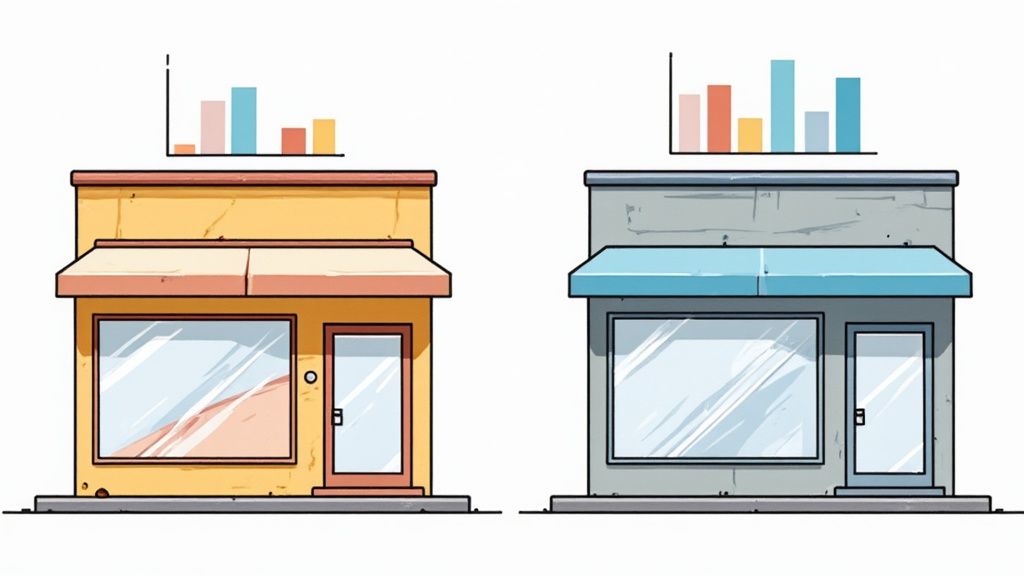 At the same time, the franchise software market is booming. It’s set to jump from USD 1.7 billion today to USD 4.5 billion by 2034, at a 10.2% annual clip.
| Metric | Value |
|---|---|
| Current Market Size | USD 1.7 billion |
| Projected Market Size (2034) | USD 4.5 billion |
| Compound Annual Growth Rate (CAGR) | 10.2% |
This surge isn’t just numbers—it reflects a shift toward real-time data and automated workflows. For a deeper dive into these trends, explore franchise management software on market.us.
Define Your Core Requirements
Before you schedule demos, grab a whiteboard. Sketch out your current process and call out where things break down. Maybe new leads pile up unassigned, or royalty tracking feels like a spreadsheet marathon. List your non-negotiables—this becomes your vendor scorecard. • Scalability: Will the platform glide from 20 to 200 locations without a hitch? • Integration: Does it talk to your accounting system, POS terminals and email platform? Data silos are the enemy. • Reporting & Analytics: Can you craft custom dashboards that highlight exactly what you need? • Industry Fit: Is it designed for your niche—quick-service restaurants, home services or another model? A generic CRM often misses those subtle workflow quirks.
Ask The Right Questions During Demos
Demos can feel like polished pitches. Don’t let slick slides distract you. Drill down on real use cases.
Involving franchisees in the evaluation process is non-negotiable. Their buy-in is the single most important factor for successful network-wide adoption. If they see the CRM as a tool that helps them grow, they will embrace it.
Key questions to bring to every session: • What does your onboarding and data migration process look like? • How do you secure data—and keep it compliant with privacy regulations? • Can we tweak workflows and custom reports to match our exact business rules? • How do you handle updates and feature requests? • What support model is included—do we get a dedicated account manager?
Involve Your Franchisees From Day One
The biggest mistake is picking a CRM in isolation and then dropping it on your network. Franchisees are the daily users. If they find the system clunky or irrelevant, adoption grinds to a halt. Form a small advisory council: include a top performer, a brand-new owner and someone who’s less tech-inclined. Have them join demos and share honest feedback. Their field insights will reveal which features truly work—and which fall flat. To see how other franchisors are tackling these choices, check out our guide on the best software for franchises. Bringing franchisees into the process turns your CRM from a corporate mandate into a real business tool—and that’s how smooth rollouts happen.
A Roadmap for Successful CRM Implementation
Buying a franchise CRM is like getting a high-performance engine. It has a ton of potential, but you don't actually get anywhere until it's expertly installed and humming smoothly inside your operation. The real return on your investment comes from a successful implementation—that’s what turns a piece of software into a core asset for your entire network. This isn’t about just flipping a switch. It starts with careful planning. One of the very first hurdles is migrating all your data from old spreadsheets or clunky legacy systems. Clean, accurate data is the fuel for your new CRM, so this part has to be done with precision. You can’t afford to lose valuable history.
Building the Foundation for Adoption
Once your data is clean and ready, it's time to configure the platform to mirror your franchise’s unique workflows. A one-size-fits-all approach just doesn’t cut it. You’ll need to customize lead routing rules, set up performance dashboards that track your specific KPIs, and build out the library of marketing assets your franchisees will actually use. A solid training program is just as critical. And I don't mean a single, boring webinar. Effective training needs separate tracks for your corporate team and for your franchisees, each focused on the features that matter most to their daily roles.
One of the best strategies for a smooth rollout is a phased launch. Start with a small pilot group of your most engaged franchisees. Let them test the system in the real world. Their feedback is pure gold for ironing out the kinks before you go live across the whole network.
Driving User Adoption and Overcoming Resistance
The final—and arguably most important—step is getting people to actually use it. Technology is worthless if it just sits there. Resistance to change is completely natural, so your strategy has to be all about communicating clear, undeniable benefits. Many successful franchisors tackle this by appointing "CRM champions" within the network. These are often tech-savvy, well-respected franchisees who can advocate for the new system and offer that crucial peer-to-peer support. You have to clearly communicate the "what's in it for me" to every single user. Show your franchisees how the CRM saves them time, helps deliver more qualified leads, and makes their reporting a breeze. When they see it as a tool that helps them succeed, adoption just happens. For those who want to take it even further, you can learn how to automate business processes to unlock even more efficiency.
A Few Common Questions We Hear
Even after you're sold on the idea of a franchise CRM, a few practical questions always pop up. It’s smart to get these answered before you pull the trigger. Here are some of the most common ones we hear from franchisors, along with some straight-up answers.
How Much Does a Franchise CRM Typically Cost?
There’s no single price tag. The cost really depends on the size of your network, the features you need, and how the vendor structures their pricing. Some will charge you per user, while others go with a flat fee for each location. You can usually expect an upfront setup or implementation fee, plus a recurring subscription—either monthly or annually. The real key is to not just look at the cost, but to weigh it against the money you’ll make back from better efficiency, more leads converting to deals, and a much smoother royalty collection process.
Can a Franchise CRM Integrate with Our Other Software?
Yes, and it absolutely has to. Any modern franchise CRM worth its salt is built to play nice with the other tools you rely on every day. Think of it as the central hub that connects to your other systems, like:
- Accounting Software: Hooking into platforms like QuickBooks makes financial reporting almost automatic.
- Marketing Platforms: Connecting with tools like Mailchimp keeps your campaigns and your contacts in perfect sync.
- POS Systems: Pulling real-time sales data directly into the CRM gives you an instant, accurate picture of performance.
Before you commit, always double-check that the CRM has proven, solid integrations with the software you already use. This is non-negotiable if you want a single source of truth for your data and want to kill manual entry errors for good.
Will a CRM Just Create More Work for My Franchisees?
This is a big one, and it's a fair question. While any new tool has a bit of a learning curve, a good franchise CRM is designed to reduce your franchisees' workload, not pile more on.
A great CRM takes tasks that used to be manual and automates them. It gives franchisees one-click access to professional marketing materials and makes managing their leads ridiculously efficient. With a system that's easy to use and proper training, it quickly becomes their best friend for growing the business—not another chore.
Ready to see how the right tools can supercharge your franchise sales process? FranFunnel integrates with your existing CRM to automate lead engagement, ensuring you connect with prospects in the critical first 60 seconds. Learn more at FranFunnel.