
Franchise management software is the central nervous system for your entire franchise network. It’s a single platform designed to connect and standardize everything—operations, marketing, finance, and training—from headquarters to every last franchisee. In short, it provides one source of truth for everyone, making sure your brand stays consistent and operations run smoothly as you scale.
What Is Franchise Management Software, Really?
Imagine trying to conduct an orchestra where every musician has different sheet music. You'd get chaos, not a symphony. A growing franchise without a central system is exactly like that: disjointed, inconsistent, and nearly impossible to manage. Franchise management software is the conductor's score. It provides a single, unified framework that brings harmony and consistency to your entire network. This isn't just another tool on the pile; it’s the operational hub that connects every moving part of your business, acting as the digital HQ for everything from brand assets and marketing campaigns to royalty collection and franchisee training.
Creating a Single Source of Truth
The whole point of this software is to drive consistency and efficiency across all your locations. It gives you the power to maintain quality control, deliver incredible support to your franchisees, and make smart, data-driven decisions that actually fuel growth. Instead of juggling scattered spreadsheets, endless email chains, and a dozen disconnected apps, a central platform ensures everyone is working from the same playbook. For franchisors, this system gives you a bird's-eye view into:
- Operational Performance: Track key performance indicators (KPIs) for each and every location.
- Brand Compliance: Make sure marketing materials and service standards are actually being followed.
- Financial Health: Easily monitor royalty payments and see overall revenue trends.
- Franchisee Engagement: Log communications and support tickets to keep relationships strong.
A franchise is a system built on replication. The right software is what makes that replication scalable, profitable, and consistent, turning a great local concept into a powerful national brand.
Before we dive into the specific features, let's look at the core problems this kind of software is built to solve. It's not just about adding tech; it's about fixing the fundamental challenges that hold franchises back from scaling effectively.
Core Problems Solved by Franchise Management Software
| Common Franchise Challenge | Software Solution |
|---|---|
| Brand Inconsistency Across Locations | Centralized brand asset library and marketing templates. |
| Inefficient Royalty Collection | Automated invoicing, payment tracking, and reporting. |
| Poor Communication with Franchisees | Integrated messaging, support tickets, and knowledge base. |
| Lack of Performance Visibility | Real-time dashboards with KPIs for each unit. |
| Difficulties in Training and Onboarding | Standardized training modules and progress tracking. |
This table boils it down: where you see a roadblock to growth, the right software provides a direct path forward, turning operational headaches into streamlined processes.
The Driving Force Behind Its Growth
The demand for these platforms is exploding as more businesses turn to the franchise model. The global market for this software is expected to jump from USD 1.7 billion in 2024 to roughly USD 4.5 billion by 2034. That’s a compound annual growth rate of about 10.2%. This isn’t just hype; it's driven by a real need for scalable solutions that help franchisors maintain control as they expand. Ultimately, franchise management software solves the biggest puzzle in franchising: how to keep your brand identity strong while empowering local owners to succeed. It transforms the messy, complex task of managing dozens (or hundreds) of separate businesses into a coordinated, efficient, and scalable operation. For a deeper look into selecting the right platform, check out our complete guide on franchise management software.
The Real-World Benefits of a Centralized System
 Let's move past the theory. The real value of franchise management software isn’t in buzzwords; it’s in the tangible, day-to-day impact it has on your business. A centralized system isn't just a nice-to-have—it's the operational backbone that holds up the three pillars of any healthy franchise: consistency, efficiency, and scalability.
These pillars don't stand on their own. They're interconnected results of putting the right platform in place. Let’s break down how a single system reinforces each one and fundamentally changes how you run and grow your network.
Let's move past the theory. The real value of franchise management software isn’t in buzzwords; it’s in the tangible, day-to-day impact it has on your business. A centralized system isn't just a nice-to-have—it's the operational backbone that holds up the three pillars of any healthy franchise: consistency, efficiency, and scalability.
These pillars don't stand on their own. They're interconnected results of putting the right platform in place. Let’s break down how a single system reinforces each one and fundamentally changes how you run and grow your network.
Unlocking Unbreakable Brand Consistency
Brand consistency is the promise you make to every customer, no matter which location they walk into. It's more than a logo; it's the entire experience—the quality, the service, the feeling they expect. Franchise management software acts as the guardian of that promise. Think about a coffee franchise launching a new seasonal drink. Without a central system, headquarters might email a PDF recipe and a separate file for marketing posters. Some locations miss the email. Others interpret the recipe differently. A few forget to update their menus at all. The result? Chaos and a watered-down brand experience. With a centralized platform, the process is seamless.
- New recipes and procedures are uploaded to a central operations library, instantly available to all franchisees.
- Marketing materials like digital menu boards and social media graphics are pushed out to every location at the same time.
- Training videos on how to make the new drink are assigned to staff, and management can track who has completed them.
On launch day, every single store delivers the exact same product and promotion. That’s how you build brand trust and keep customers coming back. Consistency stops being a daily struggle and becomes a built-in feature of your operations.
Driving Operational Efficiency at Every Level
Efficiency is really about one thing: getting time back. It’s time for your corporate team and time for your franchisees. Manual, repetitive tasks drain resources and are breeding grounds for error. The right software automates these processes, freeing everyone up to focus on what actually grows the business, like great customer service and local marketing. Take the monthly headache of royalty collection. Manually tracking sales, calculating percentages, creating invoices, and chasing payments is an administrative black hole. A unified platform completely changes the game.
The right software automates the tedious but critical tasks that bog down growth. It shifts your team’s focus from administrative firefighting to strategic business building, directly impacting your bottom line.
By automating routine tasks, you create a more productive and less frustrating environment for everyone. For example, instead of a field consultant spending hours on paperwork after a site visit, they can use a mobile app to fill out a compliance checklist, upload photos, and send the report before they even leave the parking lot. That means franchisees get faster feedback, and consultants have more time for meaningful coaching.
Building a Foundation for Smart Scalability
Scalability isn't just about growth; it's about growing without the whole system collapsing under its own weight. A centralized software system provides the scaffolding you need to add new locations seamlessly, ensuring your tenth—or thousandth—franchise operates with the same precision as your first. Onboarding a new franchisee becomes a standardized, repeatable process. New owners get access to a portal with every training module, operational manual, and marketing launch kit they need. This gets them open and profitable faster while making sure they’re following brand standards from day one. The market is already voting with its dollars. Projections show the franchise management software market is expected to grow from around USD 1.2 billion in 2024 to an estimated USD 2.5 billion by 2033. This surge shows just how essential these platforms have become for any brand trying to manage multi-unit operations in competitive spaces like retail and hospitality. You can learn more about the market drivers from the full research on franchise management software growth. Ultimately, a centralized system removes the operational bottlenecks that choke expansion. It creates a clear, structured path for growth you can actually sustain.
Decoding the Core Features You Actually Need
When you start looking at franchise management software, it’s easy to drown in a sea of technical jargon and endless feature lists. Forget the buzzwords. The smart way to think about these tools is by the problems they solve. A good platform will group its features into modules that map directly to the real-world jobs of running a franchise network. Let's cut through the noise and break down the essentials into five practical buckets. This will help you pinpoint what your franchise really needs to grow, making sure every tool you pay for delivers a clear, tangible return.
Franchisee Relations And Support
At its core, franchising is a relationship business. Keeping communication lines open and providing world-class support isn’t a nice-to-have; it's everything. Features in this category are all about building and maintaining strong, productive relationships with your franchisees.
- Centralized Communication Hub: Think of this as a private social network just for your brand. It’s the spot for system-wide announcements, direct messages, and forums, finally putting an end to scattered email chains and missed updates.
- Support Ticketing System: When a franchisee has a problem—a marketing question, a tech issue, anything—this tool logs, tracks, and sends their request to the right person at corporate. Nothing falls through the cracks.
- Franchisee Directory: This gives you a complete profile for each franchisee, logging every communication, performance note, and key document in one easy-to-find place.
These tools make sure your franchisees feel heard, supported, and connected. That’s fundamental to their success—and yours.
This image shows how the big benefits of franchise software all flow from a few core principles that drive efficiency and standardization.
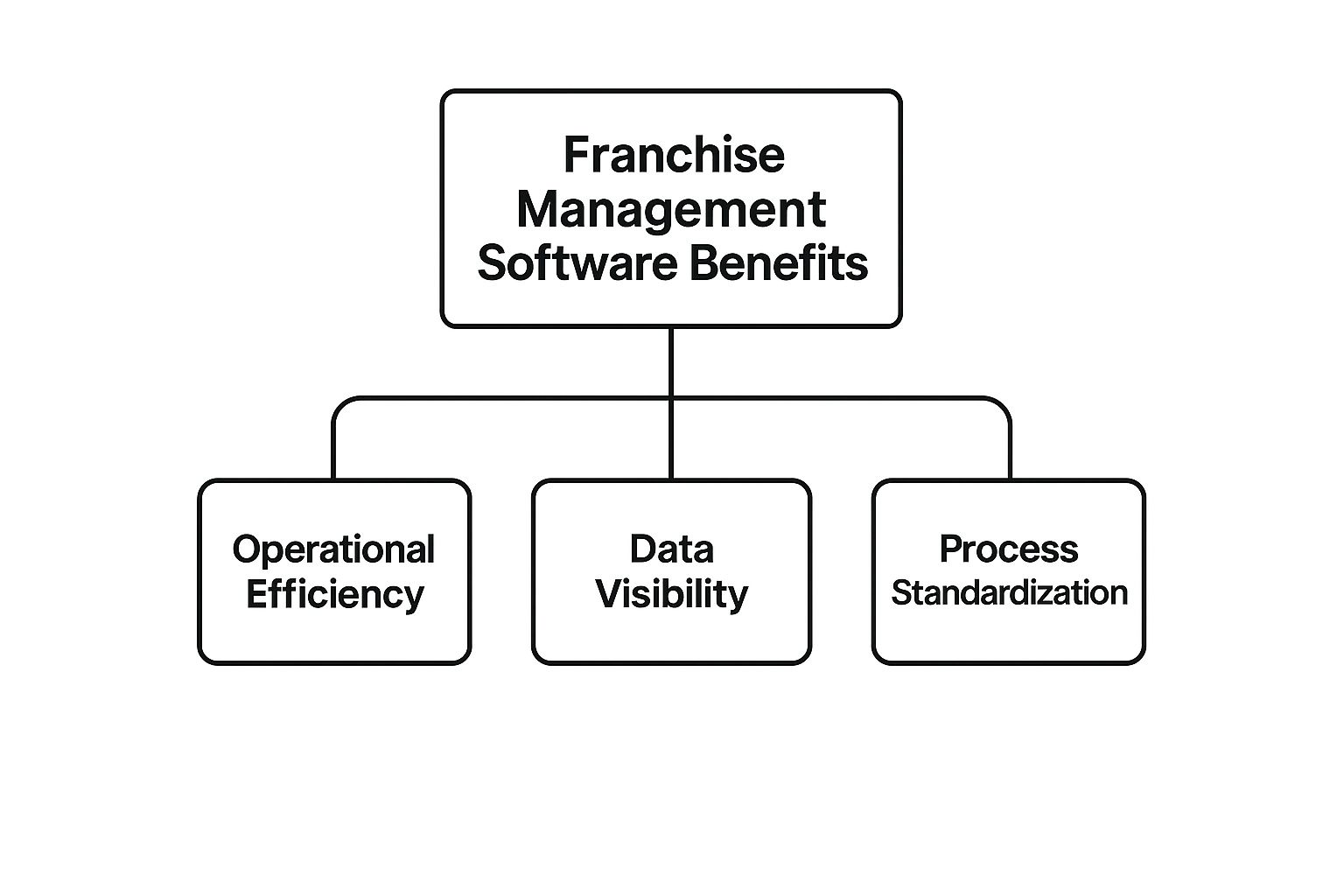 As you can see, all the major wins come from creating efficient, visible, and standardized processes across your entire network.
Operations And Compliance Management
Consistency is the absolute cornerstone of a great franchise. The features focused on operations and compliance are all about making sure every single location executes your brand’s playbook flawlessly. This is where you standardize excellence. A perfect example is a mobile audit tool. It lets a field consultant walk into a location and run through a standardized checklist right on their tablet. They can snap photos, add notes, and generate a report with actionable feedback before they even leave the parking lot. That’s instant, constructive guidance that directly improves how that store runs.
The point of operational tools isn’t to micromanage. It's to empower franchisees with clear standards and give franchisors the visibility needed to uphold the brand promise at every location.
Another key operational feature is the digital operations manual. This isn’t some dusty binder on a shelf; it’s a living, breathing knowledge base for all company procedures, recipes, and policies. It’s instantly updatable, so franchisees always have the latest info. To show how these features serve different parts of your organization, let's break down where the value lands.
Feature Breakdown by Franchise Department
This table illustrates how specific software features benefit various departments, highlighting the platform's cross-functional impact.
| Core Feature | Primary Beneficiary (Department) | Key Outcome |
|---|---|---|
| Mobile Audit Tools | Operations / Field Support | Improved brand consistency and real-time performance feedback. |
| Automated Royalty Collection | Finance / Accounting | Drastically reduced administrative work and improved cash flow. |
| Digital Asset Management (DAM) | Marketing | Ensured brand integrity and empowered local marketing efforts. |
| Learning Management System (LMS) | Training & Onboarding | Faster, more consistent franchisee ramp-up and reduced support load. |
| Support Ticketing System | Franchisee Support / Ops | Quicker issue resolution and a clear record of support interactions. |
As you can see, a single platform delivers targeted value across the board, from finance to field support, making everyone's job easier and more effective.
Financial Management And Performance
Manually chasing down sales data and calculating royalties is an administrative nightmare. It’s slow, full of errors, and a massive waste of time. Financial management tools automate these critical tasks, bringing clarity and accuracy to both you and your franchisees. Here are the must-haves:
- Automated Royalty Collection: The software plugs right into point-of-sale (POS) systems to pull sales data, calculate royalties and marketing fund contributions, and fire off invoices automatically.
- Performance Dashboards: This gives you a real-time, at-a-glance view of key performance indicators (KPIs) across the whole network. You can filter by region or drill down to a single location to spot trends and identify top performers.
- Financial Reporting: Generate detailed reports on revenue, profitability, and other financial metrics to make smart, data-driven decisions about the health of your system.
Brand And Marketing Asset Control
Your brand is your most valuable asset. Keeping it consistent across hundreds of locations is a huge challenge. Marketing modules give you central control while empowering franchisees with the tools they need for effective local marketing. This usually centers around a Digital Asset Management (DAM) library. It’s a single, cloud-based home for all approved logos, ad templates, social media graphics, and promotional materials. Franchisees can grab what they need 24/7, ensuring they always use on-brand, up-to-date creative. This simple tool kills the risk of an old logo or off-brand message popping up in the wild.
Training And Onboarding Systems
Getting new franchisees up to speed quickly and correctly is non-negotiable for fast growth. A Learning Management System (LMS) built into your software standardizes this entire process. You can create structured onboarding paths with video modules, quizzes, and downloadable guides. This ensures every new owner gets the same high-quality training on your brand, operations, and systems before they even open their doors. For a deeper look at what makes a platform truly robust, you can check out our detailed guide covering different types of software for franchises.
How to Choose the Right Software for Your Franchise
 Picking a new franchise management software is a massive decision, one that will absolutely shape the future of your entire network. This isn't just about buying another tool. It's about investing in the central nervous system for your whole brand.
A rushed choice here can lead to absolute chaos—wasted money, frustrated franchisees, and a system that creates more problems than it solves.
To get it right, you need a clear, practical way to think through the decision. This isn't about finding the platform with the longest feature list. It’s about finding the one that actually solves your biggest headaches and can grow with you from 10 locations to a thousand.
Picking a new franchise management software is a massive decision, one that will absolutely shape the future of your entire network. This isn't just about buying another tool. It's about investing in the central nervous system for your whole brand.
A rushed choice here can lead to absolute chaos—wasted money, frustrated franchisees, and a system that creates more problems than it solves.
To get it right, you need a clear, practical way to think through the decision. This isn't about finding the platform with the longest feature list. It’s about finding the one that actually solves your biggest headaches and can grow with you from 10 locations to a thousand.
Start by Defining Your Core Needs
Before you even think about watching a demo, look inward. What are the biggest operational pains causing friction in your franchise right now? Forget software features for a minute and focus on the real-world problems. Are you burning hours manually chasing down royalty payments? Is keeping brand consistency across locations a constant battle? Is your franchisee onboarding process a slow, disorganized mess? Write down your top three to five pain points. This list is your compass. It will guide every single step of your evaluation. For instance, if lousy communication is your main issue, then a platform with a killer centralized hub and a slick support ticketing system should be at the very top of your list. If your financial reporting is a total black box, then automated royalty collection and real-time performance dashboards are non-negotiable.
Prioritize Scalability and Integration
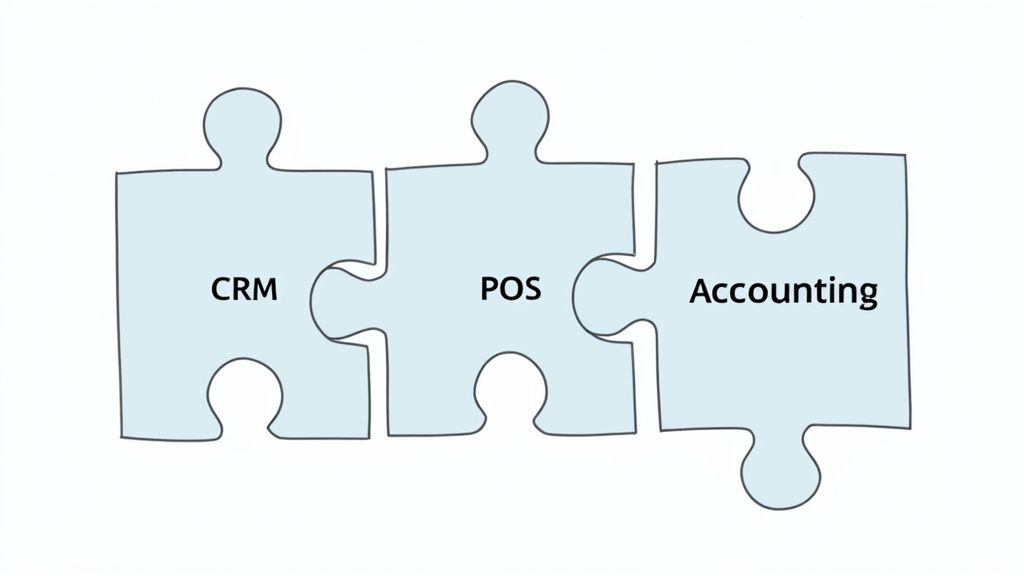
The software that works perfectly for five locations might completely implode at 50. A huge part of your evaluation has to be a platform's ability to scale. You need to ask vendors how their system handles the data load and operational complexity of hundreds of units. Just as important are its integration capabilities. Your franchise management software doesn't live on an island. It has to play nicely with the tools you already rely on, especially your Point of Sale (POS) and accounting software.
A platform that doesn’t integrate with your existing tech creates data silos, forcing your team into the soul-crushing work of manual data entry. This defeats the entire purpose of a unified system and creates more work, not less.
Always, always ask for a live demonstration showing how the software connects to your specific tools. Don't just take their word for it. See it with your own eyes and make sure the data flows smoothly in both directions without any hiccups.
Focus on User Experience for Everyone
A platform can have all the power in the world, but it's totally useless if your team and franchisees find it clunky or confusing. The user interface (UI) and user experience (UX) aren't just about pretty screens; they directly impact whether people will actually use the software. You have to evaluate the experience for two key audiences:
- Your Corporate Team: Can they easily pull reports, manage brand assets, and communicate with the network without wanting to pull their hair out?
- Your Franchisees: Is the interface intuitive for busy owners who aren't tech wizards? Is there a solid mobile app for managing things on the go?
The best way to figure this out? Bring a few of your trusted franchisees into the demo process. Let them click around and give you their honest, unfiltered feedback. Their buy-in is absolutely critical for a successful rollout, and including them early makes them feel like partners in the decision.
Calculate the True Cost of Ownership
That monthly subscription fee is just the tip of the iceberg. To understand what you’re really going to spend, you need to calculate the Total Cost of Ownership (TCO), which includes all the other expenses that sneak up on you. Make sure you ask vendors about:
- Implementation and Setup Fees: Is there a one-time cost to get everything configured and running?
- Training Costs: Is training included, or is that an extra line item on the invoice?
- Ongoing Support: What level of customer support comes with the standard price? Are there premium support tiers you'll need?
- Data Migration: Are they going to charge you to import your existing data from your old systems?
Getting clear on these "hidden" costs prevents nasty budget surprises later and gives you a much more realistic picture of the long-term financial commitment. For a deeper look at selecting the right business tools, you might find this independent guide on choosing the best small business HR software helpful. While it's focused on HR, its core principles for evaluating software apply across the board. By following this simple, structured approach—defining your needs, checking for scalability, testing usability, and calculating the true cost—you can confidently pick a franchise management software that will become a powerful engine for your brand's growth.
Executing a Smooth Software Implementation
Picking the perfect franchise management software is a huge win, but let's be honest—that's only half the battle. The most powerful platform on the planet will flop if the rollout is clumsy, confusing, or alienates the very people it’s supposed to help: your franchisees. A smart, deliberate implementation plan is what turns a great software choice into a system-wide success story. Think of it like building a new highway. You wouldn’t just show up and start pouring asphalt wherever it looks good. You'd meticulously plan the route, figure out how to manage traffic, and keep the local residents in the loop. A software rollout needs that same level of care—a clear roadmap, a dedicated team, and constant communication to avoid causing operational gridlock.
Assembling Your Implementation Team
Your very first move should be putting together a dedicated, cross-functional implementation team. This isn't a one-person show. You need key players from different corners of your organization to make sure every angle is covered and to build buy-in from the ground up. Your team should absolutely include members from:
- Operations: They live and breathe the day-to-day workflow of franchisees. Their input is gold.
- Marketing: They’ll ensure brand assets, campaign tools, and messaging are all correctly integrated.
- Finance: You'll need their expertise to set up royalty collection and financial reporting correctly.
- IT: They're the ones who will handle the technical heavy lifting of data migration and system integrations.
This diverse group becomes the command center for the entire project. Their collective know-how ensures the new system actually works for every part of the business, not just one department.
The Power of a Phased Rollout
A "big bang" launch where you flip the switch for everyone at once is a classic recipe for disaster. A much smarter, safer approach is a phased rollout. Start with a small, manageable pilot group. This lets you test the software in a real-world setting and iron out any kinks before pushing it out to the entire system. Hand-pick a few of your most trusted, tech-savvy, and engaged franchisees for this pilot program. Their experience will be invaluable. They’ll uncover usability issues you never even thought of and give you the brutally honest feedback you need to refine your training materials and processes.
Involving franchisees early doesn't just help you debug the software; it transforms them from potential resistors into your biggest advocates. When the full rollout happens, these pilot users become champions who can vouch for the new system's benefits to their peers.
Communication and Training Are Non-Negotiable
You simply cannot over-communicate during an implementation. Set up a clear communication plan that keeps everyone in the loop with regular updates, timelines, and FAQs. That kind of transparency dials down anxiety and stops rumors before they can even start. At the same time, you need to invest heavily in top-notch training. This isn't just a single, boring webinar. Develop a multi-format training program with live sessions, on-demand video tutorials, and a detailed knowledge base people can reference anytime. And be sure to tailor the training to different roles—a franchisee's needs are completely different from a front-line employee's. This focused approach ensures everyone feels confident and capable from day one. When you nail the implementation process, you also boost your franchise sales pipeline, because a strong operational backbone is a huge selling point for new candidates. You can learn more about how operational efficiency impacts growth in our guide on sales funnel optimization. The market for these platforms is growing for a reason—they solve real-world scaling challenges. The all-in-one franchise management software market was valued at around USD 1.5 billion in 2025, with a projected 12% CAGR through 2033. This growth is being driven by cloud solutions that make sophisticated tools accessible to more brands, though effective implementation planning remains a critical hurdle for many. To dig deeper into this trend, you can find more insights about the all-in-one franchise software market on datainsightsmarket.com.
The Future of Franchise Management with AI
 The world of franchise management software is about to get a whole lot smarter, and it’s all thanks to artificial intelligence and automation. These technologies are no longer just for managing tasks; they're becoming proactive partners in growing your brand. The next wave of platforms won't just tell you what happened last month—they'll start predicting what’s coming next.
Imagine having an experienced business analyst on your team working 24/7. That’s what AI is becoming. By crunching historical sales data, local market trends, and even things like weather patterns, these systems will soon deliver startlingly accurate sales forecasts. This lets franchisees make smarter calls on inventory and staffing, which flows right to the bottom line.
The world of franchise management software is about to get a whole lot smarter, and it’s all thanks to artificial intelligence and automation. These technologies are no longer just for managing tasks; they're becoming proactive partners in growing your brand. The next wave of platforms won't just tell you what happened last month—they'll start predicting what’s coming next.
Imagine having an experienced business analyst on your team working 24/7. That’s what AI is becoming. By crunching historical sales data, local market trends, and even things like weather patterns, these systems will soon deliver startlingly accurate sales forecasts. This lets franchisees make smarter calls on inventory and staffing, which flows right to the bottom line.
Predictive Analytics for Proactive Support
One of the biggest game-changers AI brings is the ability to spot at-risk franchisees before they start to struggle. An AI-powered system can keep an eye on dozens of key performance indicators (KPIs) in real-time—everything from a dip in foot traffic to slower-than-usual royalty payments. When the software flags a pattern that usually leads to a drop in performance, it can automatically alert your field support team. This flips your entire support model on its head. You move from reactive firefighting to proactive coaching, giving you a chance to step in with the right help long before a small hiccup turns into a full-blown crisis.
The future of franchise support isn't about looking in the rearview mirror at last month's numbers. It's about looking ahead through the windshield, using predictive insights to steer franchisees toward success before they ever go off course.
The Rise of Intelligent Automation
Automation is also getting an upgrade, moving in to kill off the last bits of tedious, manual work that still slow down franchise operations. We're going way beyond simple payment reminders and into intelligent, context-aware automation that can handle complex workflows from start to finish. Think about what this could do:
- Automated Lead Nurturing: Instantly engage new franchisee leads with personalized email and text message sequences, making sure no potential owner goes cold.
- Compliance Management: Automatically send reminders for expiring certifications or licenses and track renewals without anyone having to chase people down.
- Dynamic Training Paths: Assign specific training modules to an employee or franchisee based on their actual performance data, closing skill gaps on the fly.
Mobile-First Platforms Are Non-Negotiable
As franchise operations get more fluid and fast-paced, the need for powerful, mobile-first platforms is absolutely exploding. Modern franchise management software has to give everyone—from the CEO to a field consultant to a franchisee on the floor—the power to run their part of the business from any device, anywhere. This means your field consultant can wrap up a full site audit, upload photos, and assign follow-up tasks from their tablet before they even leave the parking lot. It means a franchisee can approve a new marketing campaign or check their daily sales dashboard while grabbing coffee. This level of on-the-go access isn't a nice-to-have anymore. It’s a core requirement for running an efficient, modern franchise network and staying ahead of the competition.
Got Questions? We’ve Got Answers.
Jumping into the world of franchise management software can feel like a big step, and you’ve probably got a few questions. Let's tackle some of the most common ones we hear from franchisors.
So, What's This Going to Cost Me?
The price tag on franchise management software isn't one-size-fits-all—it really varies. The cost hinges on how many locations you have, how many people need to use the system, and exactly which features you need to run your brand. Most platforms run on a subscription model, usually charging a monthly fee for each unit. That fee can be anywhere from $50 to several hundred dollars per location. But don't forget about the one-time setup fee. When you're budgeting, think about the total cost, which includes getting the system running, moving your data over, training your team, and any ongoing support you might need. It's about more than just that monthly number.
Will This Software Play Nice With Our Other Systems?
Yes, it absolutely should. Any modern platform worth its salt is built to integrate with the tools you already use. Top-tier franchise management solutions come with ready-made connections to the big names in point-of-sale (POS), accounting software like QuickBooks, and all sorts of marketing automation tools. When you’re talking to vendors, ask for their full list of standard integrations. If you use a specialized tool, ask them about their API (Application Programming Interface) to see if a custom connection is possible. Getting all your systems to talk to each other is a must-have—it's the only way to get a single, trustworthy view of what's happening across your entire franchise network.
How Hard Is This for My Franchisees to Actually Use?
This might be the most important question of all. If your franchisees can't easily use the software, they just... won't. The best platforms are designed with a clean, intuitive interface that makes sense for everyone, from your corporate power users to busy franchisees who aren’t tech gurus. Look for a system with a simple dashboard, a solid mobile app, and great training materials like video tutorials or a knowledge base you can search easily. The best way to know for sure? Run a small pilot test. Let a handful of your franchisees try it out and give you their honest feedback before you roll it out everywhere. Their buy-in is what will make or break the entire project.
Ready to stop leads from going cold and turn more prospects into owners? FranFunnel automates the first 60 seconds of lead engagement, boosting response rates and maximizing your marketing ROI. See how our platform can future-proof your franchise sales by booking a demo.