The intro call agent runs every lead thread until a rep decides to step in. When that happens — when a rep types a message directly into the conversation — the agent shuts off. Not after the next scheduled message. Not after the rep clicks a toggle somewhere. The moment the rep sends a manual message, the agent is done with that thread.
That is the mechanic. Everything else is configuration.
Why Most Teams Skip the Agent Entirely
The objection sounds reasonable: "What if the AI says the wrong thing to a hot lead?" So the rep handles the inbox manually. The hot lead gets a reply sometime that afternoon. The other twelve leads from that morning get nothing.
The math does not work out in the rep's favor.
Forty-four percent of franchise brands never send a personal reply — just an automated acknowledgment, or nothing at all. That figure comes from submitting actual inquiries to 530 franchise brands and clocking what came back. The problem is not that brands are using automation. The problem is that the automation they are using is generic. A confirmation email that says "Thanks for your interest" and stops there is not a conversation. It is a receipt.
The intro call agent exists to fix that. It fires a personalized text in under 60 seconds, uses the candidate's name, and asks a question. The rep's concern — that automation will cost them the hot lead — is exactly backwards. The rep who handles the inbox manually is the one losing hot leads, because nobody is covering the overnight submissions, the weekend form fills, or the twelve simultaneous inbounds on a Tuesday afternoon.
"44% of franchise brands never send a personal reply — just an automated acknowledgment, or nothing at all." — FranFunnel Franchise Lead Response Time Study · 530 brands · fielded March–April 2025
What the Agent Does Before Any Rep Gets Involved
The intro call agent handles the front end of every new lead conversation. That means:
- Personalized first text in under 60 seconds, written to the candidate, with a question that invites a reply
- Answers to common early questions — territory, investment range, timeline, process overview — without a rep lifting a finger
- Calendar-connected time offers surfaced directly in the text thread: not a booking link the candidate has to click out to, but actual available slots the candidate replies to with their pick
- Once a time is chosen, the invite goes out on the rep's behalf. The rep shows up to a scheduled call with the full conversation thread above it.
- Reminder texts before the call, so the rep's show rate is not dependent on the candidate remembering a meeting they booked via text three days ago
The agent stays active across all of that. It does not send one message and hand off. It runs the full conversation until the discovery call is booked, until the CRM stage transitions, or until a rep decides to step in.
The Takeover Mechanic: One Action, No Configuration
Here is what a rep actually does to take over a thread: they open it and send a message.
That is the entire process. The moment the rep's manual message goes out, the agent for that stage shuts off. No toggle in the settings. No "pause AI" button in the thread. No email to send, no Slack message to post. The rep types. The agent stops.
The conversation continues in SMS, with the rep driving. The full thread history is visible above the rep's message — every exchange the agent had, every question the candidate asked, every time offer that went out. The rep is not starting cold. They are picking up a warm conversation with context.
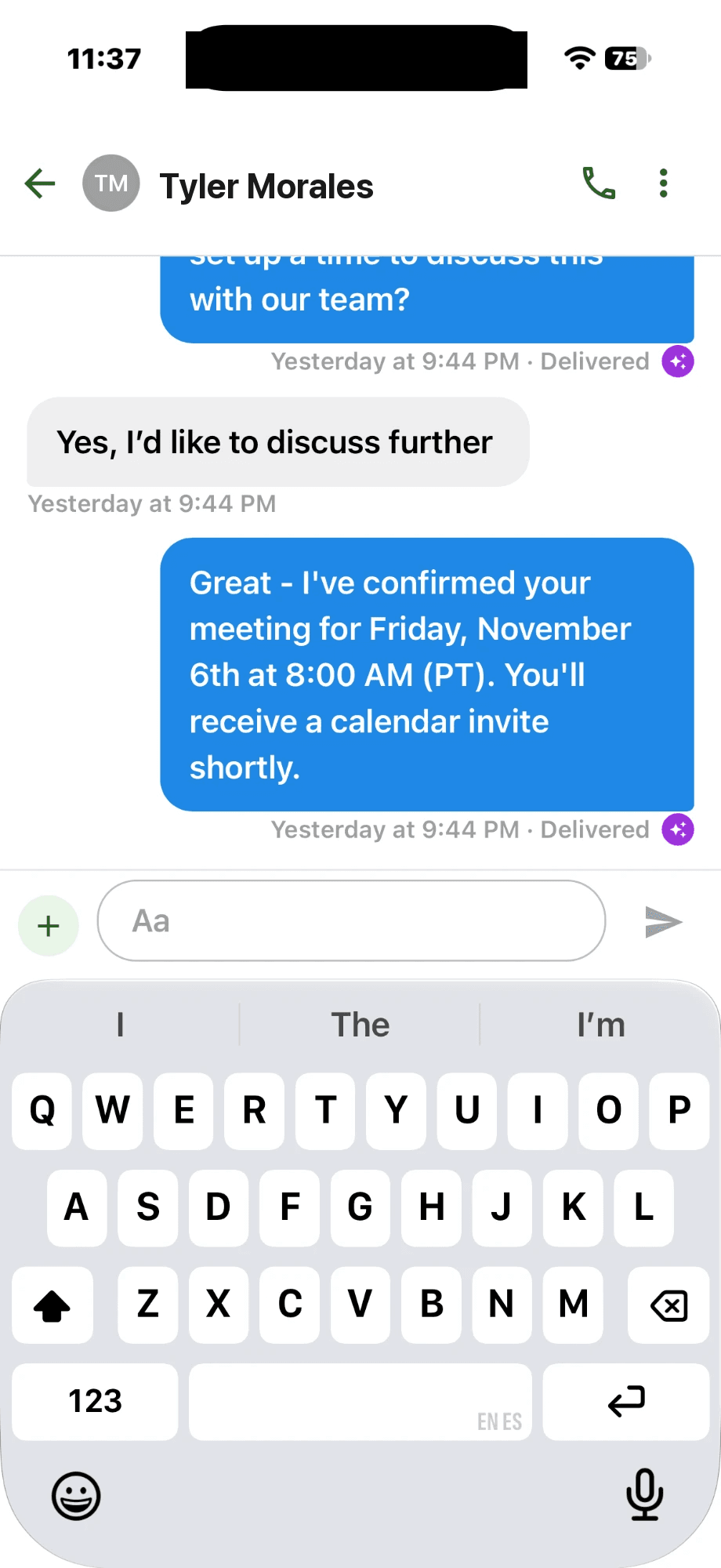 The rep types directly into the thread the agent was handling. Full history is visible above. Names changed.
This is what resolves the AI-vs-human debate for most teams. The question was never "AI or rep?" The question was "how does a rep take over when they want to?" When the answer is one action with no configuration, the debate ends.
What Happens Next: Stage Transition Activates the Next Agent
After a rep takes over manually, the intro call agent stays off for that pipeline stage. It does not restart when the rep goes quiet. It does not send a scheduled follow-up an hour later while the rep is mid-conversation with the candidate.
The next agent in the sequence — the application agent — activates when the CRM stage transitions. The rep marks the lead as having submitted an application, the CRM stage changes, and the application agent picks up from there. The intro call agent's job is finished.
This is the same mechanic whether a rep took over manually or the agent ran the full conversation to a booked call. The transition is the CRM stage change, and the stage change is the proof the candidate moved forward. Stage-specific agents do not guess at where the candidate is in the process. They wait for the signal.
The sequence, in canonical order, looks like this:
| Pipeline Stage | What Triggers the Agent | Agent's Job |
|---|---|---|
| New lead | Form submission | Engage, answer questions, offer times, book the intro call |
| Application | CRM stage change to Application | Follow up on the open application, answer next-steps questions |
| FDD Sent | CRM stage change to FDD Sent | Check in during the 14-day window, answer FDD questions |
| Discovery Day | CRM stage change to Discovery Day | Confirm attendance, logistics, reminders |
Each agent is built by the FranFunnel team to match the engagement, questions, and tone that stage actually requires. The rep does not configure the prompts. When the process changes, the client solutions manager makes the change.
Configuring the Intro Call Agent for Your Process
There is no prompt editor to maintain. FranFunnel builds the intro call agent to match your sales process, your brand voice, and the questions your candidates actually ask. What you configure is the meeting controls around it:
- Which calendar the agent books against, and which rep's availability it surfaces
- How far out it offers times — a minimum notice window keeps candidates from booking a call 20 minutes from now
- Whether a buffer gap sits between meetings, so a rep who does five calls in a day does not end up back-to-back without a break
- Whether reminder texts go out before the call and when — the day before, the morning of, an hour out
The agent itself — the conversation, the questions it answers, the tone it uses — is built and maintained for you. You approve it before it goes live. It goes live in 48 hours. When something in your process changes, you tell your client solutions manager and they make the change.
The rep's job is to show up to calls, not to manage an inbox. The intro call agent runs the inbox. The rep steps in when they want to. The CRM stage change moves the conversation to the next agent.
That is the full configuration. Book a demo at franfunnel.com and we will show you what the first text looks like for your brand — and what a rep actually does to take over.