
In the competitive world of franchising, generic outreach doesn't cut it. While SMS marketing boasts unparalleled open rates, its true power for franchise development lies in a specialized approach. Standard SMS marketing best practices often overlook the unique multi-location structure, compliance complexities, and lead-to-owner journey inherent in the franchise model. A blast-and-pray strategy that works for a single ecommerce store can quickly lead to compliance issues and alienated prospects when applied across a national franchise network.
This guide moves beyond the basics, offering eight actionable, franchise-focused strategies designed to convert more leads into franchisees. You will learn precisely how to build and manage a text messaging program that respects legal boundaries while driving significant results.
We'll explore how to navigate TCPA compliance across different territories, personalize communication for high-value prospects, and automate follow-up without losing the human touch. These aren't just tips; they're a blueprint for building a scalable, compliant, and highly effective SMS program. Implementing these sms marketing best practices will help you accelerate growth for both franchisors and their individual owner-operators, ensuring every marketing dollar works harder to close more deals.
- Obtain Clear and Explicit Consent
The foundation of any successful and compliant SMS marketing strategy is obtaining clear, explicit consent from every subscriber before sending them promotional messages. This isn't just a suggestion; it's a legal requirement under regulations like the Telephone Consumer Protection Act (TCPA) in the United States. Gaining explicit permission ensures you are communicating with an engaged audience that wants to hear from you, which directly boosts open rates and conversions while protecting your brand's reputation.
For franchises, maintaining consistent consent practices across all locations is crucial for brand integrity. This involves implementing transparent opt-in mechanisms and meticulously documenting consent to build trust and ensure compliance.
How to Implement Explicit Consent
Effective consent collection should be seamless for the customer yet thorough for compliance. Here are proven methods for franchise brands:
- Keyword Text-to-Join: Encourage customers to text a specific keyword (e.g., "DEALS" or "PIZZA") to a short code. For example, a local Domino's franchise can place signs at the counter that say, "Text PIZZA to 12345 for exclusive weekly specials!"
- Web Forms & Checkboxes: Add a dedicated field for phone numbers on your website's checkout page or newsletter signup form. Sephora excels at this by using a clear, unticked checkbox with language like, "Yes, sign me up for text alerts about new products and promotions. Msg & data rates may apply."
- In-Store QR Codes: Place QR codes on menus, posters, or receipts that link directly to a mobile-friendly opt-in page. Target effectively uses this in-store, guiding shoppers to a form with explicit consent language and details about their SMS program.
Actionable Tips for Success
To master this key aspect of SMS marketing best practices, focus on clarity and record-keeping.
Key Insight: Your consent language should be simple and unambiguous. State exactly what subscribers will receive (e.g., "weekly offers," "appointment reminders") and the potential frequency.
Stay updated on legal and ethical standards to protect your franchise. For comprehensive guidance on navigating legal and ethical requirements, including staying informed on recent consent updates, it's vital to consult authoritative resources regularly. Always store consent records with a timestamp, source, and the exact language used during the opt-in. This documentation is indispensable during a compliance audit.
- Perfect Your Timing and Frequency
Strategic timing is one of the most critical SMS marketing best practices for maximizing impact. Unlike email, which can be read hours later, SMS messages are typically opened within minutes. Sending your texts at the right moment ensures they arrive when your audience is most receptive, dramatically increasing the likelihood of engagement and conversion. Sending too often can lead to annoyance and opt-outs, while sending too infrequently can cause subscribers to forget why they signed up.

For franchises, synchronizing send times across different time zones is essential. A national campaign must be scheduled to respect local hours, ensuring a 10 AM message in New York doesn't wake up a customer at 7 AM in California. This thoughtful approach prevents subscriber fatigue and preserves the personal, immediate nature of text messaging.
How to Implement Strategic Timing
Aligning your message delivery with customer behavior patterns is key. Here are proven methods for franchise brands to perfect their timing and frequency:
- Align with Daily Routines: Send messages that coincide with relevant daily activities. For example, Starbucks effectively sends promotional SMS messages between 7-9 AM, aligning with morning coffee runs and commuting habits.
- Target Peak Service Hours: Deploy promotions when customers are most likely to need your service. Uber capitalizes on this by sending ride offers during peak commuting hours (7-9 AM, 5-7 PM) and on weekend evenings.
- Leverage Shopping Windows: Retail brands can drive immediate sales by targeting key shopping periods. A clothing franchise like H&M might send a flash sale alert on a Saturday morning, when people are making weekend plans and are more inclined to shop.
Actionable Tips for Success
To master timing, focus on testing, analysis, and respecting subscriber preferences. A well-timed message feels helpful, not intrusive.
Key Insight: Always send messages within standard business or leisure hours, typically between 10 AM and 8 PM in the recipient's local time zone. Respecting personal time is non-negotiable for maintaining a positive brand perception.
Limit promotional blasts to 2-4 messages per month unless the subscriber has explicitly requested more. Monitor your open rates, click-through rates, and opt-out rates to identify the best days and times for your specific audience. For more insights into optimizing your communication cadence, review these lead follow-up best practices to ensure your strategy is effective. Ultimately, giving subscribers the option to set their own frequency preferences is the gold standard for a customer-centric SMS program.
- Craft Concise and Compelling Messages
In the world of SMS marketing, brevity is power. With a strict 160-character limit, every word must work hard to grab attention, communicate value, and drive action. Crafting concise and compelling messages is a core tenet of effective SMS marketing best practices because it respects the customer's time and the direct, personal nature of the channel. A powerful SMS message cuts through the noise, delivers its point immediately, and makes it easy for the recipient to respond.

For franchises, this means each location must master the art of delivering a clear, on-brand message in just a few lines. Whether it's a promotional offer, an appointment reminder, or an order update, the content must be instantly understandable and impactful to maintain customer engagement and drive results across the entire network.
How to Implement Concise Messaging
The key is to prioritize information and use powerful, action-oriented language. Here are examples of how to apply this practice:
- Promotional Offers: Lead with the value proposition. Nike excels with messages like: “🔥 24hr FLASH SALE: 30% off running shoes! Shop now: nike.com/flash Code: RUN30 Reply STOP to opt out.” This is effective because it creates urgency and provides a direct path to purchase.
- Transactional Updates: Be clear and helpful. A local Pizza Hut franchise can send: “Your large pepperoni pizza is ready for pickup! Order #1234. Thanks for choosing Pizza Hut!” This simple, informative message enhances the customer experience.
- Service Alerts: Provide essential information upfront. Bank of America uses direct alerts like: “ALERT: Low balance warning. Your checking account balance is below $25. View details: bofa.com/alerts.” It delivers critical information without any fluff.
Actionable Tips for Success
To perfect your SMS content, focus on clarity, value, and a strong call to action.
Key Insight: Always lead with the most important information. Customers scan texts quickly, so place the offer, discount, or critical alert at the very beginning of the message to ensure it gets noticed immediately.
Develop a consistent brand voice that can be adapted for the brief format of SMS. For a deeper dive into building a messaging framework, explore this helpful communication strategy template to ensure your franchise's texts are always on-brand. Remember to include clear opt-out instructions in promotional messages to maintain compliance and build trust with your audience.
- Implement Strategic Personalization
In today's crowded digital landscape, generic messages are easily ignored. Strategic personalization uses customer data to craft targeted, relevant SMS campaigns that resonate on an individual level. By moving beyond one-size-fits-all broadcasts, you make subscribers feel seen and valued, which dramatically improves engagement, strengthens brand loyalty, and drives higher conversion rates. This is a cornerstone of effective SMS marketing best practices.
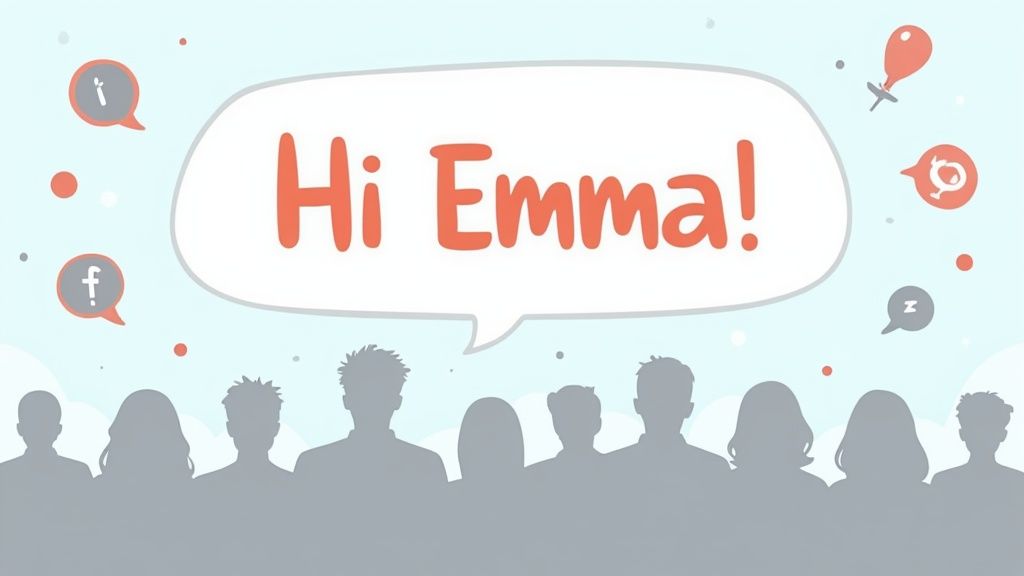
For franchises, personalization can be tailored to a customer's local branch, purchase history, or loyalty status. This ensures that every text feels less like an advertisement and more like a helpful tip from a trusted local business, boosting the message's impact and effectiveness across the entire network.
How to Implement Strategic Personalization
Effective personalization starts with good data and thoughtful segmentation. Here are proven methods for franchise brands:
- Behavior-Based Recommendations: Use a customer's past purchases to send relevant offers. For example, a local pet supply franchise could send, "Hi Sarah, we see you love Acana dog food! Get 15% off your next bag this week only at our downtown location."
- Location-Specific Offers: Leverage geographic data to promote local events or deals. A fitness franchise like Orangetheory Fitness can send a message like, "Hey Mike! Don't miss our special 90-minute DriTri workout this Saturday at the Northside studio. Limited spots available!"
- Milestone & Birthday Messages: Automate messages to celebrate key customer dates. Sephora is a master at this, sending texts like, "Birthday treat for you, Emma! Enjoy a free gift with your next purchase. Valid all month long."
Actionable Tips for Success
To get the most out of personalization, focus on relevance and respect for privacy. Your goal is to be helpful, not intrusive.
Key Insight: Start simple by using a subscriber's first name, then layer in more advanced data points like purchase history or location as you refine your strategy. Always ensure your data is accurate to avoid awkward errors.
Balancing personalization with privacy is critical for maintaining trust. The power of personalization extends beyond SMS; discover how to master cold email personalization to see how these principles apply across different channels. Finally, continuously A/B test personalized messages against more generic ones to quantify the lift and prove the ROI of your efforts.
- Provide Easy Opt-Out Options
Just as important as getting consent is providing a clear and simple way for subscribers to withdraw it. Offering easy opt-out options is not only a legal mandate under regulations like the TCPA, but it's also a fundamental best practice that respects customer autonomy and preserves brand integrity. A frictionless unsubscribe process demonstrates that you value customer choice, which can leave a positive final impression and keep the door open for future re-engagement.
For franchise networks, standardizing the opt-out process across all locations is essential. It ensures every customer, regardless of which franchise they interact with, has the same straightforward experience, reinforcing a consistent and trustworthy brand image while maintaining system-wide compliance.
How to Implement Easy Opt-Outs
The goal is to make unsubscribing effortless and immediate. Integrating multiple opt-out channels ensures every customer can easily manage their preferences.
- Standard Keyword Responses: The most common method is including clear instructions in every message, such as, "Reply STOP to unsubscribe." This should be a universal practice for all promotional texts. The system must be configured to automatically recognize and process keywords like STOP, END, CANCEL, UNSUBSCRIBE, and QUIT.
- Web-Based Preference Centers: More sophisticated brands empower users beyond a simple stop-all command. Best Buy provides a great example with its web-based preference center, allowing customers to log in and select which types of messages they want (e.g., order updates but not marketing deals), giving them granular control instead of forcing a complete opt-out.
- Customer Support Channels: Ensure that customer service staff across all franchise locations are trained on how to manually process opt-out requests received via phone call, email, or in-person interactions. This provides a crucial fallback for customers who may not be comfortable using automated text commands.
Actionable Tips for Success
To master this crucial element of SMS marketing best practices, prioritize immediacy and clarity in your opt-out procedures.
Key Insight: A customer's final interaction with your SMS program should be as positive as their first. A simple, instant opt-out confirmation message like "You have successfully been unsubscribed. You will receive no more messages from us." provides closure and demonstrates professionalism.
Always process opt-out requests immediately and automatically. A delay can lead to frustrated users receiving unwanted messages, which can result in complaints and damage your brand’s reputation. Furthermore, consider offering a "pause" or "snooze" option as an alternative, allowing subscribers to temporarily stop messages for 30 or 60 days instead of unsubscribing permanently. This can significantly reduce list churn.
- Leverage Automation and Triggered Campaigns
One of the most powerful SMS marketing best practices is leveraging automation to send timely, relevant messages based on customer behavior. Setting up triggered campaigns allows you to engage subscribers at key moments in their journey without manual intervention. This approach enhances the customer experience by delivering personalized content at scale, driving conversions, and fostering long-term loyalty.
For franchises, automated workflows ensure consistent communication across all locations. Whether it's a welcome offer for a new subscriber or a reminder for a scheduled service, automation maintains a uniform brand voice and high level of service, which is essential for brand integrity.
How to Implement Automation
Effective SMS automation connects specific customer actions to pre-defined message sequences. This creates a responsive and dynamic communication channel. Here are proven methods for franchise brands:
- Welcome Series: When a customer subscribes, trigger a multi-message welcome series. An Anytime Fitness franchise could send: "Welcome to the club! Your first text-exclusive offer is 15% off personal training. Use code FIT15." A follow-up a few days later could highlight gym amenities.
- Appointment Reminders: Reduce no-shows by automating reminders. A Hand & Stone Massage and Facial Spa can send a message 24 hours before an appointment: "Hi [Client Name], your massage is tomorrow at 3 PM. Reply C to confirm or R to reschedule."
- Cart Abandonment: For franchises with e-commerce, a cart abandonment trigger is crucial. If a customer at a local Edible Arrangements leaves an order incomplete, an automated text can reignite interest: "You left something delicious in your cart! Complete your order now for a sweet treat."
Actionable Tips for Success
To master SMS automation, focus on relevance, timing, and continuous optimization.
Key Insight: The goal of automation isn't just to send messages; it's to continue a conversation. Ensure each automated text feels personal and adds value, rather than coming across as robotic.
Start with simple, high-impact triggers like welcome messages and then gradually build more complex workflows. To understand the broader landscape of digital communication automation, exploring resources on the best email marketing services can offer valuable insights into campaign strategy. Always test your automation flows thoroughly and set frequency caps to avoid overwhelming subscribers. For more ideas on implementation, you can learn more about SMS automation.
- Maintain Clean and Segmented Lists
Sending the same message to your entire subscriber list is a missed opportunity. Effective list management, which involves both regular cleaning and strategic segmentation, is a cornerstone of advanced SMS marketing best practices. By organizing contacts into relevant groups and removing inactive numbers, you ensure your messages are highly targeted, which significantly improves engagement, conversions, and ROI.
For a franchise system, segmentation allows each location to communicate with its specific audience while maintaining overall brand consistency. This practice prevents message fatigue and makes subscribers feel understood, strengthening their connection to your local and national brand.
How to Implement List Hygiene and Segmentation
The goal is to deliver the right message to the right person at the right time. This requires a systematic approach to organizing your subscriber database. Here are proven methods for franchise brands:
- Behavior-Based Segmentation: Group subscribers based on their actions. A retail franchise like The UPS Store can create segments for "frequent shippers," "mailbox renters," or customers who have only used "printing services." This allows for tailored offers, like a discount on shipping for a frequent printer.
- Geographic and Store-Level Targeting: For franchises with multiple locations, segmenting by city, zip code, or preferred store is essential. A fast-food chain like Subway can send a message about a lunch special valid only at a specific downtown location, making the promotion feel exclusive and relevant.
- Engagement-Level Grouping: Create lists for your most engaged users (e.g., VIPs who open every message) and those who are becoming inactive. For example, a fitness franchise like Orangetheory Fitness can send a special "we miss you" offer to members who haven't booked a class in 30 days.
Actionable Tips for Success
To master list management, make it a continuous process, not a one-time task. This ensures your SMS marketing stays effective and efficient.
Key Insight: Start with broad segments and refine them over time. You don't need dozens of complex segments from day one. Begin with simple categories like "new customers" and "loyal customers," then analyze the data to identify more granular opportunities.
Regularly clean your lists at least quarterly to remove invalid or permanently unreachable numbers. This improves your deliverability rates and reduces costs. Furthermore, empower your customers by using a preference center where they can self-select the types of messages they want to receive, such as "weekly deals," "new product alerts," or "event invitations." This not only improves their experience but also automates a key part of your segmentation strategy.
- Track, Measure, and Optimize Performance
Sending messages is only half the battle; the real growth comes from understanding what works and why. Tracking, measuring, and optimizing your SMS performance is a critical practice that turns your marketing efforts from guesswork into a data-driven strategy. This process involves monitoring key metrics to analyze campaign effectiveness, ensuring your messages resonate with your audience and deliver maximum return on investment.
For franchise organizations, this continuous feedback loop is essential. It allows brand-level marketing teams to identify high-performing campaigns that can be standardized across all locations, while also giving individual franchisees the data they need to tailor promotions to their specific local market and customer base.
How to Implement Performance Tracking
A systematic approach to data analysis helps you make informed decisions. Here’s how successful brands track and optimize their SMS marketing best practices:
- E-commerce & Retail: A clothing franchise can track click-through rates (CTR) on links to new product collections, conversion rates from specific discount codes, and overall revenue per message sent. This helps them understand which offers drive the most sales.
- Restaurants & QSRs: A national pizza chain like Papa John's can measure the redemption rate of a "Free Cheesesticks" coupon sent via text. They can also analyze the impact on average order value (AOV) for customers who use the SMS offer versus those who do not.
- Service-Based Franchises: A fitness franchise such as Orangetheory Fitness can track trial conversion rates from texts sent to leads. They can also monitor churn reduction among members who receive class reminders and motivational messages, tying SMS activity directly to customer lifetime value (CLV).
Actionable Tips for Success
To transform raw data into a powerful optimization engine, focus on metrics that directly reflect your business goals.
Key Insight: Don’t get lost in vanity metrics. Focus on the data that directly connects to revenue and customer loyalty, such as conversion rate, redemption rate, and customer lifetime value.
Start by setting up UTM parameters on all links within your texts to accurately attribute website traffic and sales back to specific SMS campaigns. A/B test one variable at a time, such as the offer, the call-to-action, or the send time, to gain clear insights into what drives results. Regularly analyze performance across different customer segments to refine your targeting and personalization strategies for even greater impact.
SMS Marketing Best Practices Comparison
| Item | Implementation Complexity 🔄 | Resource Requirements ⚡ | Expected Outcomes 📊 | Ideal Use Cases 💡 | Key Advantages ⭐ |
|---|---|---|---|---|---|
| Obtain Clear and Explicit Consent | Medium - requires consent management and ongoing compliance | Moderate - infrastructure for opt-in/out tracking | Legal compliance, higher engagement, reduced complaints | New subscriber acquisition, compliance-focused campaigns | Builds trust, ensures compliance, protects reputation |
| Perfect Your Timing and Frequency | High - involves testing, time zone management | Moderate to high - analytics and timing tools | Higher open/response rates, reduced unsubscribes | Promotions requiring optimal send times and pacing | Maximizes engagement, improves ROI and brand perception |
| Craft Concise and Compelling Messages | Low - focused on skilled copywriting | Low - requires copywriting resources | Clear, impactful messages with higher conversions | Quick promotions, alerts, customer updates | Higher CTR, clear communication, respects attention span |
| Implement Strategic Personalization | High - needs robust data and platform capabilities | High - data collection, management, advanced tools | Up to 6x higher engagement, better retention | Targeted campaigns, loyalty programs | Stronger customer loyalty, improved ROI, enhanced experience |
| Provide Easy Opt-Out Options | Low to medium - must maintain opt-out mechanisms | Low to medium - infrastructure for opt-out processing | Legal compliance, reduced spam complaints | Compliance-focused, customer preference management | Maintains trust, legal adherence, positive brand image |
| Leverage Automation and Triggered Campaigns | High - complex setup and integrations | High - CRM, e-commerce integration needed | Scalability, increased conversions, better CX | Behavioral campaigns, automated workflows | Saves time, improves relevance, scalable engagement |
| Maintain Clean and Segmented Lists | Medium - ongoing maintenance and data management | Moderate - data tools and validation processes | Improved targeting, deliverability, engagement | Any list-based SMS marketing, targeted campaigns | Higher conversion rates, cost efficiency, better analytics |
| Track, Measure, and Optimize Performance | Medium to high - requires analytics setup and expertise | Moderate - analytics platforms and tracking tools | Data-driven improvements, better ROI, insights | Performance-driven campaigns, continuous optimization | Informed decision making, performance tracking, ROI maximization |
Turn Your Franchise Leads into Owners with Intelligent SMS
Navigating the landscape of franchise development requires more than just a good concept; it demands a sophisticated communication strategy that meets potential owners where they are. As we have explored, mastering SMS marketing best practices is no longer a niche tactic but a core competency for growth. By moving beyond generic broadcasts and embracing a more intelligent, relationship-focused approach, you can transform your lead generation funnel from a leaky bucket into a powerful conversion engine.
The journey from a simple inquiry to a signed franchise agreement is built on trust, responsiveness, and value. Each best practice we've detailed serves as a critical building block in that process.
- Compliance and Consent: This is your foundation. Securing explicit opt-ins and providing clear opt-out instructions isn't just about avoiding legal trouble; it's about respecting your audience and starting the relationship on the right foot.
- Strategic Messaging: Crafting concise, personalized, and timely messages ensures your communication is welcomed, not ignored. It demonstrates that you understand the prospect's needs and value their time.
- Systematic Execution: Leveraging automation, segmentation, and rigorous performance tracking elevates your strategy from a series of one-off tasks to a repeatable, scalable system that delivers predictable results.
The True Value of a Refined SMS Strategy
Implementing these principles is about more than just improving open rates or getting a few more clicks. It’s about fundamentally changing the dynamic between your franchise brand and your potential partners. When a lead submits an inquiry, the clock starts ticking. An automated, personalized SMS sent within minutes doesn't just feel professional; it captures peak interest and can increase meaningful engagement by over 400%. This is the moment you prevent lead decay and begin a productive conversation.
By thoughtfully segmenting your lists and tailoring messages, you guide prospects through their unique consideration journey, providing the right information at the right time. This level of attentiveness builds confidence and positions your franchise as a supportive, organized, and desirable partner long before the first major call ever takes place. Adopting these SMS marketing best practices is a direct investment in the quality and quantity of your discovery days and, ultimately, your new owner signings. The message is clear: a well-executed SMS program doesn't just find leads, it cultivates the future owners who will drive your brand's success.
Ready to implement a best-in-class SMS strategy without the manual effort? FranFunnel is purpose-built for franchise development, automating the proven practices discussed here to turn your leads into conversations instantly. See how the industry's leading brands use FranFunnel to stop lead decay and sign more franchisees.