
Choosing the right franchise management software isn't just an IT decision; it's a strategic move that can define your brand's growth trajectory. The wrong platform creates operational bottlenecks, frustrates franchisees, and leads to missed revenue opportunities. The right one, however, streamlines everything from lead engagement and sales pipeline management to royalty collection and brand compliance, empowering you to scale efficiently. For many owners, adopting this technology is a core part of their small business digital transformation, enabling centralized control and data-driven decisions. This guide cuts through the marketing noise to provide an in-depth analysis of the 12 best franchise management software solutions available today. We move beyond generic feature lists to give you an honest look at what works, what doesn't, and who each platform is truly built for. Whether you're an emerging brand focused on rapid growth or an established enterprise seeking to optimize operations, this resource will help you find the perfect fit for your network's specific needs. Inside, you'll find detailed profiles of leading platforms like FranFunnel, FranConnect, and FranchiseSoft, alongside evaluations of software aggregators such as Capterra and GetApp. Each review includes a breakdown of core features, ideal use cases, pricing considerations, and potential limitations. With screenshots and direct links provided for every option, you'll have all the information necessary to make a confident, well-informed decision that supports your franchise system for years to come. We’ve done the heavy lifting so you can focus on selecting the tool that will truly accelerate your success.
- FranFunnel
Best for High-Velocity Lead Engagement and Sales Automation
FranFunnel (our product) distinguishes itself as a premier tool in the franchise management software landscape by specializing in one of the most critical and often-overlooked areas of franchise development: initial lead engagement. Rather than trying to be an all-in-one platform, it focuses exclusively on speed-to-lead which can have a massive impact on conversion rate. This specialized approach allows it to address the costly problem of lead decay, where franchisors lose significant marketing investment on inquiries that go stale before a conversation ever begins.
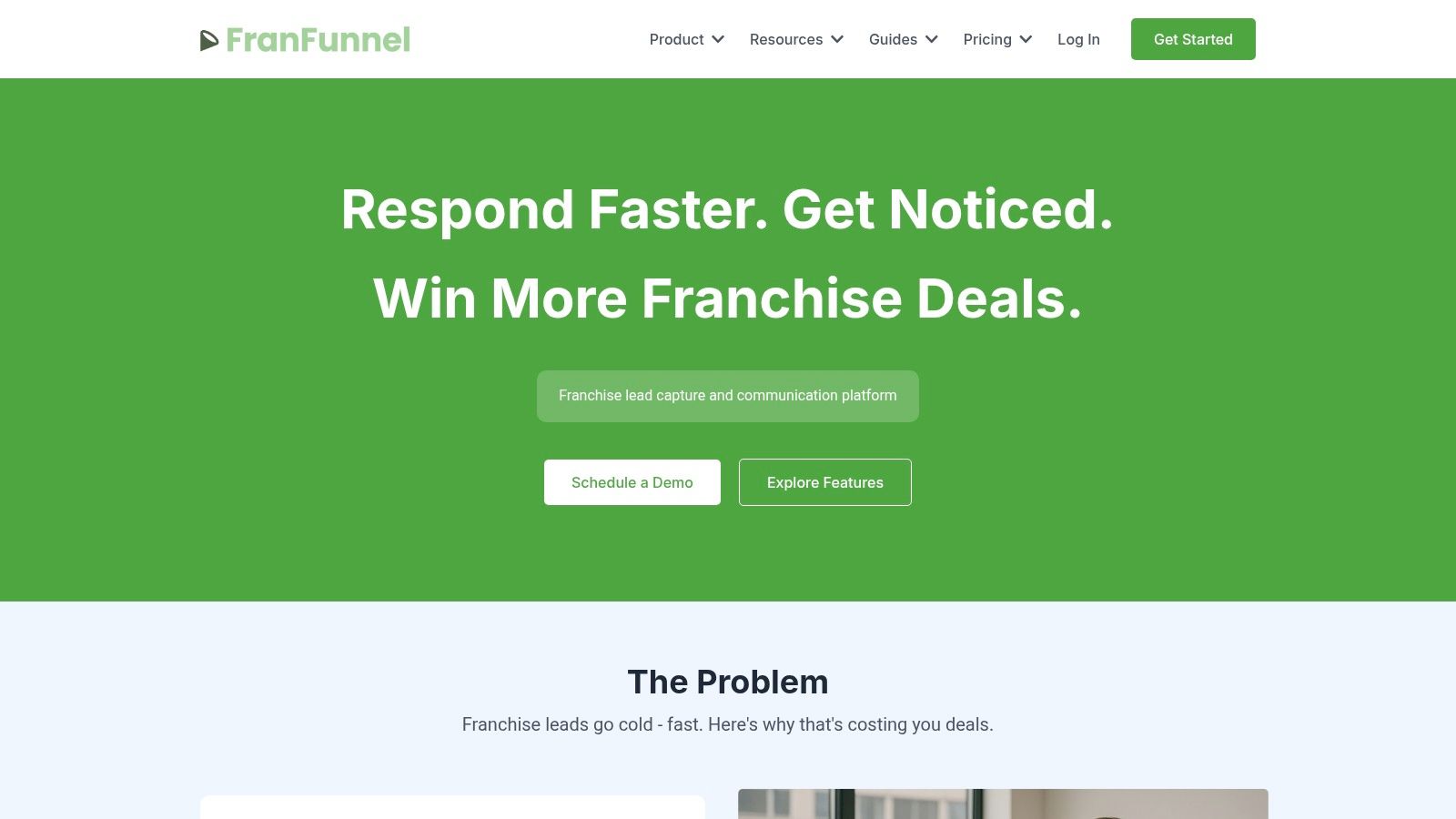 The platform’s power lies in its ability to sit on top of your existing CRM, such as FranConnect, Salesforce, Zoho, or others - acting as a hyper-efficient front-end communication engine. By integrating seamlessly, it ensures all interactions are synchronized in real-time without requiring a disruptive system overhaul. See exactly how this works on top of your franchise CRM.
Key Features and Use Cases
- Automated Multi-Channel Outreach: Upon lead submission, FranFunnel instantly triggers a sequence of communications via SMS, email, and phone. This ensures no lead is left waiting and dramatically increases the likelihood of a response. Users report a significant boost in engagement, with some achieving up to an 85% lead response rate through text messages alone.
- Intelligent Lead Routing and Qualification: The system automatically qualifies leads based on predefined criteria and routes them to the appropriate sales team member. This eliminates manual sorting and ensures prospects are connected with the right person immediately, accelerating the sales cycle.
- Persistent, Automated Follow-Up: FranFunnel’s automated cadences continue to engage leads until a response is received. This frees up development teams from the tedious task of manual follow-up, allowing them to focus their energy on qualified, engaged prospects.
- Mobile App and Live Analytics: The dedicated mobile app empowers sales teams to manage leads on the go, while the analytics dashboard provides real-time insights into campaign performance. This allows for quick adjustments to optimize response rates and conversion funnels.
- **Ease of Use:**FranFunnel's focus is on making lead engagement as easy as texting your friends. If it's any harder than that, your conversion rate is likely suffering.
FranFunnel’s white-glove onboarding and commitment to no long-term contracts make it an accessible and low-risk solution for franchise brands looking to maximize their marketing ROI and close more deals. It is an exceptional choice for franchisors who have invested heavily in lead generation but struggle to convert those leads into meaningful conversations.
- Pricing: $249/mo for all features, all integrations, and full white-glove service.
- Pros: Specialized focus on lead engagement, seamless integration with major CRMs, significant boosts in response rates, low-risk implementation, white-glove service from top tier team.
- Cons: Niche focus best for businesses with inbound leads that are high-LTV - franchising, real estate, mortgages, etc.
- Website: https://www.franfunnel.com
- FranConnect
FranConnect is a dominant force in the industry, offering an enterprise-level, end-to-end franchise management platform. It's designed to be a single "system of record" for franchisors, covering the entire lifecycle from initial lead to ongoing operations. The platform serves established, multi-location brands seeking comprehensive control over every aspect of their network.
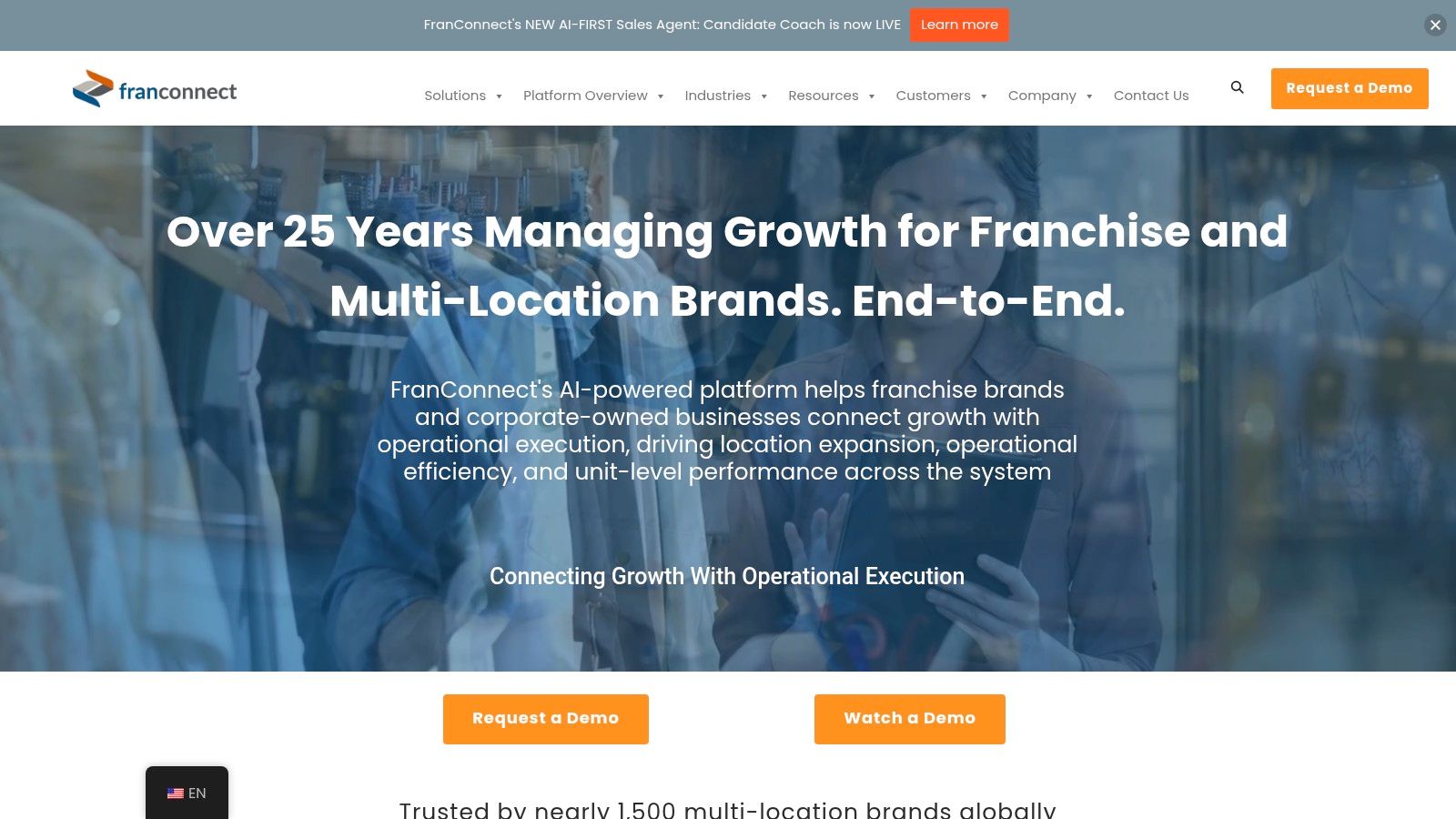 Its strength lies in its sheer breadth of functionality. Users can manage franchise development with a dedicated CRM, plan territories, oversee field operations with audit tools, and ensure brand compliance across hundreds of units. The platform also integrates royalty management, training through a built-in LMS, and a central content hub for franchisees.
Key Features & Use Cases
- Franchise Development: Manage leads, sales pipelines, and territory mapping in one place.
- Field Operations: Conduct digital checklists, audits, and site visits to enforce brand standards.
- Royalty & Financials: Automate royalty collection and reporting with integrations for POS and ERP systems.
- Franchisee Engagement: Utilize the franchisee portal and LMS for training, onboarding, and communication.
Our Assessment
FranConnect is often considered the best franchise management software for large-scale enterprises that need an all-in-one solution. Its long-standing market presence and recognition by the International Franchise Association (IFA) provide significant credibility. For more information on its CRM capabilities, see this in-depth analysis of franchise CRMs. However, its enterprise focus can be a drawback for smaller or emerging brands. Some users report a steep learning curve, implementation friction, and occasional performance issues due to the platform's complexity. Pricing is customized based on the modules selected and the size of the franchise system, requiring a direct sales consultation.
| Pros | Cons |
|---|---|
| Deep, franchising-specific modules | Can feel heavy and complex for smaller brands |
| Single system for the entire franchise lifecycle | User reviews note implementation friction |
| Strong reputation and large US customer base | Premium pricing for enterprise-level features |
Website: https://www.franconnect.com
- FranchiseSoft
FranchiseSoft offers a comprehensive, all-in-one franchise management software platform designed to streamline the entire franchise lifecycle. It provides a cohesive suite of tools that supports everything from initial sales and development to ongoing operational management and franchisee support, making it a strong contender for brands seeking an integrated solution.
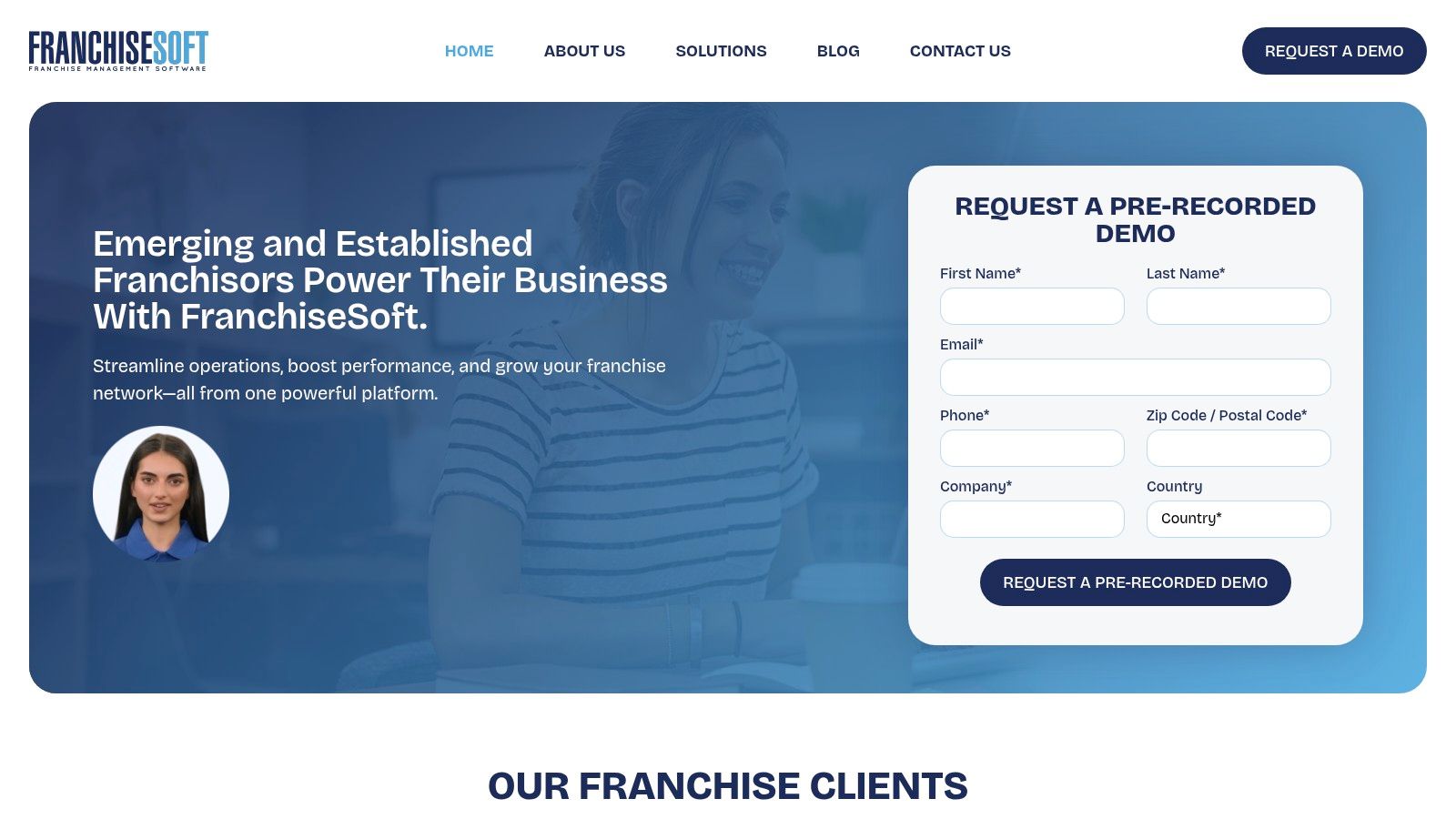 The platform’s strength lies in its purpose-built modules that address specific franchising needs. Users can manage franchise sales pipelines, onboard new owners, handle brand compliance through field audits, and automate royalty calculations. By offering tools for both franchisor and franchisee workflows, it helps improve communication and operational efficiency across the entire network.
Key Features & Use Cases
- Franchise Sales CRM: Manage lead pipelines and track candidates through the discovery process with a dedicated applicant learning center.
- Operations & Compliance: Use digital checklists and field audit tools to enforce brand standards and manage support tickets.
- Royalty Management: Automate the calculation, invoicing, and collection of royalties with built-in analytics.
- Onboarding & Training: Manage brand assets and franchisee training materials through a central digital library and LMS.
Our Assessment
FranchiseSoft is one of the best franchise management software options for franchisors who need a unified system that goes beyond a generic CRM. Its strong focus on the North American market and modules that support both franchisor and franchisee needs make it a practical choice. However, the platform’s true potential is often unlocked through its onboarding services, which may be an additional consideration for new users. Its pricing is not publicly available and requires a direct consultation, which can be a hurdle for brands in the early research phase. The system’s breadth means smaller brands might need to invest time to leverage all its features effectively.
| Pros | Cons |
|---|---|
| Purpose-built franchising modules | Pricing is not publicly listed and requires contact |
| Supports both franchisor and franchisee workflows | Onboarding services may be needed for full value |
| Strong focus on the North American market | Can be complex for brands with simpler needs |
Website: https://franchisesoft.com
- BrandWide by Soffront
BrandWide by Soffront is an all-in-one franchise management platform designed to support multi-unit brands across their entire operational lifecycle. The software provides a unified system for managing franchise development, onboarding new locations, ensuring compliance, and handling day-to-day franchisee support and financials. It is tailored for franchisors seeking a comprehensive toolset that can scale with their network.
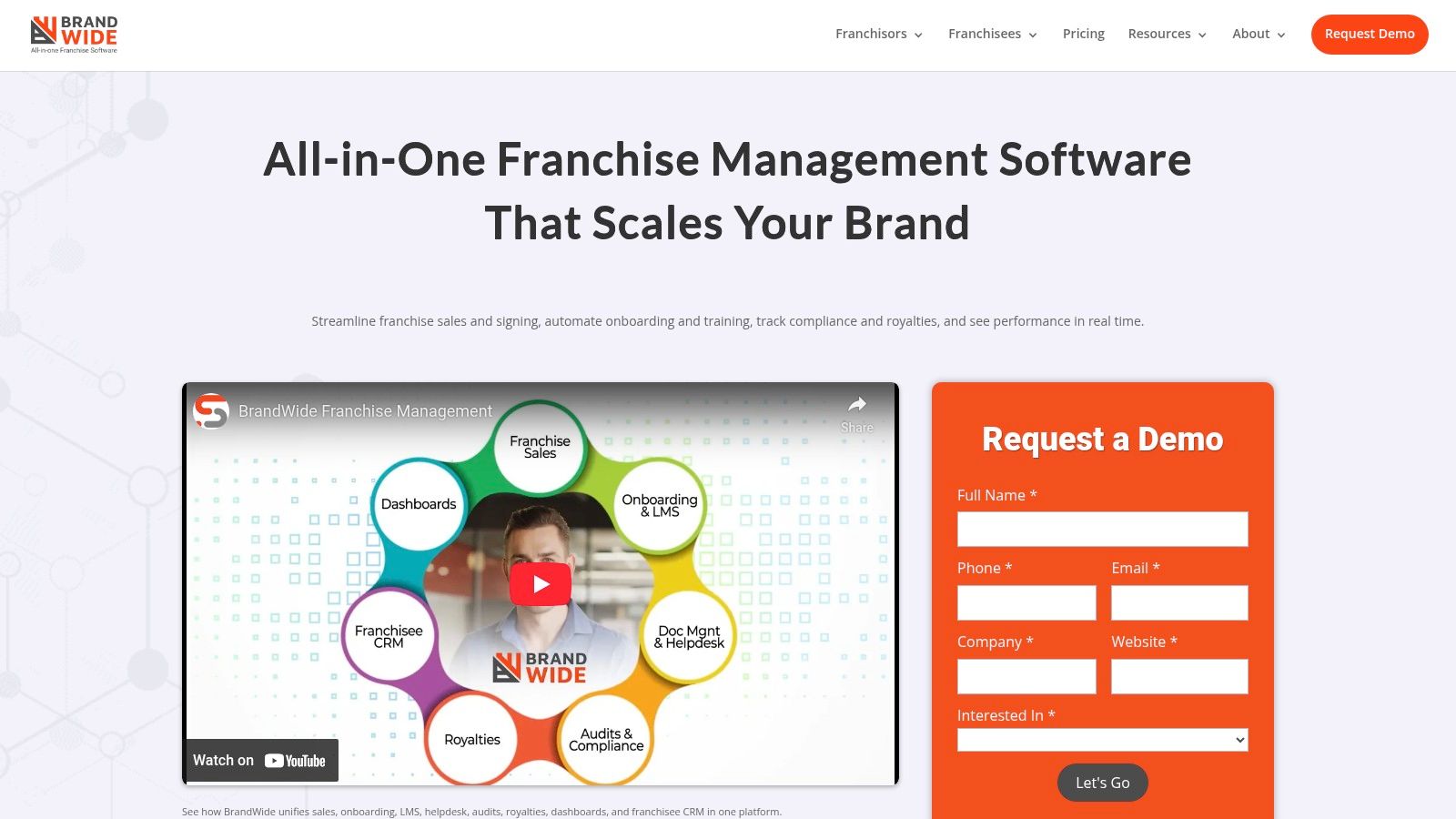 The platform's strength lies in its modular yet integrated approach, covering everything from the initial sales process to ongoing royalty collection. Users can leverage automated workflows for sales and store openings, a built-in Learning Management System (LMS) for training, and a central intranet for communication. This makes BrandWide a strong contender for the best franchise management software for brands that value end-to-end functionality.
Key Features & Use Cases
- Automated Sales & Onboarding: Streamline the franchise sales process and manage new store opening checklists.
- Built-in LMS: Develop training programs and track franchisee certifications directly within the platform.
- Helpdesk & Intranet: Provide a centralized franchisee support system with ticketing and a document hub.
- Royalties & KPIs: Automate royalty calculations and monitor key performance indicators with POS and accounting integrations.
Our Assessment
BrandWide is an excellent choice for franchisors needing a scalable, full-suite solution with dedicated support. The offering of managed implementation and 24/7 assistance is a significant differentiator, aiming to reduce the friction often associated with adopting a new, complex system. Its recognition as a US supplier member of the IFA adds to its credibility within the industry. However, the breadth of its features can present a learning curve, potentially requiring a concerted change management effort within the organization. The pricing is not publicly listed and requires a consultation, which is typical for platforms of this scope but may be a barrier for those in the early research phase.
| Pros | Cons |
|---|---|
| Broad module coverage scalable to thousands of units | Complex interface breadth may require change management |
| Managed implementation and 24/7 support available | Pricing not openly available; demo required |
| US presence with strong franchisor references | May be overly comprehensive for very small franchises |
Website: https://meetbrandwide.com
- Naranga
Naranga is a US-based franchise operations suite that positions itself as an accessible and user-friendly platform. It's designed for emerging and mid-sized brands that need a comprehensive system without the enterprise-level complexity. The platform offers a modular approach, allowing franchisors to build a solution that fits their immediate needs and scales with them.
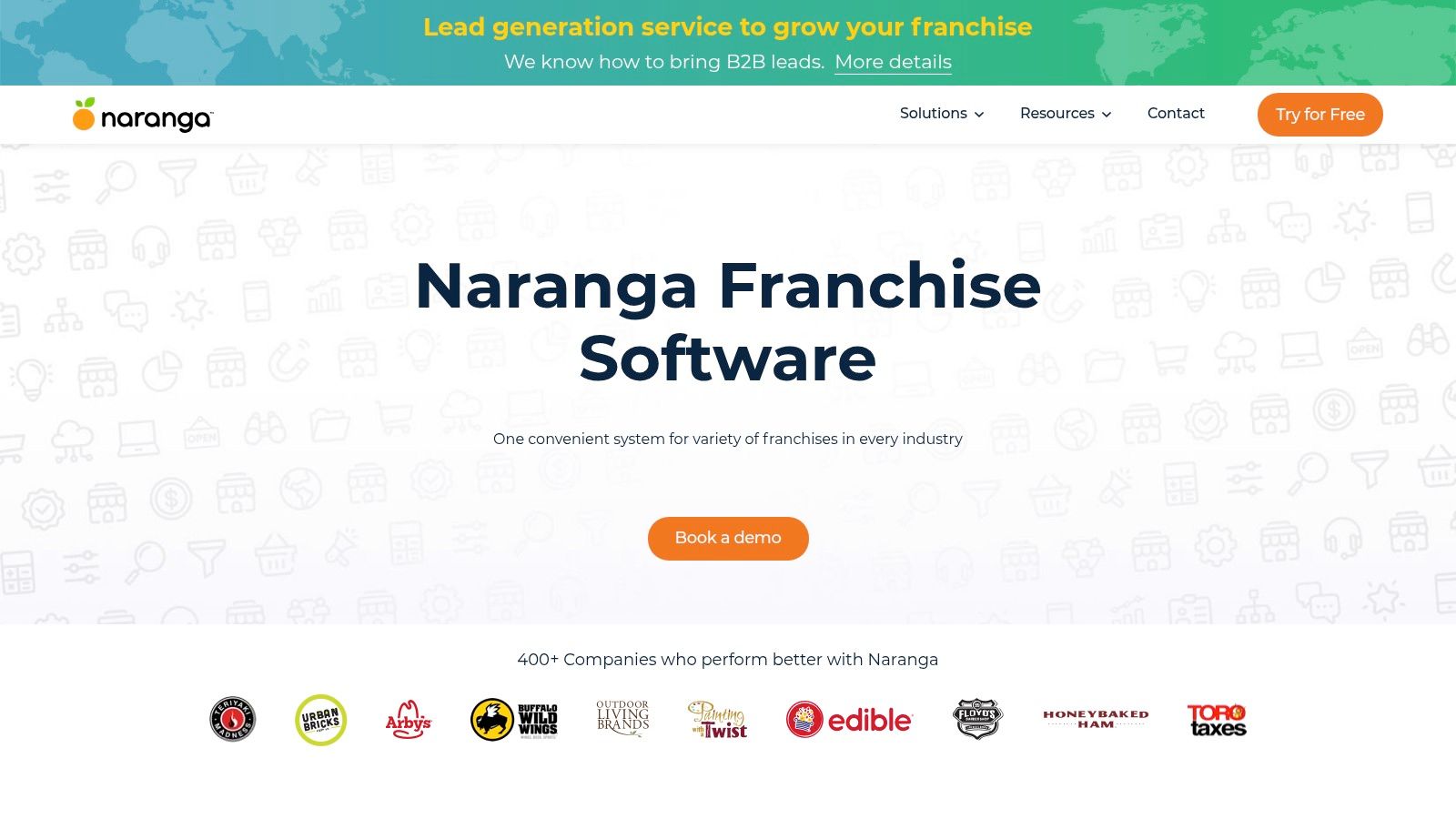 The suite emphasizes quick setup and simplicity. Its core strength lies in streamlining daily operations through a centralized console, franchisee portal, and field audit tools. This focus on ease of use makes it a strong contender for franchisors prioritizing rapid adoption and straightforward functionality for managing brand consistency and communication across their network.
Key Features & Use Cases
- Lead Management & Onboarding: Manage franchise leads with a built-in CRM and streamline new franchisee onboarding workflows.
- Operations Console: Provide franchisees with a central portal for communications, document access, and support ticketing.
- Training & Audits: Develop and deploy training modules through an integrated LMS and conduct field audits with digital checklists.
- Reporting & Support: Generate performance reports and manage franchisee support requests efficiently.
Our Assessment
Naranga stands out as one of the best franchise management software options for brands that value speed and simplicity. Its all-in-one, modular design is ideal for emerging franchisors who need a robust system that can be configured and launched in weeks, not months. The focus on usability can significantly lower the barrier to entry for both franchisors and their franchisees. However, some users have noted that the mobile experience for certain modules lags behind the desktop version in terms of full functionality. Similar to many competitors in this space, pricing is not publicly available and requires a direct consultation and demo to receive a customized quote based on your specific needs and the size of your franchise system.
| Pros | Cons |
|---|---|
| All-in-one approach for emerging/mid-sized brands | Some modules have limited mobile parity, per users |
| Strong focus on ease of use and configurability | Pricing is not public and requires a sales consultation |
| Quicker onboarding timelines (often just weeks) | May lack the deep functionality of enterprise rivals |
Website: https://naranga.com
- FRM Solutions
FRM Solutions offers an enterprise-grade franchise relationship management platform built on the robust Microsoft Dynamics 365 framework. It is specifically engineered for complex, multi-brand franchisors that require deep customization and seamless integration with existing enterprise systems. The platform focuses on centralizing data and workflows to align sales, legal, operations, and finance departments. Its core strength is its powerful backend, which supports intricate business rules and compliance requirements. FRM Solutions provides tools for managing everything from the sales gateway and legal document tracking to field operations and royalty collection. This makes it an ideal choice for large franchise networks looking for a highly configurable and scalable system.
Key Features & Use Cases
- Legal & Compliance Tracking: Manage Item 20 disclosures, FDDs, and other critical compliance documents within a centralized system.
- Field Operations: Deploy a dedicated site-visit app with weighted scoring to maintain brand standards and track franchisee performance.
- Royalty Automation: Integrate directly with POS and ERP systems to automate royalty calculations and financial reporting.
- Franchisee Gateway: Provide franchisees with a portal for communication, support requests, and streamlined product ordering.
Our Assessment
FRM Solutions stands out as one of the best franchise management software options for enterprise-level organizations that already operate within the Microsoft ecosystem. Its foundation on Dynamics 365 allows for unparalleled customization and integration, making it a powerful tool for franchisors with unique operational needs or multi-brand portfolios. The US-based support and proven industry footprint add significant value. However, this level of customization comes at a cost. The platform requires a significant implementation effort and timeline, making it unsuitable for smaller or emerging brands needing a quick, out-of-the-box solution. Pricing is not publicly available and is determined through a consultative sales process tailored to the enterprise's specific requirements.
| Pros | Cons |
|---|---|
| Strong enterprise customization and integrations | Requires significant enterprise implementation effort |
| Supports multi-brand and cross-department alignment | No public pricing; consultative sales process |
| US-based support with proven industry footprint | Can be overly complex for brands without dedicated IT teams |
Website: https://www.frmsolutions.com
- ClientTether
ClientTether is a franchise-tuned CRM and sales automation platform focused on accelerating lead engagement and streamlining the sales pipeline. It was designed by franchisors to address the critical need for rapid lead response and persistent follow-up, combining communication tools with sales process management.
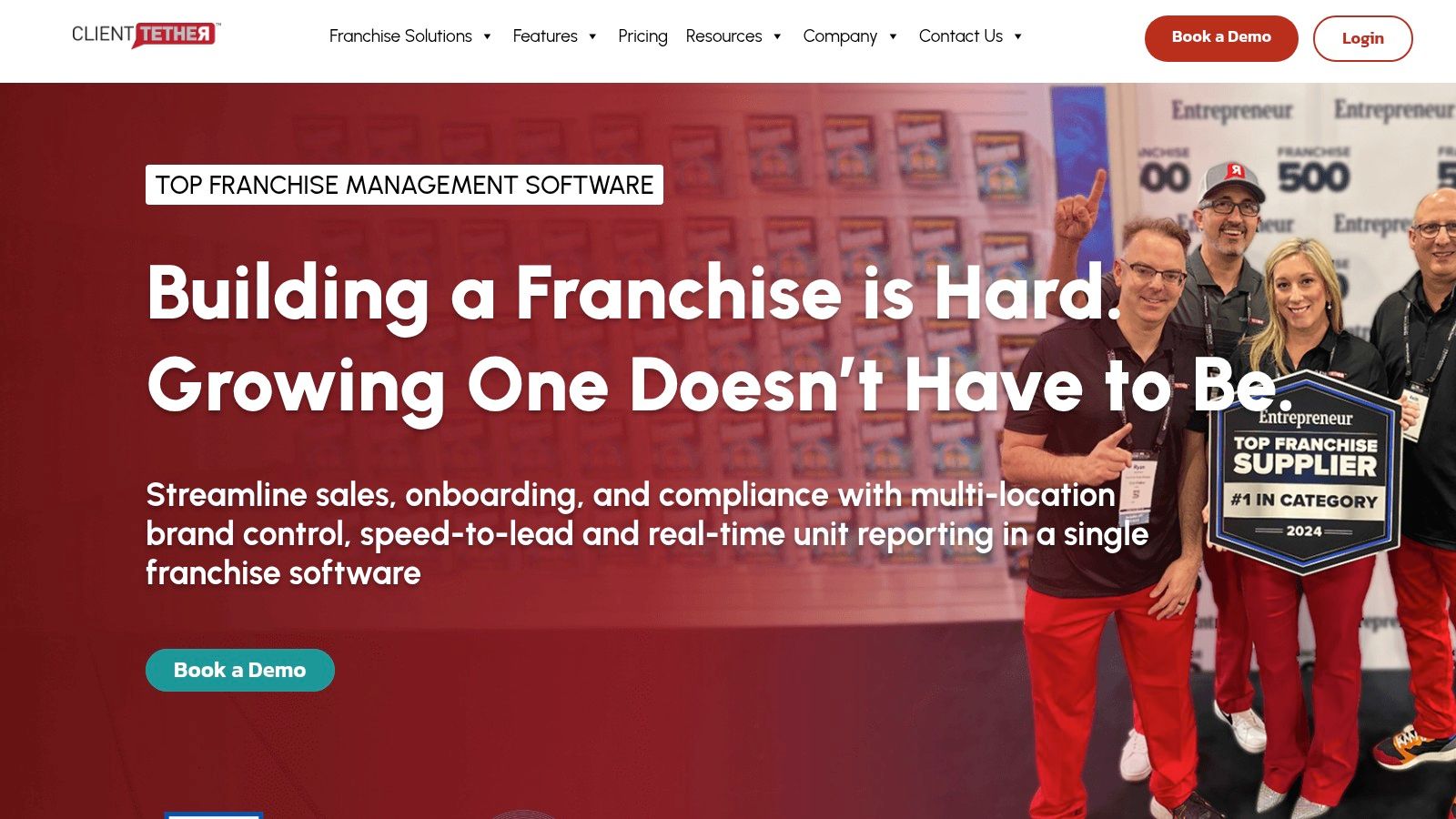 Its core strength is its powerful automation engine. The platform enables franchisors to implement 30-second lead response systems using automated voice, text, and email sequences. It provides multi-location dashboards, proposal generation with e-signatures, payment processing, and a mobile app for field teams, making it a robust tool for franchise development and customer acquisition across the network.
Key Features & Use Cases
- Sales & Lead Automation: Deploy automated playbooks for immediate lead response and long-term nurturing.
- Multi-Channel Communication: Engage leads and customers via phone calls, two-way texting, and email campaigns from one dashboard.
- Franchise Network Management: Oversee multiple locations with centralized reporting, campaign management, and reputation tools.
- Proposals & Payments: Streamline the closing process with integrated proposals, e-signatures, and payment collection.
Our Assessment
ClientTether is one of the best franchise management software options for brands prioritizing franchise sales and lead conversion. Its focus on time-to-value and ease of use makes it highly effective for teams needing to improve response times and sales velocity without the complexity of an enterprise ERP. The platform's strong automation capabilities directly address the challenge of lead leakage and inconsistent follow-up. For more insights into these challenges, you can explore the essentials of the management of a franchise. However, its specialization in front-office activities means it lacks the comprehensive back-office operational tools found in all-in-one suites. Franchisors needing deep royalty management, supply chain, or franchisee onboarding modules may need to integrate it with other systems. Pricing is not publicly listed and requires a direct sales consultation.
| Pros | Cons |
|---|---|
| Designed by franchisors for rapid time-to-value | Limited back-office operational features |
| Powerful automation for lead conversion | Pricing not listed publicly |
| Praised for ease of use and strong ROI | Not an all-in-one ERP-style solution |
Website: https://clienttether.com
- Square for Franchises
Square for Franchises extends its renowned POS system into a powerful multi-location management solution, making it an excellent choice for retail and restaurant franchises. Rather than being a full back-office suite, it centers its functionality around the point-of-sale, building outwards with integrated tools for payments, team management, loyalty programs, and marketing. This POS-first approach simplifies operations for franchisees while giving franchisors centralized oversight.
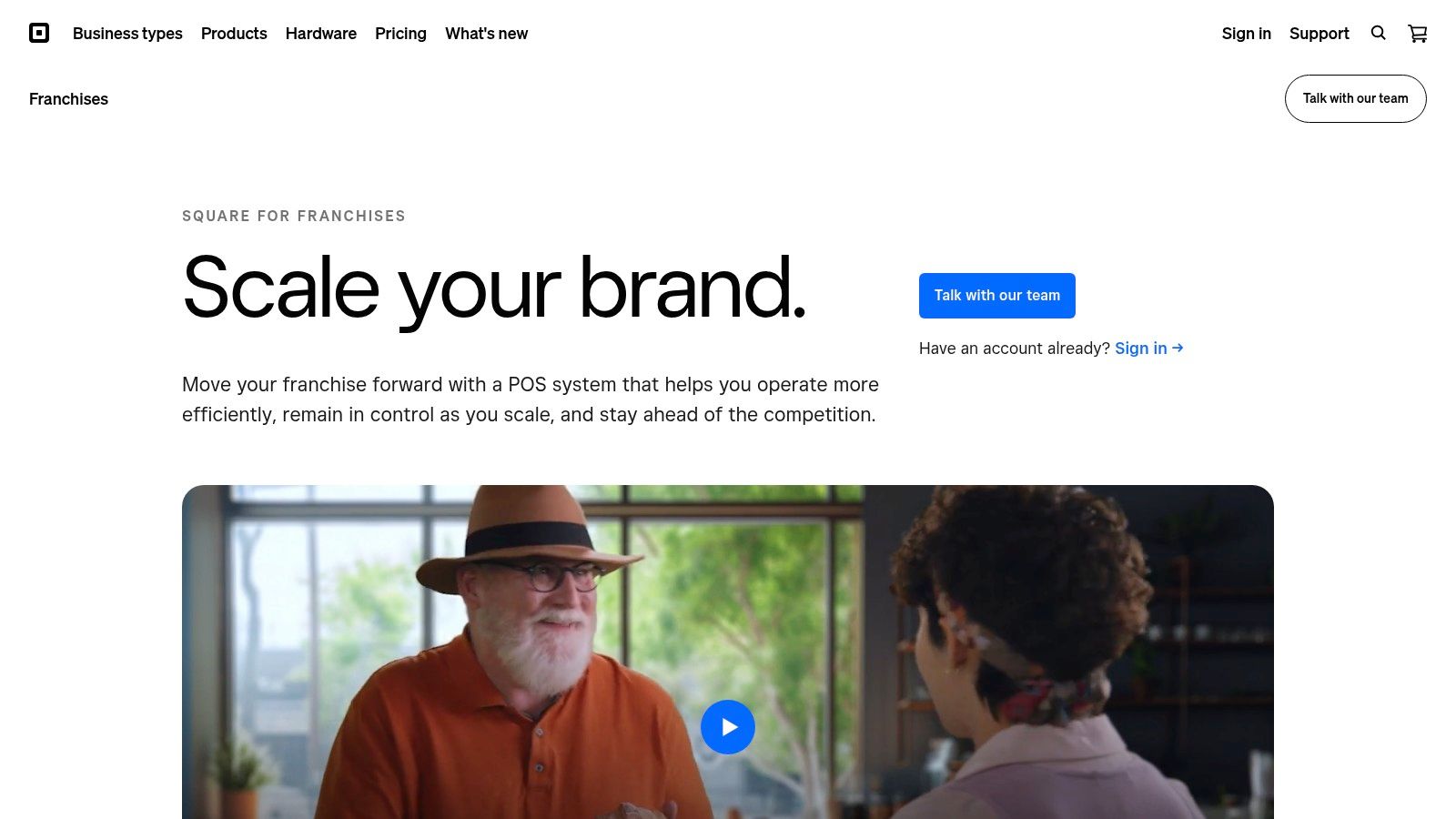 Its strength lies in its cohesive ecosystem and rapid deployment. Franchisors can standardize hardware and software across all locations, manage menus or item catalogs from a central dashboard, and roll out system-wide loyalty and gift card programs. The platform's open APIs and extensive marketplace allow for seamless integrations with third-party apps for online ordering, delivery, and accounting.
Key Features & Use Cases
- Centralized POS Management: Standardize menus, pricing, and permissions across all franchise locations.
- Customer Engagement: Implement and manage unified loyalty programs, gift cards, and email marketing campaigns.
- Team & Operations: Utilize integrated payroll, shift scheduling, and team management tools for streamlined staffing.
- Sales Analytics: Access consolidated sales reports and dashboards to monitor performance across the entire network.
Our Assessment
Square offers one of the best franchise management software solutions for brands where the POS is the central nervous system. Its transparent pricing and scalable hardware make it accessible for emerging franchises, while its robust feature set supports established networks. When evaluating Square, it is helpful to see comparisons with other prominent systems; this breakdown of Peppr vs. Square POS offers a useful perspective. The primary limitation is its focus; it is not an all-in-one franchise management platform. Critical functions like FDD management, royalty collection, and legal compliance are not built-in and would require separate systems or custom integrations. This makes it ideal for operational consistency but less so for comprehensive franchisor back-office administration.
| Pros | Cons |
|---|---|
| Transparent pricing on core POS and add-ons | Not a full franchise back-office suite (lacks legal/royalty) |
| Fast deployment with a large integration ecosystem | Deeper customizations may require partners or API development |
| Excellent for restaurant and retail franchise rollouts | Primarily focused on operational and sales data, not compliance |
Website: https://squareup.com/us/en/franchises
- Bindy
Bindy is a highly-focused platform specializing in retail execution, audits, and task management for franchise brands. It excels at helping franchisors enforce brand standards and operational procedures across their network, particularly in sectors like retail, foodservice, and hospitality. Rather than trying to be an all-in-one system, Bindy drills down on ensuring consistency and compliance in the field.
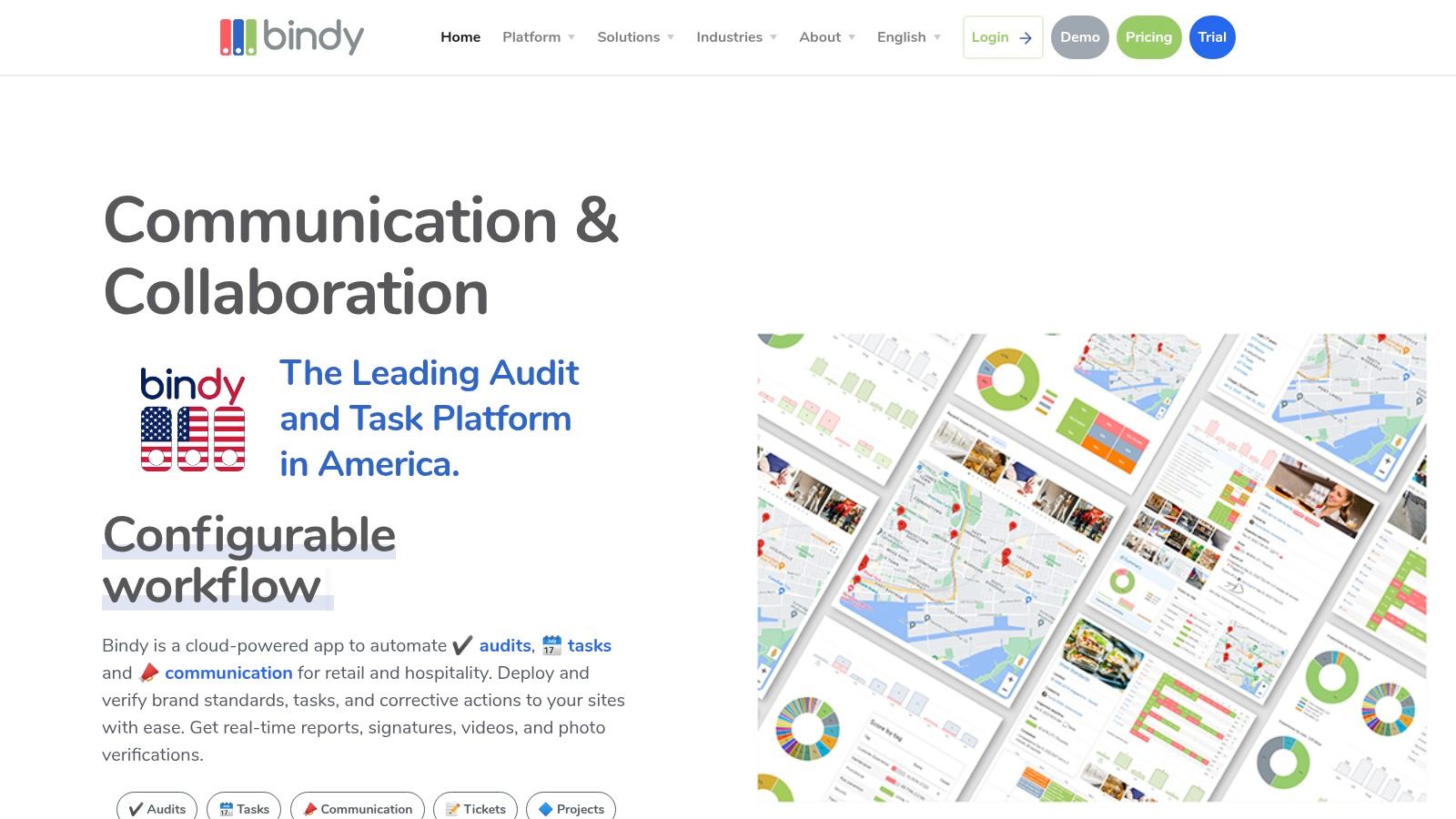 The platform empowers field managers and corporate teams to conduct detailed site inspections using custom forms, complete with photo evidence and geotagging. Its strength lies in its closed-loop system for corrective actions, allowing franchisors to assign tasks, track resolutions, and ensure that identified issues are actually fixed. This focus makes it a powerful tool for maintaining quality control at scale.
Key Features & Use Cases
- Custom Audits & Inspections: Build custom forms and checklists for site visits, operational reviews, and safety audits.
- Automated Corrective Actions: Automatically assign tasks with deadlines based on inspection results to ensure follow-through.
- Real-Time Dashboards: Monitor network-wide compliance, identify recurring issues, and track performance with live data.
- Communication & Task Management: Streamline communication between corporate and franchisees for daily tasks and projects.
Our Assessment
Bindy is one of the best franchise management software options for brands whose primary challenge is operational consistency. Its field-first design and intuitive mobile interface lead to high adoption rates among franchisees and field staff. Many established franchise brands rely on Bindy because of its proven effectiveness and fast deployment. The platform's main limitation is its specialized nature. It is not a full-suite franchise ERP and lacks modules for franchise sales, royalty collection, or financial management. It is designed to integrate with other systems to cover those functions. Pricing is typically based on usage, which can result in a lower total cost of ownership compared to comprehensive, seat-based platforms.
| Pros | Cons |
|---|---|
| Excellent for field audits and brand standards | Not a full franchise ERP; lacks financial tools |
| Fast deployment and high user adoption | Requires integrations for royalties and lead management |
| Proven with hundreds of veteran franchise brands | Narrow focus may not suit all franchisors |
Website: https://www.bindy.com
- GetApp – Franchise Management Software category
GetApp isn't a single software but a Gartner-owned directory that serves as an excellent starting point for discovering the best franchise management software. It provides a comprehensive, up-to-date listing of platforms, allowing franchisors to conduct side-by-side comparisons based on features, pricing models, and, most importantly, verified user reviews. This makes it an invaluable research tool for brands at any stage of their software evaluation process.
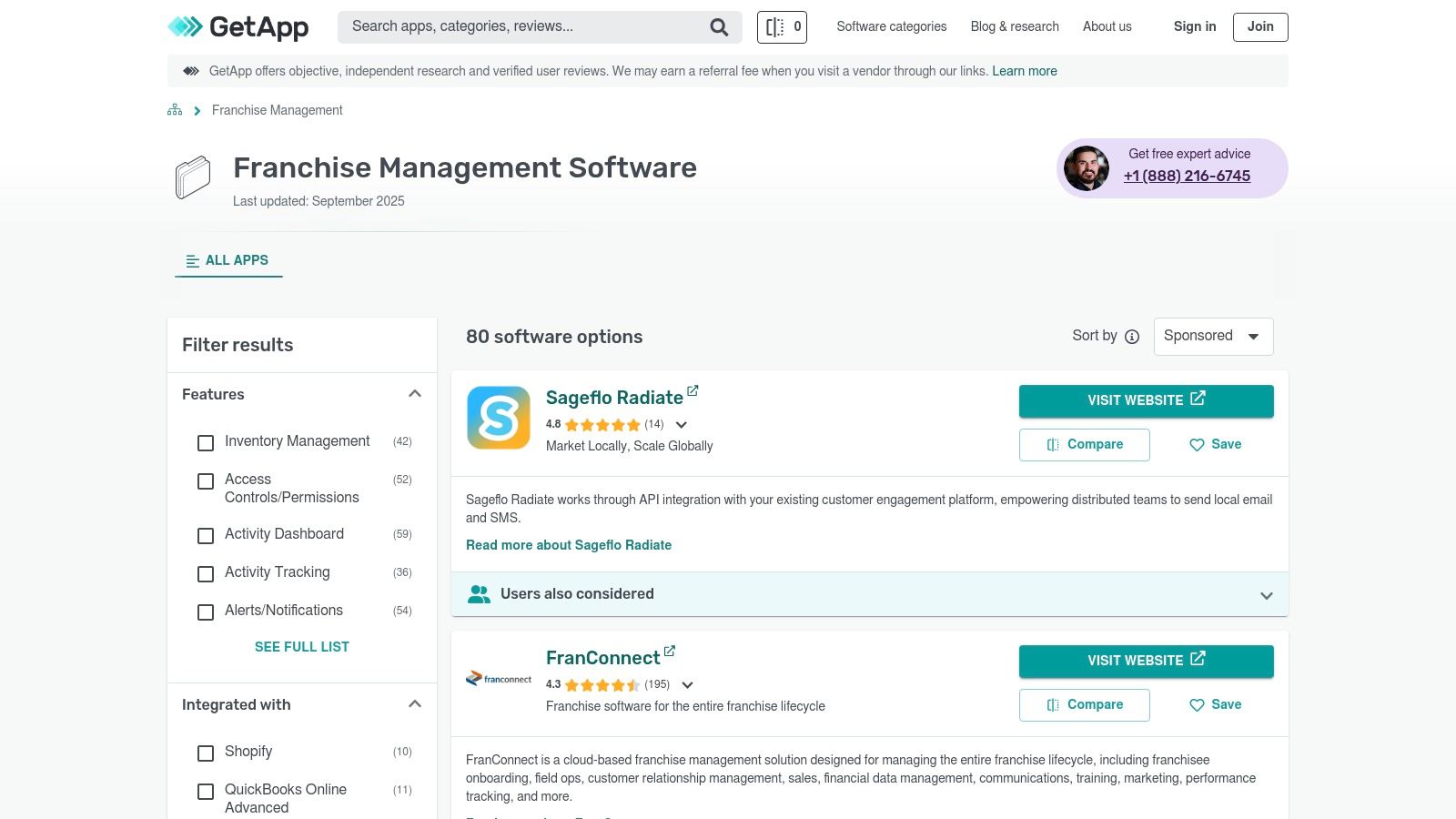 The platform’s strength is its robust filtering system and transparent user feedback. You can easily narrow down options by specific needs like royalty tracking, POS integrations, or mobile access. The comparative grids and detailed reviews offer a realistic glimpse into a platform's usability and customer support, helping you look beyond marketing claims and see how the software performs in real-world scenarios.
Key Features & Use Cases
- Software Discovery: Use filters to find niche or major franchise tools that meet your specific operational needs.
- Side-by-Side Comparison: Generate comparative grids to quickly evaluate the features and pricing of top contenders.
- User Review Analysis: Read verified user reviews to understand the pros and cons of different platforms from actual customers.
- Vendor Shortlisting: Quickly access vendor websites, request demos, and create a shortlist of potential solutions.
Our Assessment
GetApp is an essential first stop for any franchisor navigating the crowded software market. Its broad coverage and verified reviews provide a level of transparency that is hard to find elsewhere, helping you build an informed list of candidates. The platform is particularly useful for emerging brands that may not be familiar with all the players in the space. However, its impartiality can be influenced by sponsored placements, which are often displayed prominently. Franchisors must still perform their own due diligence, as star ratings alone do not guarantee a perfect fit for their unique system. Treat GetApp as a powerful research and discovery tool rather than the final word in your decision-making process.
| Pros | Cons |
|---|---|
| Broad coverage of niche and major franchise tools | Contains some sponsored vendor placements |
| Transparent sorting and verified user reviews | Users must validate fit beyond star ratings |
| Quick access to vendor websites and demos | Can be overwhelming without clear criteria |
Website: https://www.getapp.com/operations-management-software/franchise-management/
- Capterra – Franchise Management listings
While not a franchise management software itself, Capterra is an indispensable resource for discovering and comparing them. As a Gartner-owned marketplace, it provides one of the most extensive directories of franchise software solutions, complete with detailed vendor profiles, feature breakdowns, and most importantly, verified user reviews. This makes it a crucial first stop for franchisors evaluating their options. The platform’s strength is its user-driven data. Franchisors can filter options based on features, company size, and industry, then read firsthand accounts from other users about implementation, customer support, and ease of use. This peer-to-peer insight is invaluable for identifying the best franchise management software for a specific system, moving beyond marketing claims to see how platforms perform in the real world.
Key Features & Use Cases
- Software Discovery: Use filters to find niche, emerging, or global franchise platforms that may not appear in other lists.
- Comparative Analysis: Directly compare features, pricing models, and user ratings for a short list of vendors.
- User Review Vetting: Read detailed, verified reviews to understand the pros and cons of a system from a user perspective.
- Alternative Suggestions: Discover competitors and similar tools for any given software profile.
Our Assessment
Capterra is an essential research tool for any franchisor in the market for a new platform. Its massive database of user reviews and robust comparison tools provide a level of transparency that is hard to find elsewhere. It empowers buyers to make informed decisions by providing a broad, unbiased view of the market landscape. However, its utility is dependent on the information provided by vendors and users. Some profiles are more detailed than others, and sponsored listings can receive prominent placement. The sheer number of options can also be overwhelming without a clear set of initial requirements. Despite this, it remains a free and powerful starting point for the software selection process.
| Pros | Cons |
|---|---|
| Largest user-review base with comparison tools | Some vendor pages and placements are sponsored |
| Excellent resource for finding emerging & global tools | Category URLs can change, requiring internal search |
| Free and easy-to-use platform for software research | The volume of options can be overwhelming for new users |
Website: https://www.capterra.com/franchise-management-software/
- Software Advice – Franchise Management evaluations
Software Advice is not a software platform itself, but a US-based advisory service that helps franchisors research and shortlist the best franchise management software for their specific needs. It functions as a comprehensive resource, offering product evaluations, pricing overviews, and one-on-one consultations to help brands navigate the crowded vendor landscape.
 The platform's value lies in its ability to save franchisors time and effort during the initial discovery phase. Instead of sifting through dozens of vendors, users can leverage Software Advice's industry knowledge to get a curated list of suitable options. The site provides detailed product pages with feature breakdowns, verified user reviews, and connections to vendor demos or direct quotes.
Key Features & Use Cases
- Free 1-on-1 Consultation: Speak with an advisor to quickly shortlist products based on your franchise's size, industry, and budget.
- Product Comparisons: Evaluate software like FranConnect, Naranga, and other niche tools side-by-side.
- Verified User Reviews: Gain insights from other franchisors on the pros and cons of different platforms.
- Vendor Connections: Directly request demos or price quotes from your shortlisted software providers.
Our Assessment
Software Advice is an excellent starting point for US-based franchisors who feel overwhelmed by the sheer number of available tools. It effectively serves as a validation resource, allowing you to cross-reference pricing information and confirm feature fit before committing to lengthy sales demos. The platform is particularly useful for discovering lesser-known, specialized solutions you might otherwise miss. However, it's important to remember its marketplace model. The service is free because vendors pay a referral fee, so it’s wise to conduct your own due diligence after receiving their recommendations. It’s a powerful research tool but not a substitute for a thorough, independent evaluation process.
| Pros | Cons |
|---|---|
| Helpful for US buyers seeking quick, guided recommendations | Marketplace model involves referral fees; verify fit independently |
| Good source to validate pricing and feature fit before demos | Does not offer direct purchasing, only connections to vendors |
| Covers many niche franchise management tools | Recommendations may be limited to partnered vendors |
Website: https://www.softwareadvice.com
Top 12 Franchise Management Software Comparison
| Product | Core Features / Automation ✨ | User Experience / Quality ★ | Value Proposition 💰 | Target Audience 👥 | Unique Selling Points 🏆 | Pricing Info 💰 |
|---|---|---|---|---|---|---|
| 🏆 FranFunnel | Instant multi-channel lead outreach (SMS, email, phone) | Mobile app, real-time analytics, white-glove support | Boosts lead response rates up to 445% | Franchise businesses | Focus on lead engagement, seamless CRM sync, no long-term contracts, white glove service | $249/mo for all features, all integrations, and unlimited white glove service |
| FranConnect | Franchise lifecycle mgmt: CRM, compliance, royalties, LMS | Large US base, IFA-recognized, enterprise scale | Comprehensive all-in-one franchise system | Enterprise franchisors | Broadest franchise system of record | Not public, enterprise-level |
| FranchiseSoft | Sales CRM, onboarding, training, compliance, royalty mgmt | Strong North America focus, franchisor + franchisee workflows | Purpose-built franchise CRM and ops | North American franchisors | Comprehensive stack with learning center | Contact for pricing |
| BrandWide by Soffront | Development, LMS, compliance, helpdesk, royalties | Managed implementation, 24/7 support, franchisor references | Scalable modules for multi-unit brands | Large multi-unit franchises | US supplier member of IFA, extensive support | Demo required, pricing not public |
| Naranga | CRM, onboarding, operations, LMS, audit tools | Ease of use, configurability, quick onboarding | All-in-one for emerging and mid-sized franchises | Emerging & mid-sized franchisors | Fast setup, simple UI | Contact/demo needed |
| FRM Solutions | Legal/compliance, site visits, royalties, product ordering | Strong customization, enterprise-grade | Multi-brand franchisor focus with deep integrations | Large multi-brand franchisors | Built on Microsoft Dynamics, complex workflows | Consultative sales |
| ClientTether | 30-sec lead response, automation, proposals, payments | Praised for ease of use and value | Focused on lead conversion and sales automation | Franchisors needing pipeline speed | Franchise-tuned CRM with e-signature & payments | Contact required |
| Square for Franchises | POS, loyalty, payroll, shift scheduling, banking | Transparent pricing, fast deployment | POS-centric multi-location management | Retail & restaurant franchises | Large API ecosystem, built-in finance tools | Transparent core pricing |
| Bindy | Audits, inspections, corrective actions, dashboards | Strong field usability, pricing by usage | Focused on brand standards enforcement | Retail/hospitality/foodservice | Geotagging & photo proof for audits | Usage-based pricing |
| GetApp – Franchise Mgmt | Filters, reviews, comparative grids | Verified user reviews, broad software coverage | Easy vendor discovery and comparison | Software buyers & franchisors | Gartner-backed marketplace | Free access |
| Capterra – Franchise Mgmt | Vendor profiles, reviews, pricing info | Largest user-review base, free & easy | Comprehensive discovery and evaluation platform | Buyers researching franchise tech | Extensive user ratings & alternatives | Free access |
| Software Advice – Franchise | 1-on-1 consultations, pricing, demos | Detailed evaluations, verified reviews | Personalized software shortlisting | US buyers seeking guidance | Direct connection to demos and vendors | Free consultations |
Making Your Final Decision: It’s About More Than Just Features
Navigating the landscape of franchise management software can feel overwhelming. We've explored comprehensive, all-in-one platforms like FranConnect and FranchiseSoft, specialized operational tools like Bindy, and even aggregator sites like Capterra to give you a broad perspective. Yet, the central takeaway isn't about finding a single platform that does everything; it’s about identifying the technology that solves your most critical business challenge right now. Choosing the best franchise management software for your brand is a strategic decision that extends far beyond a simple feature-to-feature comparison. It’s an investment in your future growth, your franchisee relationships, and your operational efficiency. A platform with a hundred features you don’t use is less valuable than one with a handful of functions that solve your biggest bottleneck.
Synthesizing Your Options: The All-in-One vs. The Specialist
Your evaluation process likely led you down two distinct paths. The first is the all-encompassing suite, platforms designed to be the central nervous system of your entire franchise operation. These systems promise a single source of truth, from lead generation and franchisee onboarding to royalty collection and compliance management. The second path is the specialized, best-in-class tool. These solutions, like FranFunnel, don’t try to do everything. Instead, they excel at solving one high-impact problem with unparalleled precision. This approach allows you to build a flexible “tech stack” that is perfectly tailored to your unique operational needs, adding or swapping tools as your brand evolves.
A Framework for Your Final Choice
To make a confident decision, move past the marketing copy and focus on your practical reality. Use this framework to guide your final evaluation:
- Identify Your Primary Bottleneck: What is the single biggest obstacle preventing your growth today? Is it generating enough leads? Responding to them quickly? Managing franchisee compliance? The right software is the one that directly addresses and removes that barrier first.
- Consider Implementation and Adoption: A powerful tool is useless if your team won't use it. Assess the implementation timeline, training requirements, and overall user-friendliness of each platform. Will it simplify your team’s workflow or add unnecessary complexity? A simple, focused tool often sees much higher adoption rates than a cumbersome enterprise system.
- Calculate True ROI: Don't just look at the monthly subscription fee. Consider the cost of inaction. For example, how much potential revenue is lost every time a promising franchise lead goes cold because your response was too slow? The ROI of a tool that solves that specific problem, like FranFunnel's instant lead engagement, can be massive and immediate.
- Plan for Scalability: Your needs will change. Will your chosen software grow with you? For all-in-one systems, this means ensuring they have the capacity to handle more units and complexity. For specialized tools, it means checking that they can integrate with other software you may adopt in the future.
Ultimately, the search for the best franchise management software is a journey of self-assessment. It requires an honest look at your brand’s unique strengths, weaknesses, and ambitions. Whether you need a comprehensive system to unify a mature network or a targeted solution to ignite your sales pipeline, the right partner is out there. By focusing on solving your most significant challenges first, you set your franchise on a path to sustainable, scalable success.
Ready to fix the most critical leak in your franchise sales funnel? FranFunnel specializes in the one thing that matters most: instant lead engagement. See how our automated communication platform ensures you connect with every prospect within seconds, turning your marketing spend into qualified conversations. Schedule your free demo of FranFunnel today!