For FSOs, inconsistency is a pipeline leak that shows up in the numbers before it shows up in a client conversation. When each client brand controls its own first-response flow, the FSO's overall contact rate is an average of every brand's process — the ones that text in 3 minutes and the ones that send an automated acknowledgment and stop. Standardizing lead routing at the FSO level is what separates organizations that reliably book discovery calls from those that are constantly explaining why the pipeline is thin.
Letting Each Brand Set Its Own Flow Means You Inherit Every Gap in Theirs
The appeal of brand-level autonomy in first response is obvious: each brand knows its candidates, its sales process, its territory rules. The problem is that "brand knows best" is a philosophy, not a system. What most brands actually have is a CRM that sends a confirmation email, a rep who checks their inbox when they get to the office, and a text workflow that someone set up two years ago and nobody has touched since.
When an FSO leaves first-response to the brand, the FSO absorbs the consequences. A lead that goes cold because a brand's rep didn't follow up until the next afternoon is a missed discovery call on the FSO's scorecard. A candidate who submitted an inquiry at 10 PM and got nothing until 9 AM the next morning is not a warm lead by that point — they are a re-engagement problem. The FSO gets credit for the pipeline it builds and blame for the pipeline that leaks, regardless of whose process caused the leak.
The fix is not to audit every brand's follow-up workflow and hope they improve it. The fix is to own the first-response layer centrally, so the FSO's standard is what every lead experiences — not each brand's individual process.
The Data on What Brands Actually Do When Left to Their Own Devices
The problem is not hypothetical.
"44% of franchise brands never send a personal reply to a new inquiry — just an automated receipt, or nothing at all." — FranFunnel Franchise Lead Response Time Study · 530 brands · fielded March–April 2025
That 44% breaks into two groups: 28% sent nothing at all — no acknowledgment, no follow-up, no message of any kind — and 16% sent an automated receipt and stopped. Neither group started a conversation. Among brands that did reply personally, only 25% did so within 5 minutes. The average time to a first email reply, measured across brands that replied, was 9.1 hours.
For an FSO managing ten or fifteen brands, the realistic scenario is that four or five of those brands fall into the 44%. The FSO's pipeline reflects that. A standardized engagement layer changes the math: every brand responds in under 60 seconds, every time, with a text written to the candidate — not an automated receipt with the candidate's name mail-merged in.
What Standardization Actually Looks Like at the FSO Level
Standardization does not mean every brand sounds the same. It means every brand meets the same response threshold. The FSO defines the rules: respond in under 60 seconds, on SMS, with a personal opener that asks a qualifying question. The messaging for a home services brand and an education franchise will differ. The timing, the channel, and the fact that it invites a response will not.
In practice, this means the FSO runs a single engagement platform that sits on top of each brand's CRM. When a lead comes in, the platform fires the first text — under the brand's name, in the brand's voice, with the brand's specific qualifying questions — before any human has to act. The rep at the brand level is never the reason the lead went cold, because the FSO's system already started the conversation.
The activity syncs back into whatever CRM the brand uses. The brand keeps its pipeline view. The FSO controls what happens before the rep ever touches the thread.
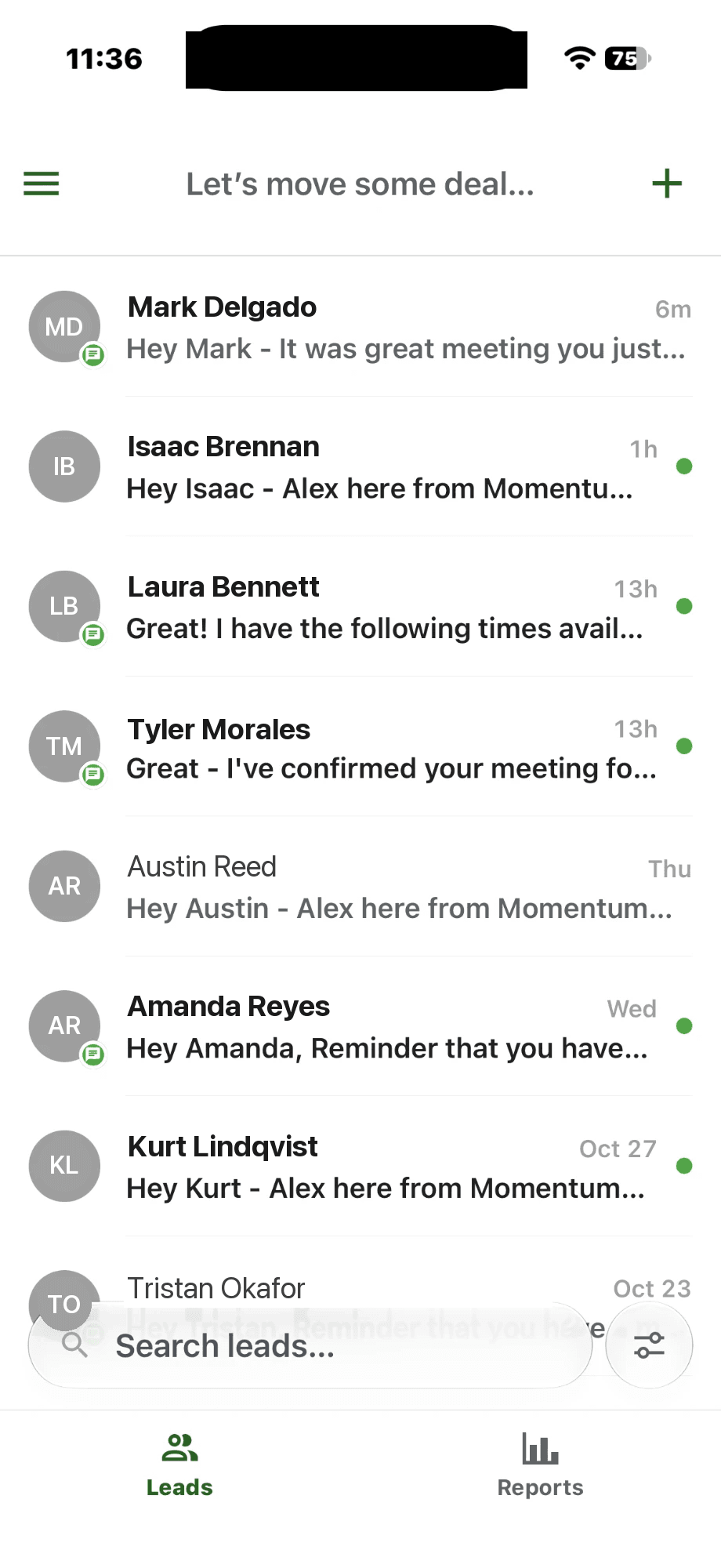 The FSO sees every brand's threads in one inbox. Agent badges show which conversations the AI is running. Names changed.
The Discovery Call Booking Gap Is Where Standardization Pays Off
First contact is only part of the problem. The larger gap for most FSOs is the distance between a lead who replied and a lead with a discovery call on the calendar. That gap is where inconsistent brand processes do the most damage: a rep who responds fast but then waits for the candidate to propose a time, a brand that sends a Calendly link and hopes the candidate clicks it, a follow-up that never comes because the rep was on another call.
Offering available times directly in the text thread — rather than sending a scheduling link — changes the conversion rate on that gap. When FranFunnel offers times in the text, 14.6% of the leads it texts end up with a booked appointment. Across nearly 20,000 leads sent a scheduling link instead, 6.7% clicked through to even open the booking page. Fewer than that actually booked. (Select FranFunnel client data, 2025-2026. Booking rate: 1,535 booked appointments from 10,506 leads texted. Link click rate: 1,338 clicks from 19,904 leads sent a scheduling link, across accounts with click tracking confirmed active. A click is the generous read for the link — the real booking rate is lower.)
For an FSO, that difference compounds across every brand on the roster. A standardized booking approach — times in the thread, the system sends the invite, the rep shows up to a scheduled call — is not a minor optimization. It is the mechanism that turns a consistent first response into a consistent pipeline.
Reporting Becomes a Client Service Advantage
The secondary benefit of standardized routing is what it does to your reporting. When every brand's leads flow through the same engagement layer, the FSO can pull contact rate and booking rate by brand, by lead source, and by campaign in a format that is consistent across the roster. That is not a reporting feature — it is a client retention tool.
A brand-side development director who gets a monthly report showing contact rate by lead source, booking rate by portal, and trend lines over time is not shopping for a new FSO. A brand that gets a vague "pipeline update" and has to ask what happened to the 40 leads that came in from a specific portal last month is a client at risk.
Standardized routing makes the data clean because it makes the process consistent. The FSO is not stitching together five different brands' CRM exports and trying to normalize the fields. One platform, one format, one standard — reported per brand on request.
The Objection FSOs Hear From Brands — and How to Answer It
The most common pushback from client brands is that standardized routing means losing control of the candidate relationship. The brand wants its rep to be the first voice, its messaging to be unique, its process to stay intact.
The answer is that standardized routing does not replace the rep — it makes the rep's job easier. The moment a rep sends a manual message into any thread, the automated agent for that stage shuts off and the rep is driving the conversation. The brand keeps full control of every thread from that point forward. What the FSO is standardizing is the response time and the channel — not the rep's judgment once they are in the conversation.
Brands that push back on this usually have not seen the data on what their own process actually produces. When the conversation starts there, it tends to get shorter.
FranFunnel is built for FSOs that want to run one consistent engagement layer across every brand on their roster — fast first response, in-thread booking, stage-specific follow-up, and reporting your clients can read. Book a demo at franfunnel.com and we will show you what your current contact rate and booking rate look like across your book of business.